Dubai gold prices fall after recent surge. Buyers spot brief saving window
A brief dip in Dubai gold prices offers buyers fresh breathing space this week
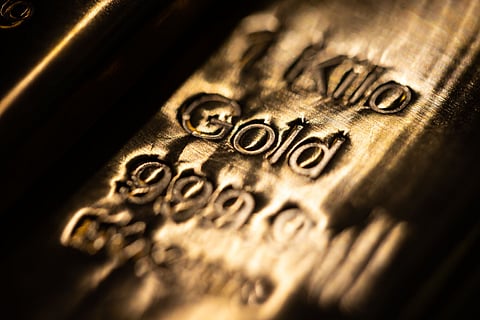
Dubai: Dubai gold prices edged lower early Tuesday following a sharp run-up a day earlier, giving buyers a brief window after several sessions of steady gains driven by global uncertainty. At 8.30 am, the 24-carat rate stood at Dh623 per gram, down from Dh626.75 on Monday morning, while the 22-carat variety was priced at Dh577, down from Dh580.25 a day earlier. (Check latest UAE gold prices here, alongside prices in Saudi Arabia, Oman, Qatar, Bahrain, Kuwait, and India.)
Despite the dip, prices remain significantly higher than levels seen at the start of the month, reflecting persistent global demand for safe-haven assets.
February rally still intact
Price movements over the month show a strong upward trajectory despite occasional corrections. At the beginning of February, 24-carat gold traded below Dh590 per gram before slipping sharply to nearly Dh564 on the second day of the month, marking one of the lowest levels in recent weeks.
The metal then staged a steady recovery, crossing Dh600 by mid-month and climbing further to above Dh615 in the third week. Momentum accelerated late last week, pushing prices close to Dh627 before Tuesday’s mild cooling. The 22-carat segment followed a similar path, rising from the low Dh520 range at the start of February to above Dh580 before easing slightly.
Such fluctuations are typical during strong rallies, with brief profit-taking phases creating short-term declines without disrupting the broader trend.
Global retreat after profit-taking
Internationally, gold weakened after four consecutive days of gains that were driven by geopolitical risks and uncertainty surrounding US trade policy. Prices fell by as much as 1.6% before trimming losses when Chinese traders returned to the market after the Lunar New Year break.
The metal had surged more than 7% in the previous sessions, supported by investor demand for safe assets amid rising tensions between the US and Iran and fresh tariff threats from Washington.
Markets remain unsettled following statements from President Donald Trump that he intends to raise a global import levy to 15% after a US Supreme Court ruling challenged earlier tariff policies. Several trading partners are struggling to reconcile the new measures with existing agreements, adding further uncertainty to global trade flows.
Safe-haven demand still strong
Gold continues to hold above $5,000 an ounce despite volatile trading. The metal had earlier retreated sharply from a record high above $5,595 reached in late January after a wave of speculative buying pushed the rally to extreme levels. Prices have since recovered more than half of those losses.
Major banks including BNP Paribas, Deutsche Bank and Goldman Sachs expect the longer-term bullish drivers to remain intact. Concerns over Federal Reserve independence, shifting investor preferences away from sovereign bonds and currencies, and persistent geopolitical tensions are all seen supporting prices in the months ahead.
The Middle East remains a central risk factor, with the US deploying its largest regional military presence in more than two decades while talks on Iran’s nuclear programme are set to resume. Investors continue to monitor these developments closely, which is likely to keep gold trading volatile while maintaining strong underlying demand.
- With inputs from Bloomberg.