Stock-Naia-Islands-(Shamal)
EXPLAINER
Why high-net-worth buyers are racing to secure Dubai's Naïa Island plots
Limited plots, global wealth flows and scale push Naïa Island to record levels
Last updated:
5 MIN READ
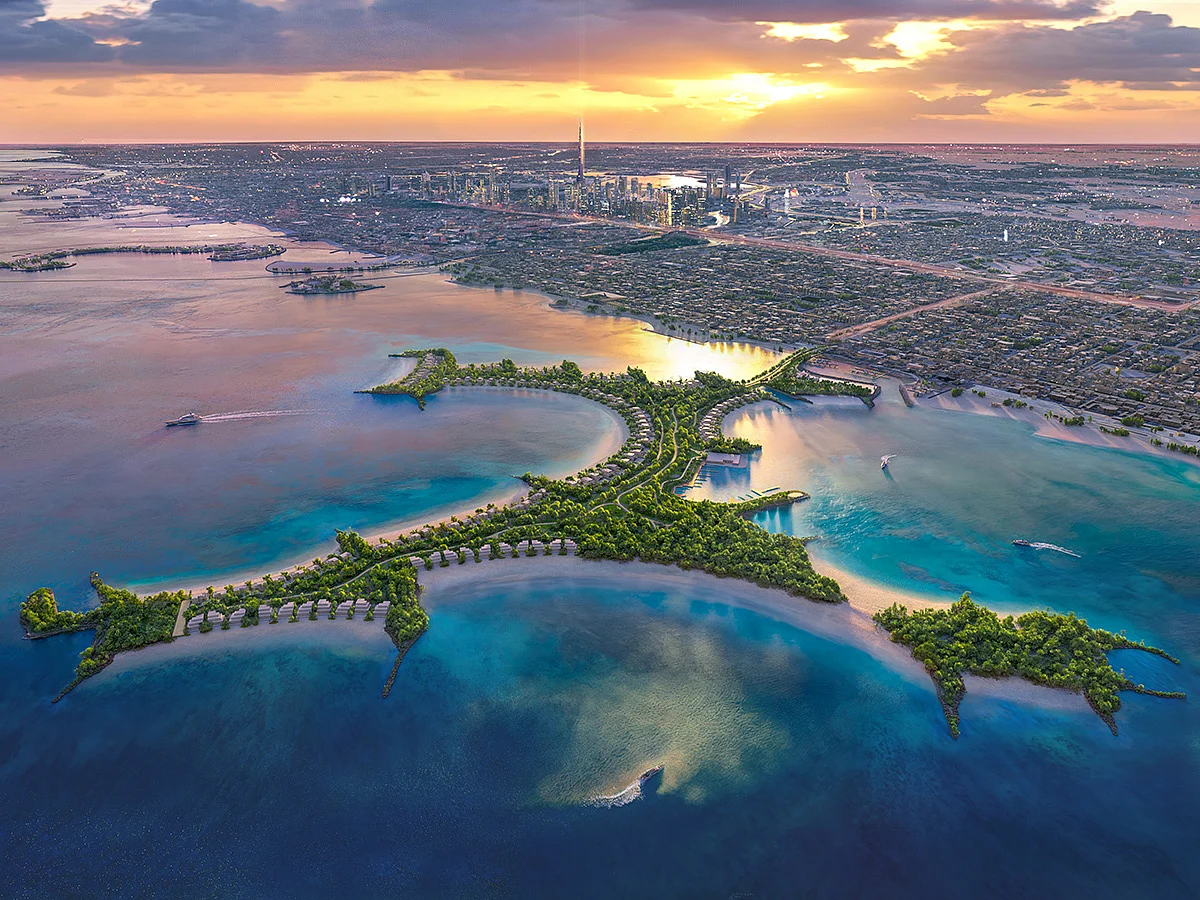
The Naia Island Dubai isn't just about adding more homes on the Dubai waterfront. It could even reset the price benchmarks in the city's super-luxury waterfront home category.
Supplied
Dubai: The Dh377 million land deal on Naïa Island has become a reference point for how the top end of Dubai’s property market is behaving, where a small pool of global buyers is competing for assets that are characterised by privacy and long-term control.
This is a narrow segment, and it moves differently. Activity depends on what becomes available and whether it meets a very specific set of expectations, as opposed to not following wider market trends or transaction cycles. It. When that happens, decisions are made quickly. The record deal involved the largest plot on the island, and market participants say that combination of size and rarity left little room for hesitation.
Get updated faster and for FREE: Download the Gulf News app now - simply click here.
“This is not broad-based demand,” said Chris Whitehead, Managing Partner at Dubai Sotheby’s International Realty. “It’s a small, highly qualified buyer pool targeting trophy assets defined by location, scale and rarity.” He pointed to a pattern where buyers are responding to scarcity and not waiting for alternatives.
Supply remains limited, and visibility is clear
Naïa Island was planned with strict limits on density. Fewer than 100 beachfront plots form the entire estate. Since its launch in late 2025, around 65 have already changed hands, according to Dubai Land Department data compiled by Cushman & Wakefield Core.
Momentum has carried into this year. Transactions worth about Dh1.5 billion were recorded across March and April. That pace, at these levels, reflects sustained demand rather than a one-off spike.
David Abood, Co-CEO at Cushman & Wakefield Core, said the rate of absorption “signals an extremely strong depth of demand within the global ultra-high-net-worth segment.” He pointed to the fact that buyers are committing capital at record prices without waiting for a wider market pullback.
Whitehead said the structure of the project leaves little ambiguity for buyers. “With finite inventory, urgency can build quickly within a small, highly qualified buyer pool,” he explained, noting that the opportunity set is clearly defined and limited.
Plot sizes, ranging from roughly 19,500 to more than 53,000 square feet, reinforce that clarity. These are not interchangeable assets. They allow for private estates at a scale that is increasingly difficult to secure in established global cities where planning restrictions limit expansion.
Value is shifting toward land and control
The most notable change is where buyers are placing value. Transactions are being completed at the land stage, often before any architectural plans are in place. That method shows how this segment is evolving.
“It’s not unusual for ultra-high-net-worth buyers to transact at this level,” Whitehead said, describing these acquisitions as long-term family holdings that extend beyond a typical property purchase.
Land offers flexibility. It gives owners control over design, timing and use. It also allows the asset to be shaped over time, which is central to how these buyers think about ownership.
Abood said Naïa Island has set “the highest benchmark recorded in the emirate” on a land rate basis. Some plots have reached around Dh11,000 per square foot on a gross floor area basis. That level places the island ahead of established trophy markets such as Palm Beach and Indian Creek.
Industry experts say the difference lies in how value is built. In most global markets, those price levels are attached to completed homes. Here, they are being achieved through land, supported by low-density planning and large build envelopes that expand what can be created on each plot.
Global capital is aligning with long-term ownership
Demand is coming from a broad set of geographies. European buyers account for the largest share, followed by Asia, the Middle East and North America. The spread reflects Dubai’s position in global wealth flows, but the more relevant shift is in intent.
These purchases are being made with a long-term view. Many buyers are entering as end-users or through family offices, focusing on assets that can serve both as residences and stores of value.
“These purchases are rarely single-purpose,” Whitehead said. “They sit at the intersection of legacy planning and capital preservation.” That balance between lifestyle and long-term capital is shaping how decisions are made.
Abood pointed to sustained inflows of ultra-high-net-worth individuals into the UAE, which are supporting both pricing and absorption. Larger, more exclusive waterfront plots are drawing the most interest, particularly those that offer privacy alongside proximity to the city.
Stock-Naia-Islands-(Shamal)
Pricing depends on what comes next
The Dh377 million deal has raised questions about whether the market can move higher from here. At this level, pricing depends on the next asset that comes to market.
“The market doesn’t move uniformly,” Whitehead said. “It’s entirely driven by rarity.” Premiums are being paid for assets that meet a very specific set of criteria, and those opportunities are limited by design.
Naïa Island is structured to maintain that balance. Supply is controlled, ownership is curated and development standards are set to preserve long-term positioning. Even with new waterfront developments coming through Dubai’s pipeline, few offer the same combination of scale and exclusivity.
That is what is sustaining demand. The record deal has set a benchmark, but the broader shift is in how value is being defined at the top end of the market, where land, scale and control are shaping decisions and capital continues to follow.
Network Links
GN StoreAbout Gulf NewsTerms & ConditionsReach by GNSitemapContact usPrivacy PolicyGN FocusHave your sayWork with usAdvertise with usGulf News epaperPrinting Services
Download our app
© Al Nisr Publishing LLC 2026. All rights reserved.