"Most of the hotels currently undergoing refurbishment already had plans and designs in motion. The current softer demand has simply fast-tracked those plans and in some cases prompted owners and operators to close and renovate sooner than they might have otherwise, something that would have been a harder call in recent years, given how strong the market momentum had been," said Joao Cravo.
UAE luxury hotel revamps can now cost more than Dh600,000 per room
Hotels are using softer occupancy periods to speed up major refurbishment projects
Last updated:
4 MIN READ
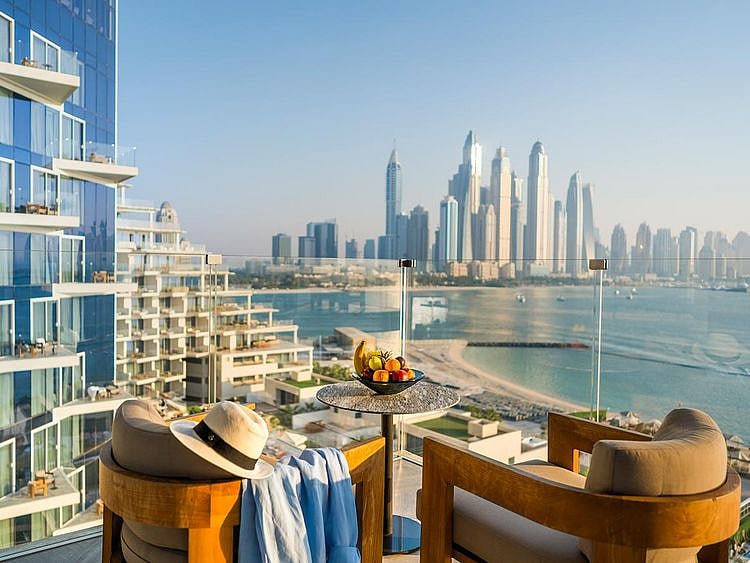
Consultants say luxury hotel upgrades can exceed Dh600,000 per room. Picture from FIVE Hotel used for illustrative purposes.
Supplied
Dubai: Luxury hotel renovations in the UAE are becoming significantly more expensive, with consultants saying some upgrades now cost as much as Dh600,000 per room — and in certain cases even more.
Hospitality asset managers, interior designers and hotel strategists say owners are still willing to spend heavily because renovations are increasingly tied to long-term room pricing power, competitiveness and future returns.
Industry consultants say many refurbishment plans were already in motion, but recent shifts in travel demand have encouraged hotel owners to fast-track projects that may otherwise have been delayed.
The changes are affecting some of Dubai’s best-known luxury properties, including Park Hyatt, Burj Al Arab, Armani Hotel in Burj Khalifa, with upgrades ranging from room redesigns to large-scale repositioning projects.
How much does it cost?
According to Trilight Hospitality Asset Management, renovation costs vary sharply depending on the hotel category and scope of work.
“The cost of revamping a single room can range from Dh60,000 to Dh600,000,” said Joao Cravo, Vice President of Asset Management at Trilight.
“It depends on the level of intervention, whether it's a light refresh or a full redevelopment and the positioning of the asset.”
Somya Angolkar and Shanawas Moidu, co-founder and partners at IDA, said costs in the UAE luxury market are now typically between Dh300,000 and Dh600,000-plus per room for full upgrades.
They added that softer refurbishments may cost around Dh150,000 to Dh300,000 per room.
For entire properties, consultants estimate renovation budgets can reach Dh60 million to more than Dh120 million for mid-sized luxury hotels.
Hospitality strategist Paul Clifford said ultra-luxury revamps could cost even more.
“For the most luxurious hotels looking at complete revamps, you could be looking at up to $200,000 per room,” he said.
With properties like Burj Al Arab or Park Hyatt Dubai, you’re not just talking about a fresh coat of paint, you’re talking about future-proofing the hotel, says Clifford.
Why costs are rising so sharply
Consultants say luxury hotel projects are becoming more expensive due to a combination of imported materials, bespoke finishes, longer supply chain delays, rising contractor costs, increased technology integration and strict luxury brand standards.
Cravo said execution has become one of the biggest cost pressures during renovations, especially when specialist materials face long lead times.
Moidu also pointed to rising prices for natural stones, metals and hardwoods. “At the same time, volatility in the cost of natural stones, metals, and hardwoods demands value engineering within the same quality bracket,” he said.
Clifford added: “Materials go up, timelines tighten, but expectations don’t move.”
Get updated faster and for FREE: Download the Gulf News app now - simply click here.
Hotel renovation programs are typically extensive, often encompassing guest rooms, lobbies, dining areas, and amenities to enhance the overall guest experience, said Somya Angolkar and Shanawas Moidu.
Why owners are still spending heavily
Despite softer occupancy in parts of the market, consultants say many owners are continuing with renovations because delaying upgrades can hurt long-term competitiveness.
“The question hotel owners will ask is ‘do we need to defend rate, grow rate, or completely reset the asset?’” Clifford said.
Cravo said many owners are using the current market environment to complete projects before travel demand strengthens again.
“The logic is straightforward, if you renovate now while demand is softer, you avoid displacing revenue during peak periods and you are ready to capture the upswing the moment it arrives,” he said.
Consultants say owners increasingly see renovations not as short-term expenses, but as investments tied directly to higher room rates and stronger positioning after reopening.
How hotels try to protect profits during renovations
Hotel owners are also trying to minimise revenue losses during renovation periods by keeping parts of properties operational while work continues.
Consultants say many hotels are renovating floor-by-floor, keeping restaurants open and delaying back-of-house upgrades to reduce disruption to income.
Operators are also prioritising guest-facing spaces such as rooms, lobbies and food-and-beverage outlets because these areas have the strongest impact on guest perception and room pricing. Some hotels are also pre-buying materials early to avoid further cost increases and supply chain disruptions.
Somya said, “The level of spend is ultimately guided by projected ROI, competitive benchmarking, and how much repositioning the asset needs to stay relevant without overextending capital.”
Clifford said owners increasingly see renovations as long-term investments tied to stronger pricing power after reopening.
“They have to see it as reinvestment into rate power rather than just a spending exercise,” he said. “The focus should be on what happens after completion: higher ADR, stronger positioning, better demand mix.”

Dhanusha is a Chief Reporter at Gulf News in Dubai, with her finger firmly on the pulse of UAE, regional, and global aviation. She dives deep into how airlines and airports operate, expand, and embrace the latest tech. Known for her sharp eye for detail, Dhanusha makes complex topics like new aircraft, evolving travel trends, and aviation regulations easy to grasp. Lately, she's especially fascinated by the world of eVTOLs and flying cars. With nearly two decades in journalism, Dhanusha's covered a wide range, from health and education to the pandemic, local transport, and technology. When she's not tracking what's happening in the skies, she enjoys exploring social media trends, tech innovations, and anything that sparks reader curiosity. Outside of work, you'll find her immersed in electronic dance music, pop culture, movies, and video games.
Sign up for the Daily Briefing
Get the latest news and updates straight to your inbox
Network Links
GN StoreAbout Gulf NewsTerms & ConditionsReach by GNSitemapContact usPrivacy PolicyGN FocusHave your sayWork with usAdvertise with usGulf News epaperPrinting Services
Download our app
© Al Nisr Publishing LLC 2026. All rights reserved.