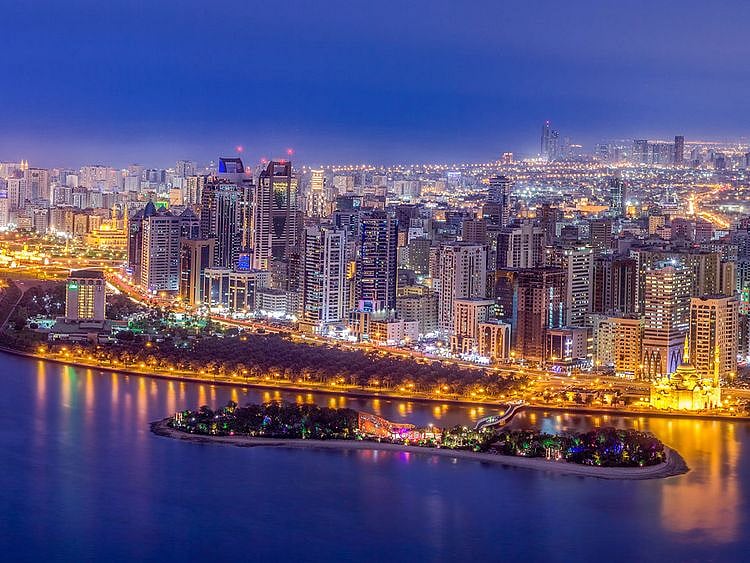
Dubai: Sharjah’s rental market is seeing a reset, driven by rising demand from residents seeking more affordable housing options and by growing interest in newer lifestyle communities across the emirate.
Data from Property Finder shows average annual rents rising from Dh45,000 in January 2025 to Dh60,000 in January 2026, marking a steep 33% year-on-year increase. The jump signals how quickly the emirate’s housing market is evolving, with demand spreading beyond traditional affordable neighbourhoods and pushing prices higher across a broad range of districts.
Renewals offer a rare cushion
Tenants already living in Sharjah’s residential communities currently enjoy an advantage that many newcomers do not. Sharjah’s rental framework prevents landlords from increasing rents during the first three years of a tenancy contract, offering stability to residents who signed leases earlier in the market cycle.
Stay updated: Get the latest faster by downloading the Gulf News app - it's completely free. Click here for Apple or here for Android. You can also find it on the Huawei AppGallery.
Edward Attwood, Chief Communications Officer at Arada, said that protection has become increasingly valuable in the current environment.
“Based on what we are observing across our own communities, we are seeing rental increases in the range of 7–10% year on year. That is a meaningful rise, but it reflects genuine demand. These are communities where people want to live, and that is reflected in pricing,” he said.
“Landlords cannot increase rent during the first three years of a tenancy, which means a significant portion of our residents are renewing at their original contracted rate,” Attwood said. “That is a substantial benefit in a market that has been moving upward.”
The result is a widening gap between the rents paid by long-standing tenants and those entering the market today.
“For tenants moving to a new property, they should expect to absorb the full market rate,” Attwood said. “The gap between what a long-standing tenant pays and what a new tenant pays is widening.”
That gap is increasingly influencing tenant behaviour. Many residents now choose to remain in their current homes rather than risk paying higher rents elsewhere.
Demand builds around emerging hubs
Rental increases are particularly visible in areas undergoing rapid development, where new infrastructure and lifestyle amenities are attracting residents.
Muwaileh has emerged as one of Sharjah’s fastest-growing residential zones, driven by its proximity to University City, Sharjah International Airport and the expanding Aljada development.
“In Muwaileh, the combination of University City, Sharjah International Airport, and the continued buildout of Aljada, which now houses over 20,000 residents, has created a genuine urban centre,” Attwood said.
Tenants are drawn to the area by its growing concentration of retail, entertainment and education facilities, while strong demand has kept occupancy levels high.
Districts east of Emirates Road are also seeing strong rental growth as families search for larger homes and greener surroundings.
“The presence of the Sharjah Grand Mosque and Tilal City, alongside our Masaar community and Nasma Residences, have anchored that district as a premium family destination,” Attwood said.
Rental increases spread across the emirate
Market data suggests Sharjah’s rental surge is far from isolated to newly developed communities.
Property Finder analysis shows some of the strongest increases taking place in Al Gharb, Al Dhaid, Muwaileh, Al Heerah and Al Bataeh, where rents have climbed between 40% and 56% year on year.
The pattern indicates that demand is affecting neighbourhoods across the price spectrum.
Cherif Sleiman, Chief Revenue Officer at Property Finder, said the scale of the increase highlights how strongly demand is reshaping Sharjah’s rental landscape.
“A 33% increase in a single year marks a clear step-up in Sharjah’s rental levels, with new residents likely moving there to manage rising living expenses,” he said.
“It shows that demand is putting measurable pressure on prices, even in an emirate historically valued for its affordability.”
The data also shows seasonal movements within the rental market. The first quarter tends to remain relatively stable, while sharper increases usually appear during the second quarter when rents often climb around 15% between April and June.
Growth continues later in the year but generally moderates, averaging around 5% per quarter toward the end of the year.
Tenants adjust expectations
The rising cost of housing is also reshaping the way tenants search for homes.
Property Finder data reveals a clear shift toward smaller and mid-sized properties, reflecting a growing focus on affordability.
Studios, one-bedroom apartments and compact units accounted for 58% of property searches in January 2026, compared with 34% a year earlier.
A similar shift is visible in villa searches. Around 70% of inquiries now focus on one- to three-bedroom villas and townhouses, while interest in larger four-bedroom homes has declined.
The change suggests tenants are becoming increasingly deliberate about balancing space and cost.
“Demand is now concentrated on practical, mid-sized apartments and villas, with tenants carefully balancing their space requirements and budget,” Sleiman said.
Sharjah’s growing appeal
Developers say the emirate’s appeal now extends well beyond affordability.
Attwood believes Sharjah is undergoing a broader transformation in how residents view it as a place to live.
“What we're seeing in Sharjah is not a cyclical rent adjustment. It's a fundamental reappraisal of what the emirate represents as a place to live,” he said.
Policy changes have also broadened the emirate’s appeal to international residents.
Sharjah’s decision in 2022 to allow property ownership for all nationalities has begun reshaping the profile of buyers and renters moving into the market.
“That law was a watershed moment, and its effects are still accelerating,” Attwood said.
Buyers and tenants now arrive from Europe, Asia, Africa and the Americas, reinforcing Sharjah’s shift from a purely affordable alternative to a residential destination in its own right.

Sign up for the Daily Briefing
Get the latest news and updates straight to your inbox
Network Links
GN StoreDownload our app
© Al Nisr Publishing LLC 2026. All rights reserved.