A view of the Bonifacio Global City (BGC, with some buildings still under construction) as seen from the Kalayaan (“Freedom”) Bridge.
Manila’s condos are back — and they’re selling faster than you think
After Dubai, Manila has quietly climbed into the world’s real estate big leagues
Last updated:
3 MIN READ
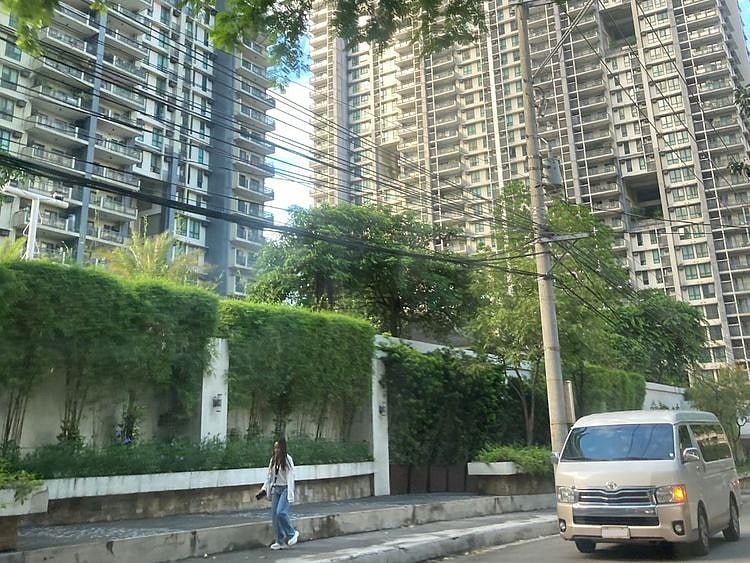
The recovery of Manila's condominium market signals that international investors now see the city as a serious contender rather than a peripheral, emerging market.
Jay Hilotin | Gulf News
Manila: After years of sluggish sales, Metro Manila’s mid-income condo market is roaring back to life.
This has caught both developers and buyers off guard.
Strong new launches and brisk demand are signalling that this is no dead-cat bounce, but a full-scale comeback.
Sweet spot
Based on the latest industry data, here's the sweet spot: units priced between ₱2.5 million ($43,000) and ₱12 million ($205,000) are now emerging as the main growth engine for the capital’s residential condo sector.
Units aimed at pros and OFWs
Colliers Philippines research director Joey Bondoc told local media about a renewed momentum: this band ($43,000 to $205,000) is particularly significant because it targets mid-level professionals, and overseas Filipino workers (OFWs) and retail international investors.
This market targetting supports broader end-user demand —rather than purely speculative buying.
Another industry data confirms it: Manila has quietly climbed into the world’s real estate big leagues.
Knight Frank now places the Philippine capital 5th among global cities for luxury residential price growth over the past 12 months, with values rising 9.1%, a pace that outstrips many more established markets.
Manila’s new status
In the ranking, only Seoul, Tokyo, Dubai, and Bengaluru sit ahead of Manila, all posting double‑digit annual gains that reflect intense demand and limited prime supply.
Manila’s 9.1% jump puts it comfortably ahead of Mumbai, Bangkok, Madrid, Nairobi, and Zurich, signalling that international investors now see the city as a serious contender rather than a peripheral, emerging market.
Momentum in the last quarter
The three‑month column shows Manila prices still edging higher by 2.2%, suggesting that the surge is not just a one‑off rebound but part of an ongoing upward trend.
While some competitors like Bangkok record negative quarterly moves, Manila’s continued rise implies resilient buyer appetite and a market that has yet to hit its ceiling.
Ready for occupancy (RFO) units
Developers are accelerating absorption of ready-for-occupancy inventory through aggressive pricing and more flexible financing structures.
Spot-cash discounts reportedly reach up to 60 percent, complemented by lease-to-own options and extended payment terms.
While Metro Manila still holds about eight years’ worth of excess RFO stock — improved from more than ten years previously — these measures are materially shortening the sell-down period.
Recent data highlight sharp improvements in specific submarkets.
'Manila North'
Manila North recorded a dramatic swing in net take-up, from just four units in the first quarter of 2025 to 1,064 units in the third quarter, followed by the Fort Bonifacio Fringe with 704 units and the Makati Fringe with 423 units, where mid-income products accounted for the vast majority of transactions.
These results underscore how strategic pricing and flexible schemes are reigniting buyer interest in this price band.
At the same time, several areas are seeing RFO inventories gradually tighten, which is beginning to weigh on sales volumes in those submarkets.
Manila’s share of remaining RFO units declined from 22% in the first quarter to 14 percent by the third quarter of 2025, while Parañaque, Pasig, and Alabang–Las Piñas also posted modest inventory reductions.
Headwinds for high-end segment
In contrast, higher-end residential segments are facing headwinds tied to governance concerns.
Colliers' Bondoc noted that the ongoing flood-control corruption scandal has dampened demand for upscale and luxury condominiums—particularly units priced from ₱15 million up to ₱100 million.
However, he stressed that take-up in the affordable and mid-income brackets appears largely insulated from this issue, reinforcing the view that mid-market residential condos will continue to anchor Metro Manila’s property recovery.
Sign up for the Daily Briefing
Get the latest news and updates straight to your inbox
Network Links
GN StoreAbout Gulf NewsTerms & ConditionsReach by GNSitemapContact usPrivacy PolicyGN FocusHave your sayWork with usAdvertise with usGulf News epaperPrinting Services
Download our app
© Al Nisr Publishing LLC 2026. All rights reserved.