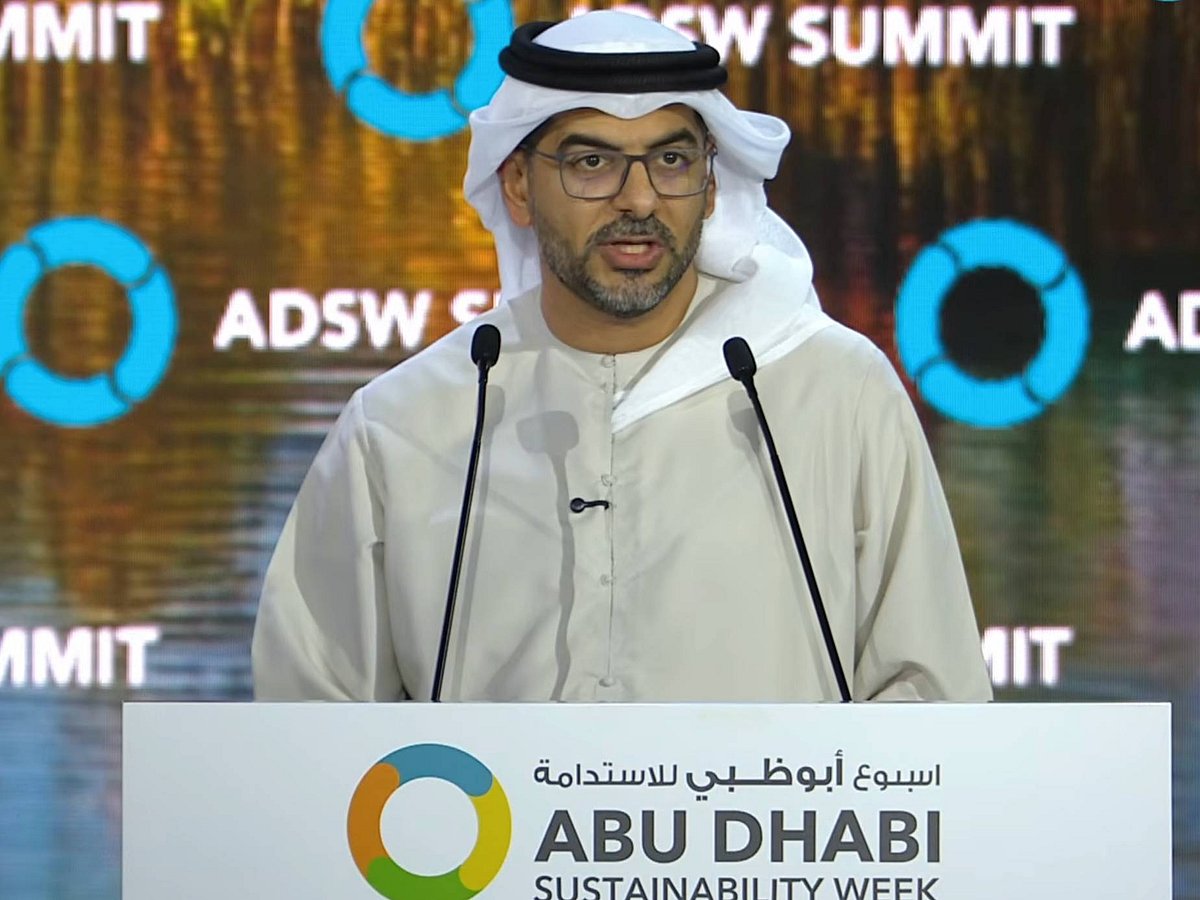
Abu Dhabi: Homes built today must be designed to cope with higher temperatures and tougher climate conditions, because climate adaptation has become a business necessity rather than a future consideration, Talal Al Dhiyebi, Group CEO of Aldar, said on Tuesday.
Speaking at Abu Dhabi Sustainability Week, Al Dhiyebi said climate change is already shaping how property developers plan, finance and operate projects, particularly in fast-growing markets such as the UAE.
“Climate change is already with us, and adaptation is now a core business imperative,” he said, adding that new developments must be planned around “higher temperatures, planning for extreme weather, and embedding climate risk assessments through the development life cycle”.
Why design decisions today matter
The stakes are high because of the scale of construction still ahead. Al Dhiyebi said half of the buildings that will exist globally by 2050 have not yet been built, meaning decisions taken now will shape living conditions for decades.
“When we plan with resilience in mind today, we reduce risk and cost tomorrow,” he said, pointing to the long-term impact on safety, asset protection and operational performance.
Buildings and construction currently account for roughly a third of global energy use and carbon emissions. Al Dhiyebi said transforming how cities are built and operated is therefore essential if climate goals are to be met.
Scale and responsibility in the UAE
Aldar’s own development pipeline illustrates that responsibility. The company awarded Dh67 billion in development contracts in 2025 alone, with more than Dh20 billion recirculated into the local economy through its in-country value programme.
More than 23,000 homes are now under development, nearly seven times the number under construction four years ago. Al Dhiyebi said this growth demands a clear focus on sustainability, wellness and long-term liveability.
Homes are being designed to respond to a diverse customer base, with sustainability principles forming the foundation of every community, even if they are applied differently across projects.
From affordable housing to affordable living
Population growth and shifting social needs are also changing how developers think about affordability. Al Dhiyebi said the focus is moving beyond housing prices to the idea of affordable lifestyle communities.
These communities are designed to be connected, supported by essential services and enriched with amenities that improve everyday living, rather than simply providing shelter.
Sign up for the Daily Briefing
Get the latest news and updates straight to your inbox
Network Links
GN StoreDownload our app
© Al Nisr Publishing LLC 2026. All rights reserved.