Dubai shared housing law: Who can rent, sublet and face fines of up to Dh1 million
New law covers permits, occupancy limits, approved locations and penalties
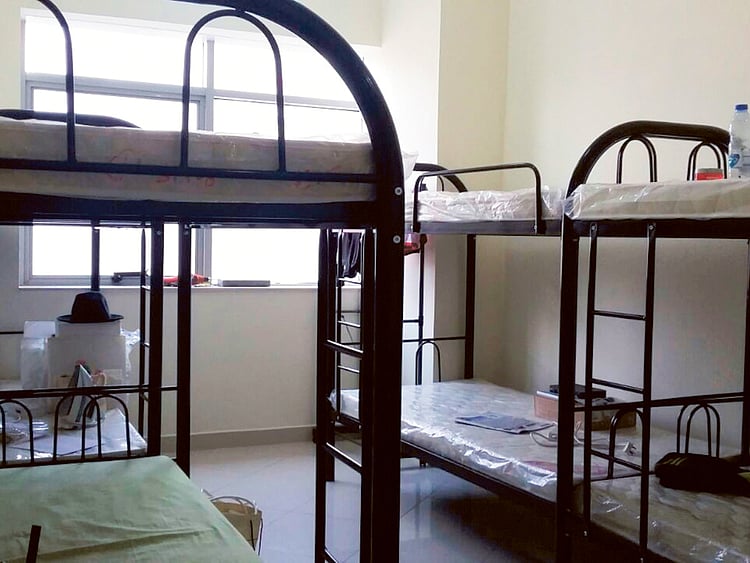
Dubai's new shared housing law has introduced a comprehensive regulatory framework for landlords, operators and tenants, covering permits, who can rent out accommodation, occupancy standards, approved locations and penalties for violations.
In implementation of Law No. 4 of 2026 Regulating the Occupancy and Management of Shared Housing in the Emirate of Dubai, Dubai Municipality has issued a circular setting out detailed planning, building and occupancy requirements for implementing the legislation. The civic body identified more than 44 areas across the emirate where buildings and villas can be allocated for shared housing, including Al Souq Al Kabeer, Al Ras, Al Warqa 1, Al Barsha 1, Al Muraqqabat and Al Rigga. Additional areas will be announced once approved, the civic body announced on Wednesday.
Get updated faster and for FREE: Download the Gulf News app now - simply click here.
Dr Hassan Elhais, Senior Legal Consultant at Amal Alrashedi Lawyers & Legal Consultants, said the legislation represented a significant shift in how shared accommodation is regulated in Dubai. “The law marks a clear shift from treating shared housing as an individual arrangement between landlords or tenants and occupants to an integrated legal framework,” Elhais said.
He said the framework determines where shared housing is permitted, who may operate it, how many people can occupy a property, which categories of residents may live together and the health and technical standards that must be met.
“This makes housing quality standards clearer and more enforceable, while strengthening oversight and accountability,” he added.
Here is what landlords and tenants need to know.
What is considered shared housing?
Under the law, shared housing refers to a group of individuals or families living in the same property, with each allocated space within the unit while sharing facilities such as kitchens, dining rooms, bathrooms and outdoor areas.
Can any landlord offer a property as shared accommodation?
No. A property cannot be designated as shared housing without the required permit.
Elhais said a landlord's consent alone was not enough to make a shared-housing arrangement lawful. Property owners and operators must ensure the property is in an approved location, has the necessary permits and complies with requirements governing the category and number of occupants and the space available to them.
Only the property owner or a licensed establishment may rent out accommodation designated for shared housing. An authorised operator may manage and rent the property on behalf of its owner under a management agreement or lease it from the owner and sublet it to residents in accordance with the law.
Owners cannot enter into shared-housing agreements with people or companies that are not authorised to conduct the activity.
Can tenants sublet their rooms or bed spaces?
No. Residents and other unauthorised parties cannot sublet the property or any space allocated to them.
Elhais said the restriction was intended to curb informal subletting, unauthorised division of residential units and overcrowding.
“Shared housing does not mean that tenants are free to sublet rooms, spaces or beds on their own initiative,” he said.
Can families and individuals share the same unit?
No. Dubai Municipality's requirements stipulate that a shared residential unit must be allocated to one category of residents. Families and individuals cannot be housed together in the same unit, while a building or villa designated as shared accommodation must also be allocated to a single category.
More than one family may, however, live in a unit designated for family shared housing, provided each family has a separate bedroom with its own private bathroom.
Elhais said regulating who may live in the same unit went beyond controlling occupancy numbers. The requirements were also intended to protect privacy, curb unregulated overcrowding and ensure properties were used for their authorised purpose.
How much space must each resident have?
Bedrooms must provide at least five square metres per occupant. A complete bathroom, comprising a washbasin, toilet and shower, must be provided for every four occupants.
In family accommodation, each family must have a separate bedroom with its own private bathroom. In accommodation for individuals, more than one resident may occupy a bedroom, subject to occupancy limits and applicable health and technical standards.
Elhais said minimum space and sanitary-facility requirements made housing standards clearer and easier for authorities to monitor and enforce.
What are the kitchen and bathroom requirements?
Where shared housing is provided within apartments, kitchens may be located inside the unit but must provide at least one square metre per occupant and comply with Dubai Building Code health and safety requirements.
Where sanitary facilities in accommodation for individuals are provided separately rather than as complete bathrooms, there must be at least one toilet for every four occupants and one shower for every six.
Buildings designated for individual shared accommodation must also provide appropriately sized multipurpose areas for dining and recreation, as well as laundry and clothes-drying facilities.
Where is shared housing allowed?
Shared accommodation is permitted only in designated areas approved under Dubai Municipality's planning framework.
The municipality's guidelines exclude plots on major roads of a tourism and commercial nature from shared accommodation for individuals. These include Sheikh Zayed Road, Jumeirah Road, Al Wasl Road and Baniyas Road, where shared accommodation is restricted to families.
Owning a suitable property therefore does not by itself give a landlord the right to convert it into shared housing. The location must also comply with approved planning requirements.
Do landlords have to convert the entire building?
For buildings and villas covered by the municipality's requirements, the entire residential building or villa must be designated for shared accommodation. An owner cannot designate only part of it for that purpose.
A building permit is required for new shared-housing developments or alterations to existing buildings and villas intended to convert them into shared accommodation.
Applications for licensing, completion and shared-housing permits must be submitted through the Dubai Building Platform, with the appointed engineering consultancy providing the required plans and occupancy information.
Who can shared housing accommodate?
The law identifies several categories, including families, women, men, female and male students, government employees and workers employed by private companies and establishments.
Government entities, private companies and educational institutions may provide shared accommodation for employees, workers or students, provided the necessary permit is obtained and the property meets the required standards.
Individual tenancy agreements are not required where accommodation is provided to employees, workers or students by their employer or educational institution.
What happens to existing shared accommodation?
Owners and licensed establishments already operating shared accommodation have one year from the date the law took effect to bring their properties and activities into compliance.
However, Elhais stressed that the grace period did not allow existing violations to continue.
“The grace period for bringing properties into compliance should not be interpreted as permission to continue committing violations, particularly building violations or unauthorised changes in the use of a property,” he said.
Unauthorised internal partitions, changes of use or alterations that breach health and safety requirements may therefore have to be removed or rectified in accordance with applicable legislation and requirements.
What are the fines?
Violations can result in fines ranging from Dh500 to Dh500,000. If the same violation is repeated within one year, the fine can be doubled, up to a maximum of Dh1 million.
The amount depends on the nature of the violation, meaning not every breach automatically attracts the maximum penalty.
Can authorities act beyond imposing a fine?
Yes. Enforcement can extend well beyond financial penalties.
Depending on the violation, the competent authority may suspend an activity for up to six months, revoke a permit or coordinate with the licensing authority to cancel an establishment's trade licence.
Authorities may also disconnect public utilities from a non-compliant property until the violation is rectified, suspend transactions involving the property and prevent the registration of tenancy or management agreements until compliance is restored.
Equipment used in committing a violation may be seized, while a property that breaches permit requirements may ultimately be vacated pursuant to an execution judge's decision.
Administrative penalties do not prevent civil or criminal liability where applicable.
What happens to tenants if an operator's permit is cancelled?
Cancellation of a permit or suspension of an operator does not necessarily mean residents must leave immediately.
The law allows the competent authority to permit occupants to remain for a specified period, giving them sufficient time to find alternative accommodation.
This means enforcement action against a landlord or operator does not automatically result in the immediate displacement of residents.
What should landlords do now?
Owners already providing shared accommodation should establish whether their property is in an approved location, check whether its use and layout comply with the requirements, ensure it houses the correct category and number of residents, rectify any building or change-of-use violations and obtain the necessary permits.
Those planning new shared accommodation must ensure the proposed property complies with planning, construction, occupancy, health and safety requirements before it is used for that purpose.
What should tenants check?
Tenants considering shared accommodation should check that the property is authorised for such use and that the person or company renting it to them is legally entitled to do so.
They should also be aware that they cannot independently sublet their allocated room or space and that occupancy must comply with the applicable category and space requirements.
As Elhais put it, the central change is that shared accommodation in Dubai can no longer be viewed simply as a private arrangement between a property owner and several occupants. The property, operator, location, resident category, occupancy level and physical standards must all comply with the regulatory framework.
Network Links
GN StoreDownload our app
© Al Nisr Publishing LLC 2026. All rights reserved.