My Business: Millions of date palms were dying. This founder built AI to find the threat
Palmear grew from one founder’s effort to help farmers fight the Red Palm Weevil
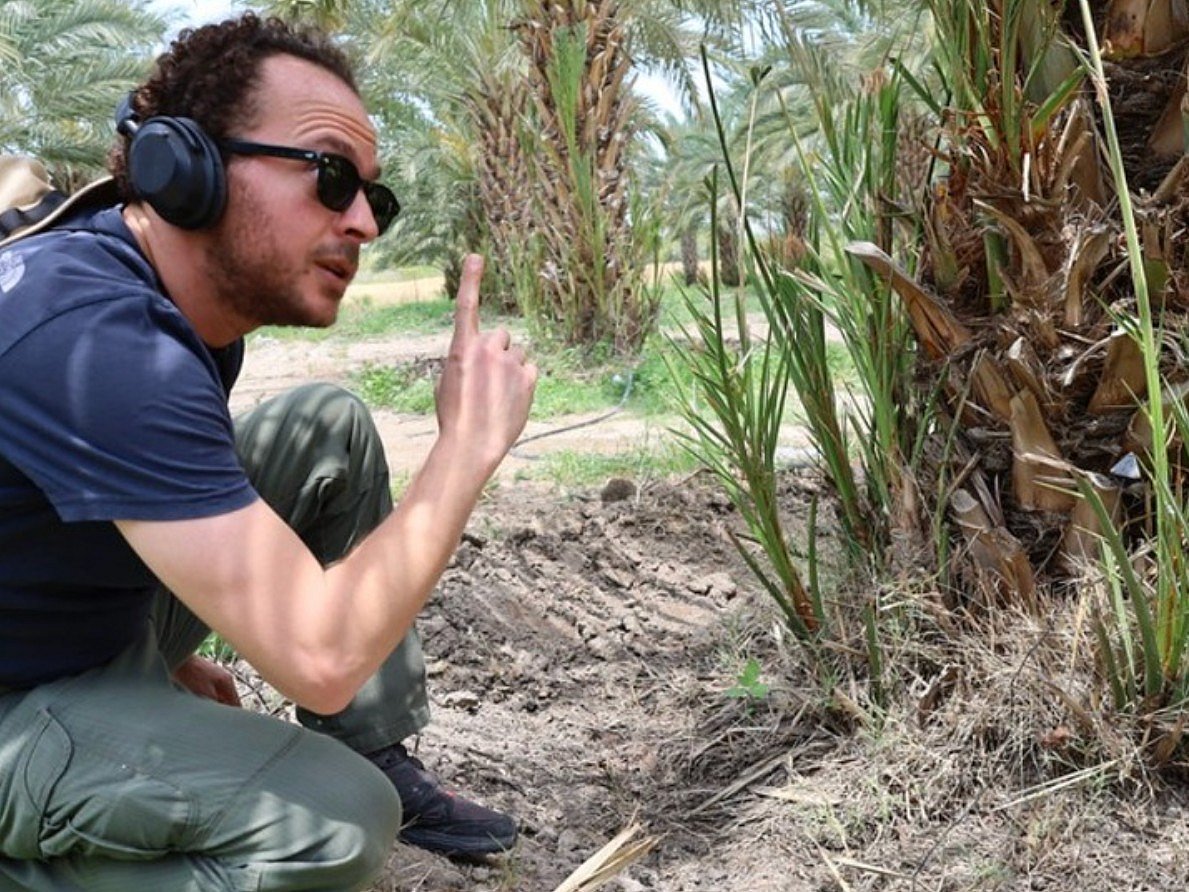
Abu Dhabi: Zeid Sinokrot had worked across agriculture, technology and industrial ventures when he encountered a problem that would eventually lead him to build a deep-tech company in Abu Dhabi.
Millions of date palms were being lost to the Red Palm Weevil, threatening trees closely tied to the region’s culture, food supply and farming livelihoods. Previous efforts to find a solution had struggled to progress beyond research and development.
Get updated faster and for FREE: Download the Gulf News app now - simply click here.
The 39-year-old Jordanian engineer decided he would try to build one himself.
“I saw millions of date palms, symbols of our region’s culture, heritage, and sustenance, being lost to the Red Palm Weevil, and I knew that if a solution didn’t exist, someone had to build it,” Sinokrot said.
His experience working on a date palm project gave him an understanding of the scale of the threat, while completing a complex industrial project in war-torn Iraq strengthened his resolve to take on difficult assignments.
“My experience on a date palm project, coupled with the resilience I gained from completing a complex project in war-torn Iraq, made one thing clear: that someone had to be me.”
That decision led to Palmear, a company developing patented AI-Acoustics technology for agriculture and environmental intelligence.
When the laboratory results failed outdoors
Building a working artificial intelligence model was only the beginning of Palmear’s challenge.
The company’s first model performed well under controlled laboratory conditions, but its reliability declined when it was deployed in the field. Changing environments and the wide range of natural sounds made the technology difficult to use consistently.
“One of our biggest challenges was realising that what works in the lab doesn’t necessarily work in the real world,” Sinokrot said.
Palmear responded by collecting more than 700,000 minutes of audio from real environments, giving its system a much broader foundation for development.
The process took considerable time, but it changed how the company approached product testing and technical development.
“True innovation only happens when you bridge the gap between theory and reality. Building robust, field-ready technology requires patience, persistence, and deep immersion in the problem.”
Farmers became the measure of success
Palmear spent four years building and refining its solution before receiving the feedback Sinokrot valued most.
Farmers began reporting that the technology was helping them address a problem that had damaged trees and affected their livelihoods.
“Our biggest success has been hearing directly from farmers who have benefited from our technology,” he said.
“After four years of building and refining our solution, seeing it solve a real and painful problem on the ground, and knowing it’s making a tangible impact on people’s livelihoods is incredibly rewarding. That validation means more than any metric.”
Funding came from several sources
Sinokrot funded Palmear through a combination of his own money, support from friends and family, angel investors, corporate investors and venture capital.
He comes from a family with a strong entrepreneurial background and serves as a board member of Jordan’s Sinokrot Group. His earlier career included work with Bühler Group in Switzerland, the development of a large industrial complex in Iraq and the co-founding of Jordanian date producer SUFFCO.
Also Read
My Business: How this Emirati turned a question about food security into a homegrown nutrition brandMy Business: How this former waiter went from selling dried fish to running his own company in DubaiMy Business: A five-minute family scare led this UAE founder to build a safety wearableMeet the Emirati inventor honoured by Sheikh Mohammed at 15, now building AI in the UAEPalmear also received support through the Mohammed Bin Rashid Innovation Fund, where discussions with advisers helped the company refine its route to market.
The programme challenged the team’s assumptions and introduced Sinokrot to people who had dealt with similar problems while building their companies.
Why Abu Dhabi
Sinokrot moved to Abu Dhabi in late 2019 and chose the UAE as the home for Palmear because the company was addressing a problem that extended well beyond one market.
The country’s regulatory, commercial and economic environment gave the business a base from which it could develop its technology and pursue customers internationally.
Palmear now wants its technology to be used by millions of farmers over the next five years, with the company seeking a larger role in agricultural and environmental intelligence.
Sinokrot acknowledges that the journey has included moments when he considered walking away and returning to a regular job.
“Every founder goes through those moments. The key is pushing through them—those are often the moments right before things start to turn.”
His advice to aspiring entrepreneurs is rooted in that experience.
“If you’re solving a problem that people are willing to pay for, don’t quit. Success is often closer than it seems, even when things feel uncertain.”

Sign up for the Daily Briefing
Get the latest news and updates straight to your inbox
Network Links
GN StoreDownload our app
© Al Nisr Publishing LLC 2026. All rights reserved.