Wajdan Gul and Anam Khalid, founders of Squatwolf.
My Business: How Squatwolf grew from a Dubai apartment into a global brand
Born in Dubai, Squatwolf scaled globally through performance-first design
Last updated:
4 MIN READ
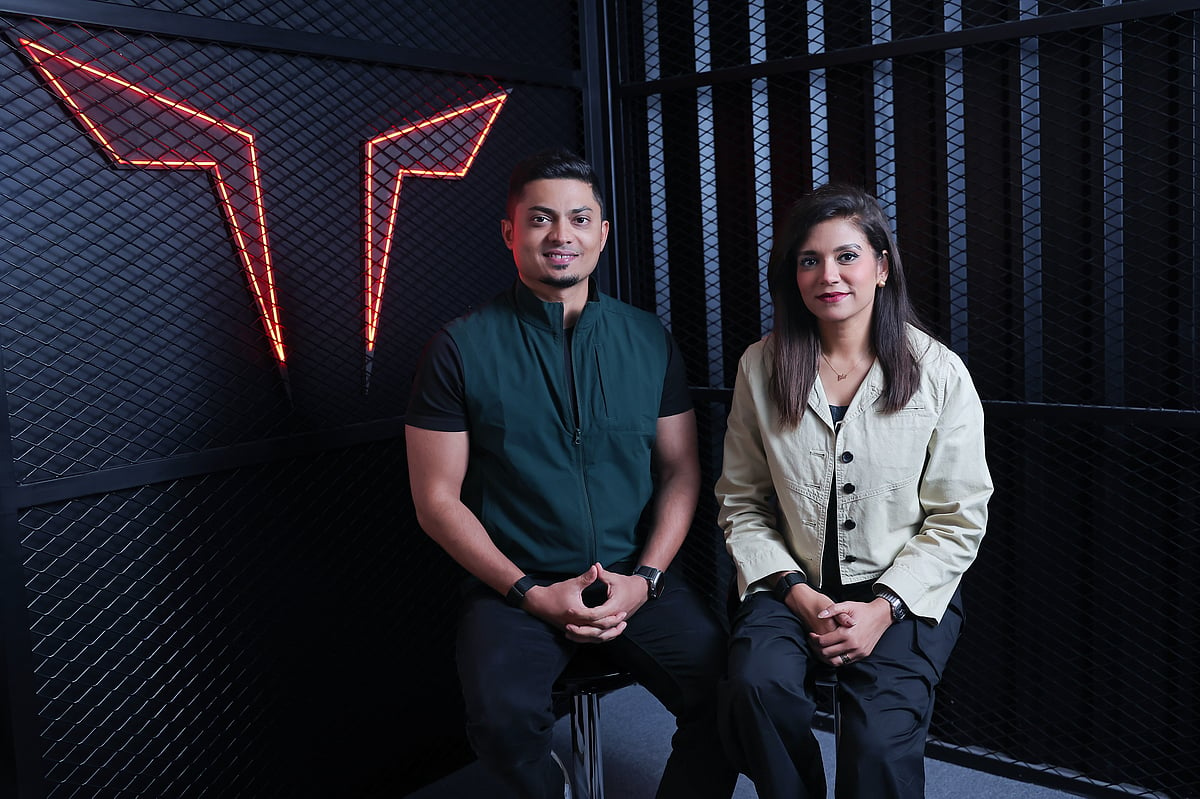
Wajdan Gul and Anam Khalid, founders of Squatwolf.
Virendra Saklani/Gulf News
Dubai: Squatwolf was born out of daily training routines in Dubai, where two founders, Anam Khalid and Wajdan Gul, deeply invested in fitness struggled to find performance wear that matched the intensity of their workouts, the realities of training in heat and the diverse body types they saw around them, a frustration that slowly evolved into the foundation of a global business.
“We were both deeply into training, but the performance wear available to us didn’t feel made for who we were or where we lived,” Khalid said. “Most brands were built for cooler climates, different body types, and a very Western idea of fitness culture.”
The brand began in a Dubai apartment in 2016, guided by function instead of fashion and shaped by the belief that consistent training in demanding conditions required apparel designed with purpose, a mindset that gradually expanded into a broader ambition to show that a performance brand with global relevance could emerge from the Middle East.
Turning a local need into global demand
Early traction came from customers who recognised the same gaps the founders experienced themselves, as fabrics, cuts and design choices built around heat and durability resonated with gym-goers across the UAE, creating an organic base of users who valued performance over aesthetics and consistency over hype.
Growth accelerated during the pandemic, when the company opened its e-commerce platform to international customers and began receiving orders from across Europe, North America and Asia, a shift that redefined both the scale and ambition of the business.
“During Covid, when we opened our e-commerce to the world, we received orders from over 100 countries,” Gul said. “That moment changed everything for us.”
Also Read
My Business: How a Dubai-based founder is simplifying personalisation for everyday brandsMy Business: How a 21-year-old Emirati built a mobile learning app from his bedroomHow this Pakistani entrepreneur went from farming to owning eight businesses in DubaiMy Business: How a long search for a home in Dubai sparked the idea behind MiftaMy Business: How a father-son team turned a hospital-bound dream into Dubai’s leading VR academyBeyond the numbers, global exposure brought credibility, with platforms such as Meta, Google and DHL later studying Squatwolf as an example of a Dubai-born brand expanding outward into global markets through digital channels and operational discipline.
Scaling brings clarity and hard lessons
Rapid growth also surfaced challenges that tested the business at every level, from production decisions and hiring pace to the difficulty of maintaining culture across a growing team, experiences that reshaped how the founders approached leadership and long-term planning.
“We’ve made every mistake possible, from overproducing the wrong styles to underestimating how hard scaling people and culture can be," Khalid said.
Those lessons reinforced the importance of clear systems, shared values and patience, particularly in brand building, where momentum often exposes weaknesses faster than it creates stability.
Dubai’s role in shaping ambition
The UAE provided an ecosystem that allowed the business to move quickly while thinking globally, supported by logistics infrastructure, digital connectivity and access to international talent, alongside a citywide mindset that encouraged ambition beyond local markets.
“Dubai’s mindset shaped how we think as founders,” Gul said. “This city encourages you to believe that global is possible from day one.”
Funding with a long-term view
Squatwolf began with personal savings before securing seed investment from friends and partners at Disrupt.com, followed by strategic capital aligned with long-term growth rather than short-term outcomes, culminating in a Series A round led by ASCA Capital to support product innovation, people and global retail expansion.
Neither founder came from a business family, navigating their path through mentors, constant learning and experimentation, a background that encouraged them to question established norms and build systems suited to their own values and operating style.
The early years brought financial pressure, operational mistakes and slow periods that tested resolve, yet walking away was never part of the conversation, as the founders approached the business with a level of commitment that left little room for retreat.
“We never treated Squatwolf as a side project or a backup plan,” Kahlid said. “The mindset was always that this had to work.”
Looking ahead, the company aims to strengthen its presence across key global markets while continuing to invest in performance innovation and community building, with the goal of becoming a trusted brand for people who train consistently and value progress over noise.
Their advice to aspiring founders reflects the same philosophy that shaped the brand’s growth, starting with a real problem, staying patient and recognising that entrepreneurship demands personal growth alongside commercial success.
“You don’t just build a business,” they said. “The business builds you.”
Nivetha Dayanand is Assistant Business Editor at Gulf News, covering aviation, financial markets and commodities. A business and financial journalist with a strong interest in multimedia storytelling, she regularly takes complex financial and economic subjects beyond the written word, producing explainer videos that make them easier for a wider audience to understand. Nivetha has interviewed senior policymakers, business leaders and global financial figures both on and off camera. Her past guests include UAE Minister of Economy and Tourism Abdulla bin Touq Al Marri, Khaled bin Alwaleed Al Saud, a member of the House of Saud and the founder and CEO of KBW Ventures, Jihad Azour, Director of the Middle East and Central Asia Department at the International Monetary Fund and Indian ministers Hardeep Singh Puri and N. Chandrababu Naidu. She has also hosted and moderated panels, conferences and awards shows, bringing her newsroom experience to live conversations on business, finance and the economy. An Erasmus Mundus journalism alum, Nivetha is drawn to stories that affect people directly and to reporting that gives a platform to voices that might otherwise go unheard. She was among the first journalists to speak to Petrofac employees in the UAE about unpaid salaries, broke the news of the planned demolition of Dubai’s well-known “Toyota Building”, and helped set the record straight on widely circulated claims that a giant replica of the Moon was coming to Dubai. More recently, her exclusive interview with EDGE Group CEO Hamad Al Marar revealed how the UAE-based defence group deployed its systems along the country’s shore border and established a geofence around the UAE within 48 hours of the February 28 escalation. Prior to joining Gulf News, Nivetha worked at ITP Media, where she helped launch Finance Middle East, a new publication covering the region’s financial sector. Her role spanned reporting and editing, video production, interviews and events. Across print, digital, and video, she focuses on finding the people behind business stories and explaining why those stories matter to the audience reading or watching them.
Sign up for the Daily Briefing
Get the latest news and updates straight to your inbox
Network Links
GN StoreAbout Gulf NewsTerms & ConditionsReach by GNSitemapContact usPrivacy PolicyGN FocusHave your sayWork with usAdvertise with usGulf News epaperPrinting Services
Download our app
© Al Nisr Publishing LLC 2026. All rights reserved.