Enrique Razon Jr. is currently the richest person in the Philippines, with an estimated net worth of $21.8 according to the 2026 Forbes World's Billionaires list.
Top Filipino billionaire bets bigger on Africa: Enrique Razon’s ICTSI to buy port operator across 3 countries — report
Acquisition deepens ICTSI’s shift beyond containers into bulk, specialised cargo handling
Last updated:
3 MIN READ
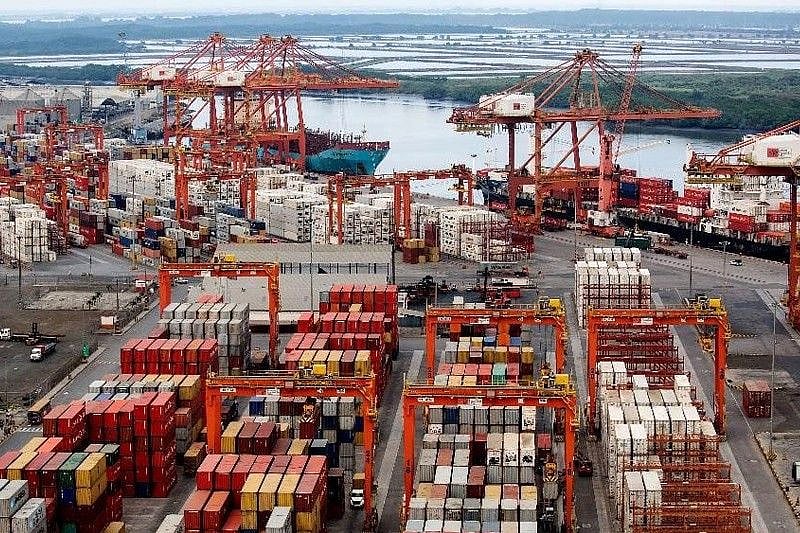
ICTSI, chaired by Filipino tycoon Ricky Razon Jr operates in 20 countries across 6 continents, managing 34 terminals, including Manila and Subic. It also runs ports in otherAsian countries (Indonesia, Pakistan), Middle East (Iraq, Syria), Europe (Croatia, Poland, Georgia), Africa (Madagascar, Cameroon, DRC, Nigeria), and the Americas (Brazil, Mexico, Colombia, Ecuador). Their portfolio covers gateway terminals, inland container depots, and multipurpose terminals, focusing on development, operation, and management.
Manila: Enrique Razon Jr., the richest Filipino billionaire and one of the world’s most aggressive port investors, is expanding deeper into Africa.
Razon-controlled International Container Terminal Services Inc. (ICTSI) has agreed to acquire 100% of TLG Acquisition Holdings, an integrated port and cargo-handling company operating in Mozambique, Namibia and South Africa, according to industry publication Portcalls.
ICTSI disclosed the agreement on Aug. 28. The purchase price was not announced, and the deal remains subject to regulatory approvals and other closing conditions.
Get it: Fast, verified news for FREE ... download the Gulf News app — simply click here
TLG handles bulk commodities and agricultural products across several strategic Southern African trade corridors.
ICTSI will buy a 74% stake from entities managed by African Infrastructure Investment Managers and the remaining 26% from South African investment company Mokobela Shataki, according to a report by Singapore Exchange.
Management investors will retain small minority holdings in some underlying businesses, leaving ICTSI with an effective economic interest of about 97.33% across the group.
Who is Enrique Razon Jr.?
“Ricky” Razon, 66, chairs ICTSI, the Manila-listed ports group that has grown from its Philippine base into a global terminal operator spanning Asia-Pacific, Europe, Africa and the Americas.
Ricky Razon Jr. started as a minimum-wage worker at age 17, when he dropped out of school to start working at the family's cargo-loading company.
Forbes named him the richest person in the Philippines in 2026, estimating his fortune at about $21.8 billion in its annual Philippines rich list.
His wealth roughly doubled from a year earlier, driven largely by a powerful rally in ICTSI shares.
Ricky Razon Jr., 66, started as a minimum-wage worker at age 17, when he dropped out of school to start working at the family's cargo-loading company.
Today, his business empire extends well beyond ports.
Razon also controls interests in property development and gaming through Bloomberry Resorts, water infrastructure through Manila Water, energy through Prime Infrastructure, and mining.
His rise in wealth is closely tied to ICTSI.
Forbes reported that the company posted record 2025 net profit of about $1.1 billion, up 23%, while revenue climbed 18% to $3.2 billion.
Why the African deal matters
The TLG acquisition gives ICTSI something strategical: a multi-country foothold in Southern Africa in one transaction.
TLG operates in Mozambique, Namibia and South Africa — markets linked to mineral, agricultural and bulk-cargo exports.
The acquisition therefore broadens ICTSI beyond its traditional strength in container terminals and deeper into bulk and specialised cargo handling.
It also gives Razon exposure to three economies whose ports serve inland mining, industrial and agricultural regions.
For ICTSI, that matters because port operators make money not merely from ships calling at terminals, but from controlling strategically located gateways through which national and regional trade must pass.
This is not Razon’s first African move. The company already has operations or terminal interests in Nigeria, Cameroon, the Democratic Republic of Congo, Madagascar and South Africa.
In December 2025, ICTSI signed a 25-year partnership with state-owned Transnet involving Durban Container Terminal Pier 2.
Operations began in early 2026, with Transnet retaining 51% of the operating company and ICTSI holding 49%. Pier 2 handles more than 40% of South Africa’s container traffic, making it one of the country’s most important trade gateways.
ICTSI has said it plans to spend close to $650 million upgrading the Durban terminal.
Why Southern Africa?
Southern Africa sits at the intersection of several major export flows: minerals, metals, agricultural commodities and manufactured goods.
But the region has also struggled with port congestion, aging infrastructure, rail bottlenecks and inefficient logistics.
That creates an opportunity for specialist operators such as ICTSI.
A global port company can bring capital, cranes, terminal systems, operating expertise and international shipping relationships into markets where export capacity has lagged demand.
For resource-rich economies such as South Africa, Mozambique and Namibia, better port handling can mean faster exports and lower logistics costs.
Network Links
GN StoreAbout Gulf NewsTerms & ConditionsReach by GNSitemapContact usPrivacy PolicyGN FocusHave your sayWork with usAdvertise with usGulf News epaperPrinting Services
Download our app
© Al Nisr Publishing LLC 2026. All rights reserved.