Remittances surge past $3b in January as Filipinos abroad send more money home
US remains top source; UAE among leading contributors
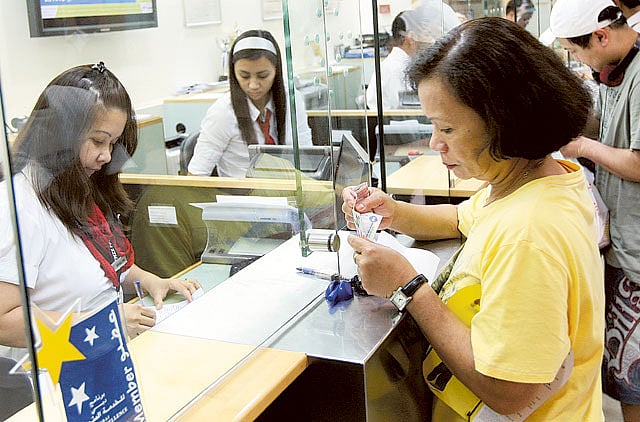
Dubai: Overseas Filipinos (OFs) have continued to contribute greatly to the Philippine economy, with cash remittances rising to $3.02 billion in January this year, a 3.5 percent increase from $2.92 billion recorded in the same month last year.
The growth has highlighted the resilience of Filipinos abroad, including those in the UAE, despite global economic uncertainties and higher cost-of-living in host countries.
UAE among top contributors
In the latest data released by the Bangko Sentral ng Pilipinas (BSP) or the Philippine central bank, the US has remained the largest source of remittances, accounting for 40.2 percent of total inflows in January.
It has been followed by Singapore with 7.6 percent and Saudi Arabia with 6.7 percent. Other key contributors have been Japan with 5.8 percent, the UK with 4.6 percent, and the UAE, which has accounted for 3.7 percent of total remittances.
Moreover, top sources have included Canada with 3.0 percent, Taiwan with 2.9 percent, Qatar with 2.8 percent, and Hong Kong with 2.5 percent.
Stay updated: Get the latest faster by downloading the Gulf News app now - it's completely free. Click here for Apple or here for Android. You can also find it on the Huawei AppGallery.
Workers drive growth
Cash remittances from land-based workers have climbed by 3.5 percent to $2.41 billion in January this year, up from $2.33 billion a year earlier.
On the other hand, sea-based workers have posted similar growth, with remittances increasing by 3.5 percent to $607.78 million from $587.02 million last year.
“Personal remittances, which include cash sent through banks and informal channels as well as remittances in kind, grew by 3.5 percent from $3.24 billion in January 2025 to $3.36 billion in January 2026,” said BSP in a statement.
Weaker peso boosts remittance value
The growth in remittances comes amid global economic pressures that have weakened the Philippine peso against major currencies, particularly the US dollar.
For Filipino families back home, this means higher peso value for every dirham or dollar sent, marking up the purchasing power of remittances.
Meanwhile, remittances remain a priority for most OFs, supporting household expenses, education, healthcare, or savings. Consistent inflows not only help families but also provide a crucial buffer for the Philippine economy.
Network Links
GN StoreDownload our app
© Al Nisr Publishing LLC 2026. All rights reserved.