Pakistan remittances jump 15% to $3.5b in January, strongest ever for the month
Saudi Arabia tops remittance sources, followed by UAE and UK
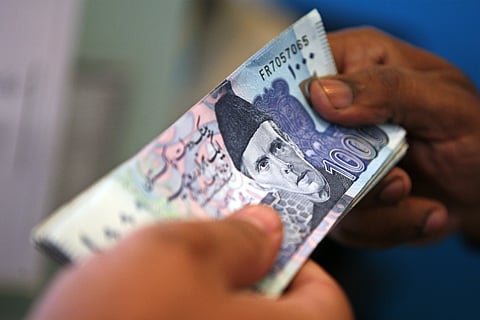
Dubai: Pakistan’s workers’ remittances surged to $3.5 billion in January 2026, marking a 15.4% year-on-year increase and the highest inflow ever recorded for the month, according to figures released by the State Bank of Pakistan (SBP).
In a statement, the central bank said inflows in January were led by remittances from Saudi Arabia ($739.6 million), followed by the United Arab Emirates ($694.2 million), the United Kingdom ($572.1 million) and the United States ($294.7 million).
On a cumulative basis, Geo News said, remittances reached $23.2 billion during the first seven months of the current fiscal year (July–January FY26), reflecting an 11.3% increase compared with $20.9 billion received in the same period last year.
Structural factors driving inflows
Sana Tawfik, Head of Research at Arif Habib Limited, said remittances had never touched this level in any previous January, underlining the strength and durability of inflows.
Speaking to Geo.tv, she attributed the surge primarily to a larger overseas Pakistani workforce, greater stability of the rupee, and a narrowing gap between formal and informal exchange markets, which has encouraged workers to channel funds through official banking routes.
She added that while geopolitical uncertainty can sometimes push remittances higher, the current momentum is being driven more by structural and policy-related factors than short-term shocks.
Full-year inflows seen at record high
Referring to guidance shared by the SBP governor in the latest monetary policy briefing, Tawfik said remittances are now expected to exceed $41 billion and could approach $42 billion in FY26 if the current trend holds.
“Such an outcome would mark the highest remittance inflow on record for any fiscal year and would play a crucial role in supporting Pakistan’s external account, while helping keep the current account deficit within the SBP’s projected range of 0% to -1% of GDP,” she said.
Brokers flag strong momentum despite monthly dip
Separately, Topline Securities said in its Economy Alert dated February 10 that remittances in January rose 15% year-on-year, though they declined 4% month-on-month compared with December.
The brokerage said total inflows for the first seven months of FY26 stood at $23.2 billion, up 11% from the same period last year, and maintained its full-year FY26 remittance forecast at $41 billion, representing a 7.5% increase over FY25 inflows of $38 billion.
Topline Securities’ Maaz Mulla said the January performance was supported by strong growth from the UK and European region, adding that the cumulative trend points to sustained support from overseas Pakistanis.
“Overall, remittances remain robust, reflecting stronger manpower exports in recent years, a reduced exchange-rate differential, and the continuation of the government’s remittance incentive package,” he said.


