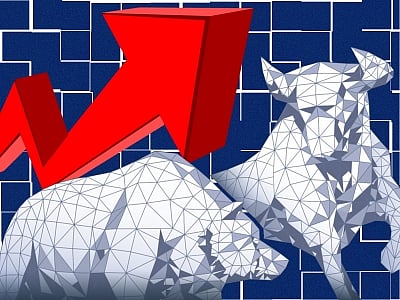
Dubai: Geopolitical fragmentation is reshaping venture capital in ways that favour local and regional technology companies, with investors saying the shift away from global efficiency toward resilience is creating space for new winners across emerging and mid-sized markets.
Speaking during a panel discussion, Alexandre Lazarow, Founding Partner at Fluent Ventures, said the impact of tariffs and geopolitics is often overstated at the earliest stages of company building.
“A startup is not a company. A startup is a project in search of a business model,” Lazarow said. At the seed stage, he added, the main risks remain founder alignment, product-market fit and whether demand exists at all, with macro pressures becoming relevant only much later.
Efficiency to resilience
While early-stage risk remains largely unchanged, investors said fragmentation is driving a deeper structural shift in how companies are built and scaled. Div Turakhia, Founder of Ai.tech, said the long-held idea of a flat world has given way to a more complex reality.
“In a flat world, you optimise for efficiency,” Turakhia said. “In a fragmented world, you optimise for resilience.”
That change is influencing everything from supply chains to hiring strategies, capital movement and product design. Founders, he said, now build businesses with contingency planning in mind, including how to move intellectual property, teams and money if trade rules or regulations shift.
Tariffs open doors, barriers decide winners
The panel outlined the distinction between what tariffs and non-tariff barriers means for companies. Tariffs, Turakhia said, tend to compress margins before being absorbed through pricing. Non-tariff barriers, by contrast, determine whether a company can operate at all.
“Tariff is just margin,” he said. “Non-tariff barriers kill the business or kill the industry.”
That dynamic is accelerating the rise of local champions, particularly in markets where governments want domestic players to compete more effectively in strategic sectors.
Lazarow pointed to India, where supply-chain disruption and China-plus-one strategies have helped create several large B2B marketplace unicorns. Similar models, he said, are now emerging in the Middle East, including platforms built around construction and industrial supply chains.
Local champions scale familiar ideas
Investors said fragmentation does not reduce ambition. Instead, it changes execution. Many of the largest technology companies in emerging markets follow familiar patterns, including local versions of e-commerce giants, digital banks and mobility platforms.
“The number one tech company in almost every market is the same,” Lazarow said. “It’s a local version of Amazon. The number two or number ten is a digital bank or buy now pay later.”
Those companies succeed by adapting global ideas to local regulation, consumer behaviour and infrastructure, often outpacing international entrants with deeper market knowledge.
Fragmentation is also influencing where capital flows. Lazarow said early-stage venture activity has expanded dramatically over the past decade, with unicorns now emerging from hundreds of cities rather than a handful of global hubs.
Late-stage capital, however, is concentrating around fewer themes, particularly artificial intelligence, where valuations have surged and capital requirements are rising. Turakhia said large funding rounds reflect risk management as much as enthusiasm, with investors backing the potential to scale rapidly despite uncertainty.
Both agreed that exits are increasingly coming from emerging markets, supported by a growing pipeline of companies reaching global scale and relevance.
Fragmentation is now distributing opportunity, rewarding companies that execute locally, build resilience into their models and adapt quickly to changing rules. For venture capital, that shift is reshaping where the next generation of technology leaders will emerge.
Sign up for the Daily Briefing
Get the latest news and updates straight to your inbox
Network Links
GN StoreDownload our app
© Al Nisr Publishing LLC 2026. All rights reserved.