What global capital really sees in Dubai is stability, structure, sustainable returns
Evolution is especially relevant as the market moves into a new phase
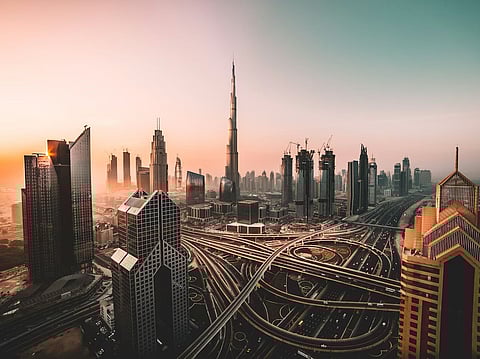
Dubai: Today’s largest allocators, from sovereign wealth funds to pension managers and private equity, approach property markets with a risk-first lens. They are less concerned with how fast prices can rise, and more focused on how capital is protected, regulated, and exited. Stability, regulatory clarity, and dependable yields now matter more than headline growth.
What Dubai did
Dubai is increasingly meeting those above-mentioned tests. Over the past few years, the emirate has shifted from being viewed as a cyclical, sentiment-driven market to one assessed alongside global gateway cities. This is not because volatility has disappeared, but because the rules of the market have become clearer. Long-term visas, transparent transaction data, tighter escrow requirements, and a more disciplined lending environment have changed how international investors underwrite risk in Dubai real estate.
This evolution is especially relevant as the market moves into a new phase. The extraordinary acceleration of 2023 and 2024, driven by post-pandemic capital flows, geopolitical reallocation, and strong population growth, is giving way to a more measured cycle. In 2026, returns will be shaped less by rapid price appreciation and more by rental income, asset quality, location, and operational efficiency. For short-term speculators, this may feel like a slowdown. For institutional capital, it looks like maturity. What makes this moment important is that Dubai is normalizing, and in doing so, becoming more investable for capital that values predictability over pace. That is where the next wave of global money is headed. Let’s unpack why.
Volatility to predictability
Dubai’s recent trajectory, punctuated by record activity but followed by growing signals of moderation, is exactly the type of environment where institutional investors can position themselves with clarity. Transaction volumes remain strong; in 2025, Dubai continued to break historical records for both transaction count and value, logging more than 270,000 transactions valued at almost $250 billion (Dh917 billion), a 20% increase year on year. Supported by clearer regulation, stronger market discipline, and a growing base of long-term investors, the sector is transitioning from a phase of rapid expansion to one defined by scale, resilience, and sustainability. This sustained activity reflects underlying demand from both end users and investors, not merely speculative trading. At the same time, indicators of moderation such as slowing price acceleration and expanded supply are being treated as shifts toward greater equilibrium. Industry forecasts, for example, anticipate prices stabilizing, and perhaps gently correcting, in segments where deliveries outpace absorption. This cooling is part of a maturing cycle. For global capital, stability is the predictable dynamics backed by data and policy clarity.
Regulation reduces risk
One of the most powerful shifts Dubai has implemented over the past decade is the evolution of its regulatory framework. International investors are looking into the assurance that buying Dubai property brings. Measures such as escrow protections for off‑plan buyers, heightened due diligence for launches, and clearly articulated urban plans are the types of policy interventions that diminish uncertainty. In markets without these guardrails, rapid supply inflows can quickly translate into volatility. In Dubai, by contrast, regulatory evolution has helped steer supply toward more absorbable levels and given investors confidence that their exposure isn’t subject to arbitrary shifts. This regulatory discipline, paired with legal certainty around property rights and pro‑business visa policies, makes Dubai far more than a high‑risk, high‑reward frontier. It is increasingly seen as a risk‑adjusted destination for capital that must serve fiduciary responsibilities.
Yield isn’t everything
There’s a misconception among some observers that global investors today are only chasing yield. In reality, what they seek is risk‑adjusted return, and a blend of modest capital appreciation, steady income, and downside protection. On this front, Dubai continues to deliver in ways that many Western and Asian markets do not. Rental yields in selected communities remain competitive relative to major global cities, often in the 7–10% range. Moreover, emerging demand patterns, from short‑term rental income fueled by Dubai’s tourism rebound, to long‑term lease demand anchored by demographic growth, diversify the income profile of real estate assets. This matters because institutional capital is increasingly reluctant to rely on a single revenue stream; diversification across income types is becoming a key part of portfolio design.
Underappreciated driver
Behind all of this sits something more fundamental which is demographics. Dubai’s residential population surpassed 4 million, reinforcing demand for homes, offices, and amenities. Even as plans unfold for longer‑term expansion toward 5.8 million residents by 2040, the immediate trend, which is steady, organic growth, lends real estate a backbone that many global markets envy. Growth anchored in jobs, technology hubs, FDI, and quality of life is now more measurable. This population momentum is a performance driver. People need homes. Businesses need space. Capital allocators value regions where fundamentals underpin demand, not merely sentiment.
New chapter
The next test for Dubai’s real estate market is not whether it can grow, but whether it can allocate capital efficiently. As supply expands and competition intensifies, value will increasingly be determined by execution, how well projects are designed, priced, delivered, and operated over time. For global investors, this is precisely the environment where conviction deepens. Markets that can absorb supply, correct selectively, and continue functioning without disruption are the ones that earn long-term capital allocation. Dubai is approaching that threshold, as a market that can be underwritten, stress-tested, and held with confidence. That shift matters. Because when a market proves it can operate without excess, it stops being traded, and starts being owned.
- The writer is Executive Director at TownX


