Dh10,000 savings in Dubai stock market would profit you over Dh1,000 this year
Dubai Financial Market up about 11% this year — here’s what that means for your money
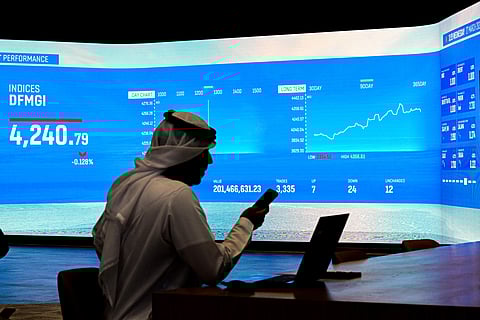
Dubai: If you put money into Dubai shares at the start of this year, chances are your investment is already worth more — without dramatic headlines or wild swings.
The Dubai Financial Market (DFM) has risen more than 11% so far this year. In simple terms, if you invested Dh10,000, it would now be worth about Dh11,100. A Dh50,000 investment would have grown to around Dh55,500.
For many UAE residents investing for the long term — retirement, children’s education, or building savings — that steady growth matters more than short bursts of excitement.
What’s driving the gains?
Dubai’s stock market is having its strongest start to a year in more than a decade. But unlike markets that rise and fall with oil prices or tech trends, Dubai’s growth is coming from everyday economic activity.
Most of Dubai’s economy is powered by non-oil sectors such as:
Real estate
Banking
Retail and tourism
Financial services
These are areas residents see and use daily — homes being bought, malls staying busy, tourists filling hotels, and businesses expanding.
That broad base helps explain why Dubai stocks have continued to rise even when global markets have been unsettled.
Where are most gains from?
A large part of this year’s gains came from two familiar names.
Shares of Emirates NBD are up about 33% this year, supported by strong lending activity and healthy profit margins. For investors, that translated into meaningful gains without needing to chase riskier assets.
Property developer Emaar Properties, known for the Burj Khalifa and Dubai Mall, also posted double-digit gains. Strong property sales and steady demand helped support its performance, even as some investors worry about oversupply at the high end of the market.
Together, these two groups accounted for roughly 60% of the market’s rise this year.
Dubai markets are different
Unlike some regional markets that depend heavily on oil, Dubai generates about 95% of its economic output from non-oil activities. That means growth is less tied to global commodity prices and more linked to population growth, tourism, and urban development.
One fund manager described Dubai’s economic model as a key reason it stands apart from neighbouring markets, pointing to how population inflows and increased activity are clearly showing up in company revenues and profits.
For everyday investors, that stability can be reassuring.
Still affordable to invest now?
Despite the strong rally, Dubai shares are not considered expensive by global standards.
The market trades at around 11 times expected earnings, compared with about 13 times for many emerging markets. Over the past five years, Dubai stocks have delivered far stronger returns than broader emerging-market benchmarks, yet valuations remain relatively modest.
That combination — growth without extreme pricing — is one reason some investors continue to add Dubai exposure to their portfolios.
Are there risks to keep in mind?
Not everyone is convinced the gains will continue at the same pace.
Some fund managers point out that Dubai lacks large technology or artificial-intelligence companies that have driven rallies elsewhere. Others note that Dubai’s biggest listed companies are mature businesses, which tend to grow steadily rather than explosively.
Still, some investors believe Dubai could benefit if enthusiasm for AI-linked stocks fades or becomes more volatile. The emirate’s strong domestic growth and limited exposure to oil price swings may help cushion the market during global shifts.
One strategist summed it up simply: unless there is a major local security issue or a global credit shock, Dubai assets still have room to rise.
Takeaways for UAE residents?
For many residents, the takeaway isn’t about beating global markets. It’s about steady progress.
Dubai stocks have rewarded patience. They’ve grown alongside the city itself — supported by people moving in, spending more, buying homes, and building businesses.
If you invested this year, your money likely worked quietly in the background. And for long-term savers, that kind of calm growth can matter more than chasing the next big trend.
- With inputs from Bloomberg