Dubai real estate holds firm as global investors seek safe assets
Strong demand and resilient prices keep Dubai property in the global spotlight
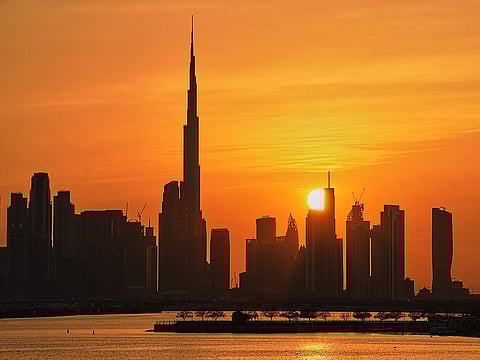
Dubai: Regional geopolitical tensions often raise concerns about economic stability and capital flows. Dubai’s property market has repeatedly demonstrated that uncertainty elsewhere can reinforce the emirate’s position as a destination for global capital.
Recent market activity suggests that pattern continues to hold. Developers, brokers and analysts say investor interest remains steady even as geopolitical tensions dominate headlines across the region.
Transaction volumes, investor enquiries and major deals continue to move through the market, particularly in prime locations and luxury developments.
Built in resilience
Dubai’s property sector has navigated several cycles of global and regional disruption during the past two decades. Each downturn has eventually been followed by a recovery that pushed the market beyond its previous peak.
Stay updated: Get the latest faster by downloading the Gulf News app - it's completely free. Click here for Apple or here for Android. You can also find it on the Huawei AppGallery.
Firas Al Msaddi, chief executive of fäm Properties, says the city’s track record plays a major role in shaping investor confidence today.
“I launched my company in Dubai in 2009 amid the global financial crisis, and have seen the market negotiate various geopolitical events since then,” he said.
“Every single downturn in Dubai’s real estate history has been followed by a recovery that saw the market surpass the previous peak.”
Past market data support that pattern. The period following the global financial crisis produced a recovery that culminated in strong price growth by 2014. A correction between 2015 and 2019 eventually gave way to another rally that accelerated during the post-pandemic recovery.
Sales value in Dubai’s property market rose from Dh71.5 billion in 2020 to Dh686.8 billion in 2025, while prices climbed about 60% and transaction volumes increased sixfold, according to market data compiled on DXBinteract.
This moment is another test of Dubai’s resilience, and Dubai is well-equipped to pass the test again. Over 70% of transactions are now end-user driven, not speculative. The buyer base is globally diversified, mortgage activity has doubled in four years, and the regulatory environment has matured.

Short-term sentiment may fluctuate during geopolitical events, yet the longer trend has consistently been upward.
Safe-haven demand
Dubai’s appeal during uncertain periods rests on several structural advantages. Investors often highlight the emirate’s regulatory framework, political stability and diversified economy.
Tauseef Khan, founder and chairman of Dugasta Properties, said demand often concentrates around quality developments when uncertainty rises.
“Historically, Dubai’s real estate market has shown resilience during periods of regional geopolitical tension,” he said.
“While short-term caution may reduce speculative activity, core demand from both regional and international investors often remains steady, particularly for prime and well-located assets.”
Developers report that projects positioned around infrastructure corridors or established residential hubs continue to attract buyers.
“Transactions tend to concentrate on high-quality developments that offer long-term value and income stability,” Khan said.
Strong governance and investor protection measures also support the market’s appeal. Dubai’s real estate regulatory system has evolved considerably over the past decade, strengthening oversight of escrow accounts, developer licensing and project delivery standards.
Investors often point to these institutional factors when allocating capital during periods of global uncertainty.
Oil prices and macro signals
Another factor shaping sentiment is the region’s macroeconomic backdrop. Rising oil prices often support government spending and liquidity across Gulf economies.
Abdullah Alajaji, founder and chief executive of Driven, Forbes Global Properties, said recent market volatility appears tied to geopolitical events rather than deeper structural issues.
“Recent volatility in oil prices and global markets is likely to be cyclical rather than structural, largely reflecting current geopolitical escalation,” he said.
The UAE’s financial position provides additional stability. S&P reaffirmed the country’s AA/A-1+ sovereign credit rating with a stable outlook earlier this month, highlighting strong fiscal buffers and consolidated net assets equivalent to 184% of GDP.
Dubai’s economy is also far more diversified than in earlier cycles. Non-oil sectors now account for roughly three-quarters of the country’s economic output, reducing the direct link between oil prices and property demand.
“Investor appetite tends to track broader macroeconomic stability and capital availability rather than oil price movements alone,” Alajaji said.
Ultra-prime confidence
One of the most striking signals of investor confidence in recent weeks has come from the ultra-prime segment of the market.
Geopolitical developments can initially introduce a degree of caution among investors, particularly in the speculative segment of the market. However, over time, they often reinforce Dubai’s position as a stable investment destination within the region.

Several high-value property transactions have reportedly closed without significant price discounts despite the uncertain geopolitical backdrop.
Khan said these deals illustrate the strength of investor conviction in Dubai’s long-term prospects.
“The closure of high-value deals at full price shows continued confidence in Dubai’s real estate fundamentals, even through regional uncertainty,” he said.
Developers continue to prepare new launches to meet demand in the luxury segment. Large-ticket property purchases in Dubai are increasingly made by cash buyers rather than heavily leveraged investors. Al Msaddi said that structural change has made the market less vulnerable to sudden downturns.
“Last year there were 129 villa transactions above Dh40 million totalling Dh11.5 billion,” he said. “Only around 55 were mortgaged.”
Strong cash participation helps stabilise prices during periods of global financial volatility.
Shifting investor mix
Buyer composition also reflects the market’s growing maturity. Domestic investors and UAE residents remain highly active participants due to their familiarity with the local property landscape.
International capital continues to flow into the market, although some investors are adopting a more selective approach.
Alajaji said cross-border investment remains geographically diverse, particularly from Asia, Eastern Europe and Africa.
“International buyer activity continues, though flows are more selective and geographically segmented,” he said.
Transactional evidence to date across the prime and ultra-prime segments does not indicate material price dislocation since the onset of the current tensions. While opportunistic investors are actively screening for assets trading below intrinsic value, broad-based repricing has not been evidenced in current transaction data at this end of the market.

Institutional investors and large private capital groups also remain engaged, focusing on assets that generate reliable income.
These investors tend to follow long-term allocation strategies rather than reacting to short-term geopolitical developments.
Resilient segments
Market resilience is not evenly distributed across all property segments. Analysts say luxury homes and prime residential developments are likely to remain the most stable during periods of geopolitical tension.
These properties often attract buyers with significant cash reserves and lower reliance on mortgage financing. Prime commercial assets with strong tenant covenants and long-term lease structures may also retain value.
Mid-market housing segments are typically more sensitive to shifts in sentiment, particularly if uncertainty persists and buyers adopt a more cautious approach. Alajaji said any slowdown in these segments would likely represent moderation rather than a sharp correction.
Long-term perspective
Experts caution that it is still too early to measure the full impact of current geopolitical developments on transaction volumes.
Real estate transaction data often reflects sentiment with a lag of several weeks.
“Less than two weeks into the current conflict, it’s too early to give an overall assessment,” Al Msaddi said.
“In real estate, transaction data takes 45 to 90 days to fully reflect actual sentiment from buyers, sellers and developers alike.”
Current activity suggests the market remains balanced. Buyers are carefully evaluating opportunities while sellers remain firm on pricing.
“Buyer demand is steady across most price ranges,” Al Msaddi said. “Sellers are being patient, buyers are being selective but committed, and that balance is holding.”
Dubai’s property sector has repeatedly demonstrated an ability to absorb external shocks while maintaining long-term growth momentum. That track record continues to shape investor expectations during the latest period of geopolitical uncertainty.