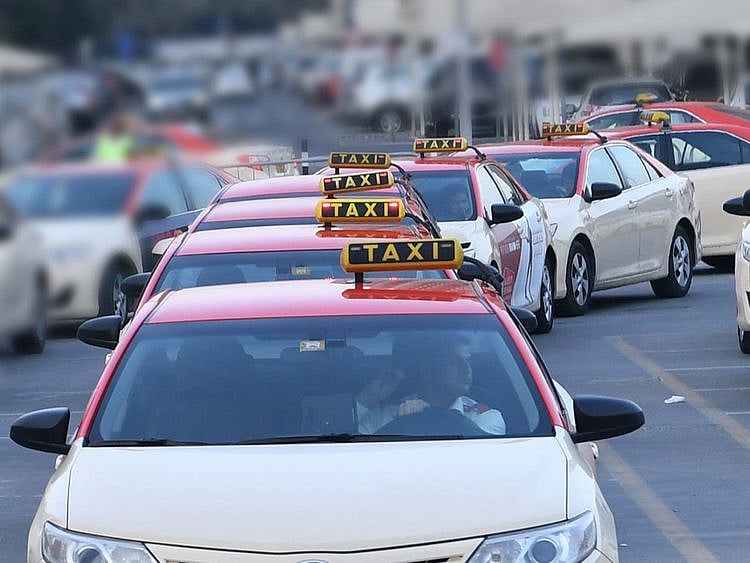
Dubai: Dubai Taxi Company reported lower first-quarter revenue and profit after regional uncertainty in March reduced trip volumes across its taxi and limousine businesses, interrupting a strong start to the year driven by fleet expansion and steady mobility demand.
The company said revenue fell 6% year on year to Dh551.1 million in the three months to March 31, 2026, while EBITDA declined 22% to Dh120.7 million. Net profit dropped 39% to Dh50.7 million, with the margin falling to 9% from 14% a year earlier.
Get updated faster and for FREE: Download the Gulf News app now - simply click here.
The March drag followed a stronger January and February, when revenue rose 10% year on year, EBITDA increased 17% and net profit grew 25%. The contrast shows how quickly transport demand in Dubai can react when tourism flows, airport movements and working patterns change during periods of regional uncertainty.
March disruption hits core trips
Dubai Taxi’s main taxi business generated Dh455.3 million in revenue during the quarter, down 12% from a year earlier, mainly due to lower trip volumes in March. During January and February, however, taxi revenue rose 5% year on year, supported by fleet expansion and strong vehicle utilisation.
The limousine segment was also hit, with revenue falling 15% to Dh29.2 million, largely due to reduced airport operations. The bus business performed better, with revenue rising 7% to Dh33.7 million, while the delivery bike segment remained the fastest-growing unit, with revenue jumping 61% to Dh26.6 million.
Across the taxi and limousine segments, Dubai Taxi completed 11 million trips in Q1, down 14% year on year. In January and February alone, trips were broadly flat at 8.5 million, showing that the weakness was concentrated in March.
Mansoor Rahma Alfalasi, Group CEO of Dubai Taxi Company, said the business remained operational through the disruption while continuing to serve customers across its verticals.
“DTC delivered a resilient performance in the first quarter, building on the strong momentum achieved in 2025. We continued to expand our fleet, invest in digital capabilities and drive efficiencies through ongoing optimization initiatives. Demand in January and February remained robust across our core segments with positive revenue and EBITDA growth, reflecting the strength of our market position and the structural drivers underpinning our growth strategy,” Alfalasi said.
Fleet expansion continues
Dubai Taxi’s operational fleet grew 16% year on year to 11,417 vehicles by the end of March. Its taxi fleet stood at 6,217 vehicles, including 594 fully electric vehicles, reflecting its push to build a cleaner fleet following an EV charging agreement signed with DEWA in 2025.
The company has continued to expand capacity despite the softer March performance. After the quarter closed, Dubai Taxi acquired 600 new taxi licence plates through the latest Roads and Transport Authority auction, lifting its market share to 47%. The new vehicles will take its taxi fleet to 6,817, with the rollout due to begin in July 2026.
The expansion comes at a time when Dubai’s population growth, tourism activity and transport infrastructure investment are expected to support long-term demand for mobility services.
E-hailing and driverless taxis move forward
Dubai Taxi is also pushing deeper into app-based and autonomous mobility. Taxi and limousine e-hailing trips increased 9% year on year to 5 million in Q1 across all platforms, supported by the company’s partnership with Bolt.
During the quarter, Dubai Taxi and Bolt also partnered with National Taxi to bring 1,823 National Taxi vehicles onto the Bolt platform, widening service coverage in Dubai. The agreement follows a separate alliance with Kabi in 2025.
The company has also launched fully driverless commercial ride-hailing services in Dubai with Baidu’s Apollo Go platform. The initial rollout covers 50 vehicles, with plans to expand to more than 1,000 driverless vehicles in phases. The launch supports Dubai’s target of moving 25% of all journeys to autonomous transport by 2030.
Balance sheet remains steady
Dubai Taxi ended March with cash and cash equivalents of Dh358 million, including wakala deposits, and a net debt-to-EBITDA ratio of 1.0x.
Shareholders approved a final cash dividend of Dh142 million for the second half of 2025, equal to 5.68 fils per share. That brought total dividends for 2025 to Dh302.7 million, or 12.11 fils per share, up 7.5% from 2024. The payment was distributed in April.
Alfalasi said the company is still watching regional conditions, while remaining positive on Dubai’s long-term growth base.
“Looking ahead, we continue to monitor the regional environment closely however we remain confident in Dubai’s strong long-term macroeconomic fundamentals, supported by ongoing urbanization, population growth and continued investment in transport infrastructure across the emirate,” he said.

Sign up for the Daily Briefing
Get the latest news and updates straight to your inbox
Network Links
GN StoreDownload our app
© Al Nisr Publishing LLC 2026. All rights reserved.