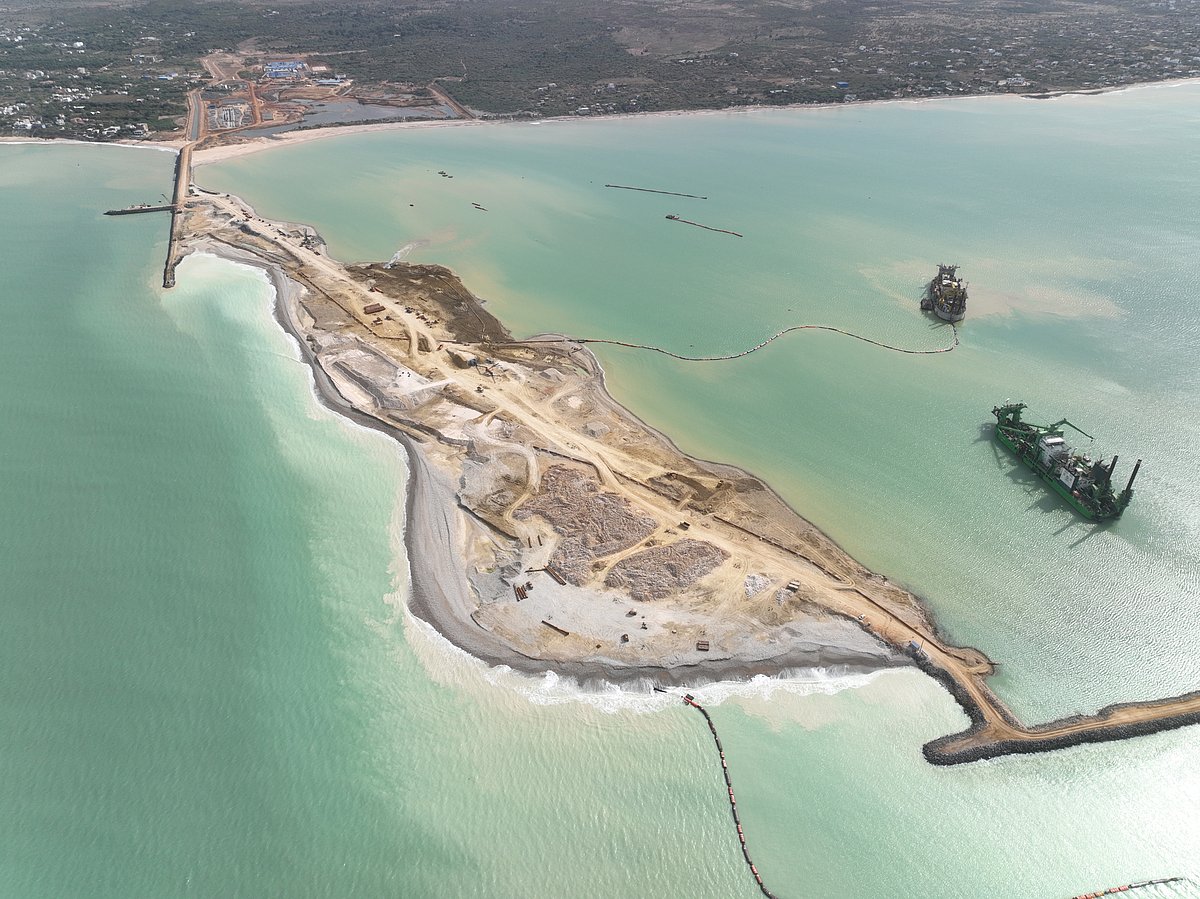
Dubai: DP World has completed major dredging work at Senegal’s Port of Ndayane 13 months ahead of schedule, allowing construction of the quay and other marine infrastructure to begin earlier than planned.
The $1.2 billion project is due to be completed in 2028 and will become Senegal’s main deep-water container gateway, expanding the country’s trade capacity and strengthening its position in West African logistics.
Get updated faster and for FREE: Download the Gulf News app now - simply click here.
More than 1,000 people are currently employed directly on the site, with construction now moving into the next phase of marine and civil works.
Major dredging phase completed
The work covered a five-kilometre navigation channel, a turning basin and a berth pocket designed to receive the world’s largest container ships.
Two large cutter suction dredgers were used to remove material from the site, more than 95 per cent of which was solid rock.
Some of the rock formations had compressive strength exceeding 100 megapascals, making them considerably harder than the material usually encountered during major port construction.
The dredging was completed without blasting, reducing the environmental impact while allowing work to continue safely.
Mohammed Akoojee, CEO and Managing Director for Africa at DP World, said the early completion would bring forward the next stage of construction.
“Completing major dredging works 13 months ahead of schedule is a significant milestone for the Port of Ndayane and a testament to the expertise, commitment and collaboration of everyone involved in delivering this project safely.”
Port designed for larger vessels
The completed access channel has been dredged to a depth of 20 metres, while the project also includes a 600-metre turning basin and an 875-metre berth pocket.
The berth will be capable of handling two Triple E-class container vessels at the same time.
Capital dredging was initially expected to be completed in September 2027, but early mobilisation in December 2024 allowed the work to finish well ahead of schedule.
Jobs and access to goods
DP World said the project would support 2.3 million jobs through trade and improve access to critical goods and staples for 7.8 million people.
The company also expects the port to improve opportunities for local businesses and support skills development in Senegal.
The project currently employs 1,043 people on site and has maintained environmental monitoring and engagement with local stakeholders throughout construction.
Dakar terminal nearing its limits
DP World has operated the Port of Dakar terminal since 2008 and has invested about $340 million in modernising the facility.
Container volumes increased from 265,000 twenty-foot equivalent units in 2008 to 850,000 units in 2025.
Vessel waiting times also fell from 35 hours to almost zero during that period.
Also Read
DP World implements mitigation measures to keep cargo flows movingDP World: A key engine behind Dubai's economic riseNMDC adds Dh618 million dredger to expand fleet and clear project backlogDP World opens Jebel Ali–Berbera route to boost Gulf–East Africa tradeThe Port of Dakar is now operating close to its physical capacity, prompting DP World and the Senegalese government to develop Ndayane as the country’s next major gateway for international trade.
The new port is located about 50 kilometres from Dakar and has been designed to support future expansion while improving links between the port and inland logistics networks.
The Port of Dakar is currently the highest-ranked port in Sub-Saharan Africa for efficiency in the World Bank’s Container Port Performance Index.

Sign up for the Daily Briefing
Get the latest news and updates straight to your inbox
Network Links
GN StoreDownload our app
© Al Nisr Publishing LLC 2026. All rights reserved.