Will UAE petrol prices rise after Venezuela crisis? What drivers should expect next
Oil markets stay calm for now as experts say surplus, not geopolitics, sets fuel prices
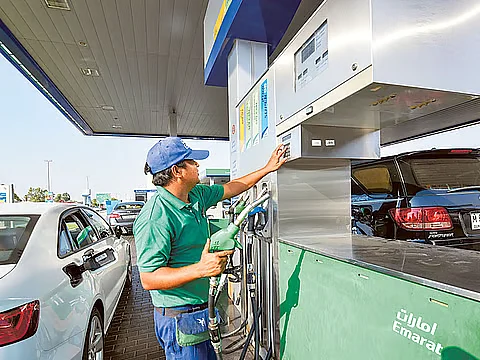
Dubai: UAE motorists are unlikely to see an immediate jump in petrol and diesel prices following the political upheaval in Venezuela, with analysts pointing to a well-supplied global oil market that is limiting the impact of geopolitical shocks at the pump.
According to Vijay Valecha, chief investment officer at Century Financial, geopolitics often creates short-term volatility rather than lasting price pressure. “During periods of geopolitical tension, oil typically shows a risk premium, but this is usually sentiment-driven and short-lived,” he said. “At the moment, global markets are already oversupplied, which is why traders are paying less attention to geopolitical headlines and more to surplus risks.”
Why the UAE pump price is insulated
Fuel prices in the UAE are not set in isolation. The pricing committee bases its monthly decision on global crude benchmarks, refined fuel prices, transport and distribution costs, and currency factors. An average of these inputs over the month determines retail prices.
Valecha noted that despite the disruption in Venezuela, price signals remain subdued. “Technically, Brent has been stable since Monday. That suggests no major impact on UAE fuel prices so far,” he said. “In fact, if geopolitical risks persist, the longer-term impact is more likely to be on the downside because the oil balance is skewed toward surplus.”
This helps explain why the sharp spikes seen in earlier geopolitical crises have not materialised this time. During previous flashpoints, oil prices jumped as much as 7% in early trading sessions. By contrast, WTI crude rose just under 2% on January 5 before erasing those gains the following day.
Venezuela matters less than headlines suggest
Despite holding the world’s largest proven oil reserves, Venezuela currently contributes less than 1% to global oil supply. Production has fallen sharply following the US embargo and tanker blockade, with output reportedly dropping from around 1.1 million barrels per day late last year to below 500,000 barrels per day.
Ole Hansen, head of commodity strategy at Saxo Bank, said this reality limits the country’s immediate influence on oil markets. “As long as Venezuelan output remains at these relatively low levels, I do not see it having much impact on OPEC,” he said. “Rebuilding the sector would require investments of around $180 billion and would take many years.”
Hansen added that even if Venezuelan barrels eventually return, low-cost producers such as Saudi Arabia are unlikely to be threatened. “Additional supply could actually help prevent future price spikes once the current glut disappears,” he said, noting that excessively high prices risk accelerating the shift toward alternative energy.
Short-term disruption, long-term optionality
For now, the Venezuelan crisis has removed barrels from the market rather than added them. PDVSA has been forced to cut production as storage fills and exports stall. Several joint ventures, including those involving Chevron and Chinese partners, have been affected.
Yet analysts stress that this disruption is manageable. OPEC+ spare capacity, rising non-OPEC supply and muted demand growth continue to anchor prices. This has reinforced the broader narrative of an oversupplied market heading into 2026.
From a market perspective, Venezuela represents future optionality rather than imminent supply. Any meaningful recovery would require political stability, sanctions relief, legal clarity and sustained high prices to justify multibillion-dollar investment. That process would unfold over years, not months.
Nannette Hechler-Fayd’herbe, CIO for EMEA at Lombard Odier Group, said consumers should not expect immediate effects at the pump. “We foresee little immediate impact and keep our 12-month forecast for Brent unchanged at $63 per barrel,” she said. “Over the next one to two years, oil prices could even head lower.”
She added that while geopolitics can cause short-lived price spikes, deeper forces shape fuel costs over time. “Structural changes such as electrification, renewables and global demand trends have a more durable impact than geopolitical risk.”
Bigger shifts beneath the surface
Beyond fuel prices, the situation highlights how global oil trade flows may become more fragmented. Lombard Odier expects American production to increasingly serve US demand, OPEC+ to supply China, and Europe to draw from a mix of Middle Eastern and Atlantic Basin sources.
Markets may also be underestimating security risks to energy infrastructure as regional conflicts multiply. “An increase in regional interventions raises risks for transport and energy assets,” Hechler-Fayd’herbe said, adding that defence spending is likely to remain structurally higher as a result.
Also Read
US-Venezuela tensions are skyrocketing: So why is oil so cheap?Video: US seizes Russia-linked oil tanker chased to North Atlantic, second Venezuela ship'A wise choice': Trump says Venezuela to purchase only American-made productsChevron to Exxon: These oil and energy stocks gained up to 16% after Venezuela crisisUAE drivers, for now, are shielded from sharp fuel price swings. The oil market remains focused on surplus supply, weak demand growth and OPEC+ discipline rather than a single-country shock. Venezuela’s turmoil may influence sentiment, but without rapid production recovery, its impact on prices remains limited.
Unless the crisis escalates significantly or spills into broader supply routes, analysts say petrol and diesel prices in the UAE are more likely to move with global demand trends than geopolitical headlines.

Sign up for the Daily Briefing
Get the latest news and updates straight to your inbox
Network Links
GN StoreDownload our app
© Al Nisr Publishing LLC 2026. All rights reserved.