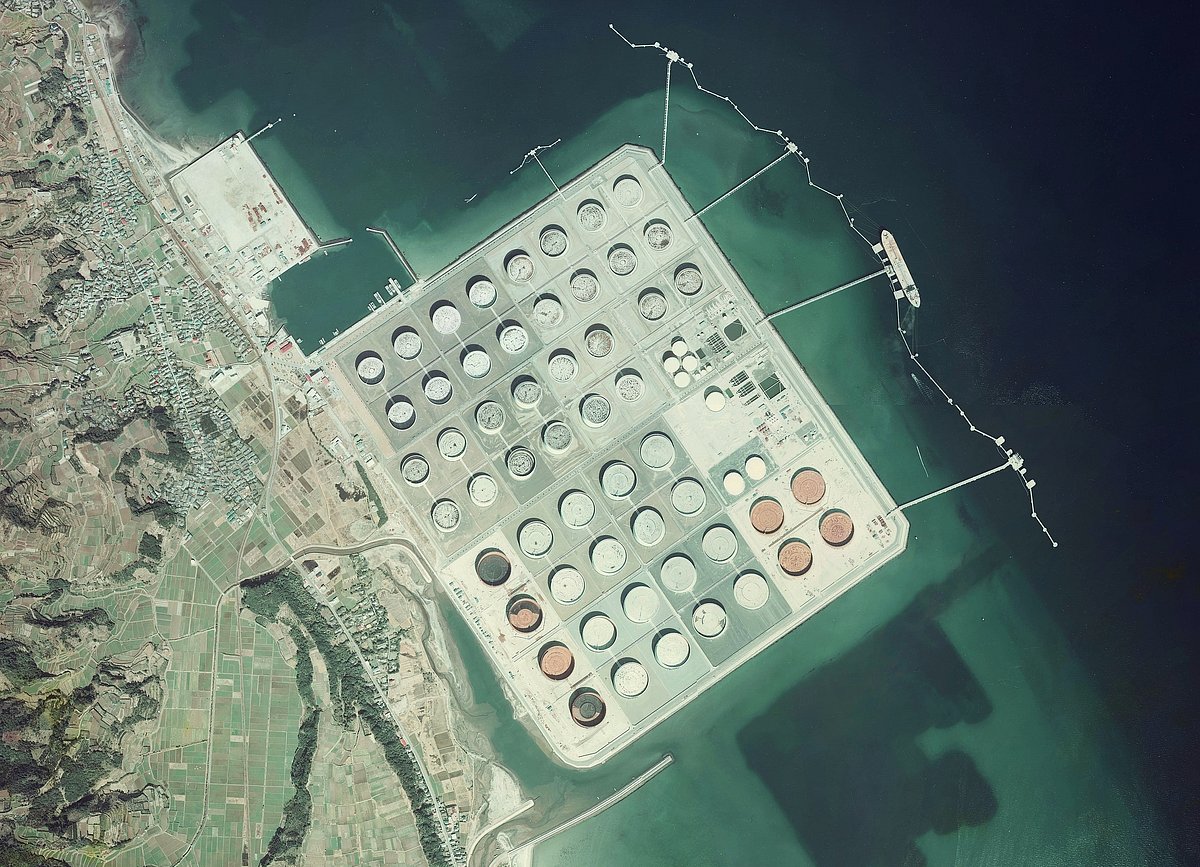
The US Strategic Petroleum Reserve (SPR) is the world’s largest supply of emergency crude oil, with a storage capacity of 714 million barrels in four underground salt caverns along the Gulf Coast, as per the US Department of Energy.
Oil is the force that turns the wheels of our present age.
This treasure beneath the earth — called by many “black gold” — moves ships across oceans, lifts aircraft into the sky, and carries the daily commerce of nations upon its unseen tide.
Yet it is also among the most restless of commodities, quick to rise, quick to fall, and most unsettled when the world itself grows uncertain.
As tensions in the Middle East press the oil markets toward perilous heights, three of the world’s great economic powers — the United States, Japan and Europe — find themselves relying upon provisions long prepared for such an hour.
Quietly and without spectacle, they maintain vast emergency oil reserves, gathered not for times of plenty but for moments of strain.
These reserves stand as a modern safeguard against the sudden want of energy that could halt industry, darken cities, and unsettle the peace of nations.
Here's the lowdown on these petroleum reserves:
United States
The United States maintains the world’s largest emergency crude reserve through the Strategic Petroleum Reserve (SPR). As of March 2026, the stockpile holds roughly 415 million barrels of crude oil, stored deep underground in giant salt caverns along the Gulf Coast in Texas and Louisiana.
At full capacity, the system can store about 714 million barrels.
Washington is now weighing whether to tap those reserves as oil prices surge amid the conflict with Iran.
Crude prices briefly approached $120 per barrel on Monday, prompting urgent consultations among major economies. Then, both West Texas Intermedia (WTI), a key US price benchmark made a deep price dive on Tuesday, alongside Brent, the British benchmark.
This came as officials discussed a possible coordinated release of emergency reserves with partners in the International Energy Agency (IEA) and the Group of Seven (G7), a move designed to stabilise markets and reassure traders that supply shortages can be managed.
What is the SPR?
The SPR was created in the aftermath of the 1973 Oil Crisis, when an Arab oil embargo exposed the vulnerability of Western economies to supply disruptions. Today the reserve remains a central pillar of US energy security.
Japan's strategic oil stockpile
Across the Pacific, Japan maintains one of the world’s most extensive petroleum reserve systems.
Japan’s heavy dependence on imported fuel makes such reserves critical.
Unlike the US, Japan’s oil security relies on a combination of government stockpiles, industry reserves and joint storage programs with oil-producing countries.
Together, these reserves amount to roughly 254 days of oil imports. Some sources cite a "joint oil storage" (public and private) data with a much lower number of 204 days, or about 440 million barrels.
Government strategic reserves alone account for about 146 days, while additional oil held by private industry and cooperative storage programs brings the total to one of the highest coverage levels in the world.
Tokyo is now considering releasing part of these reserves as the conflict threatens shipping through the Strait of Hormuz, the narrow Gulf chokepoint through which roughly 70% of Japan’s oil imports travel.
Officials are evaluating whether any release should be coordinated with allies such as the United States and other members of the International Energy Agency.
The country imports around 95% of its crude oil from the Middle East, leaving its economy particularly vulnerable to disruptions in Gulf shipping lanes.
Europes' petroleum stockpile
Europe also holds large strategic stockpiles. Under rules coordinated by the International Energy Agency (IEA), European countries collectively maintain emergency petroleum reserves equivalent to at least 90 days of net oil imports.
Many members of the European Union (EU) maintain even larger buffers through national strategic reserves and mandatory industry stockholding systems designed to cushion supply shocks during geopolitical crises.
The emerging picture highlights a key contrast in global energy security.
As oil markets react to the Middle East war, those strategic stockpiles may soon become the world’s most important tool for preventing an energy shock from spiraling into a full-blown economic crisis.
Strategic oil stockpiles: US, Japan, Europe
Following are the strategic petroleum reserves of the US, Europe and Japan. Note: Europe’s reserves are distributed across many countries, coordinated under the International Energy Agency (IEA) and European Union (EU) rules requiring at least 90 days of net imports in emergency stockpiles.
| Country / Region | Reserve size | Coverage | Latest policy move |
|---|---|---|---|
| US | ~415 M barrels in the Strategic Petroleum Reserve | Largest national emergency oil reserve globally | Considering release to stabilise prices amid Middle East conflict |
| EU + IEA | ~1.1–1.2 B barrels combined across member states | Minimum 90 days of net imports mandated across Europe | Monitoring markets; coordinated release possible under IEA emergency system |
| Japan | Reserves cover ~146 days; total including private stocks ~254 days of imports | One of the largest reserves among oil-importing nations | Considering partial release due to risk to tanker traffic in the Strait of Hormuz |
Sign up for the Daily Briefing
Get the latest news and updates straight to your inbox
Network Links
GN StoreAbout Gulf NewsTerms & ConditionsReach by GNSitemapContact usPrivacy PolicyGN FocusHave your sayWork with usAdvertise with usGulf News epaperPrinting Services
Download our app
© Al Nisr Publishing LLC 2026. All rights reserved.