Trump’s own Iran hawks fear he’s about to cave
GOP allies who backed war now fear Trump may settle for deal that leaves Tehran stronger
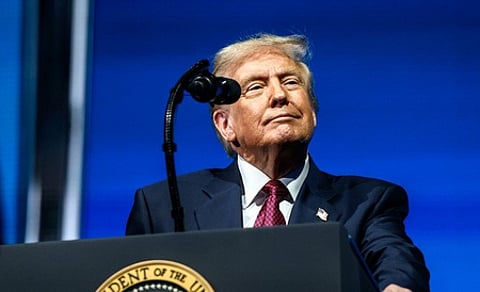
Dubai: Just weeks after demanding Iran’s “UNCONDITIONAL SURRENDER,” President Donald Trump is now facing a very different political problem: Some of his own fiercest Iran hawks fear he is preparing to settle for a deal they believe leaves Tehran stronger, richer and still dangerous.
As reports emerge of a possible US-Iran agreement to gradually end the war, reopen the Strait of Hormuz and restart negotiations over Iran’s nuclear programme, alarm is spreading across the Republican national security establishment that once strongly backed Trump’s military campaign.
What began as a war aimed at crushing Iran’s strategic power now risks becoming a messy compromise that critics say could hand Tehran leverage it never had before the conflict.
The shift in mood reflects a growing reality confronting the White House after nearly three months of war: Trump appears increasingly reluctant to restart major military operations against Iran, despite repeatedly threatening to do so.
Last month, Trump insisted on social media that he was in no rush to end the conflict.
“I have all the time in the World,” he wrote. “But Iran doesn’t — The clock is ticking!”
Since then, however, several of Trump’s own deadlines and ultimatums have come and gone without military escalation. Instead, Washington and Tehran have edged toward indirect negotiations aimed at freezing the conflict before economic and political pressures worsen further.
Fractures in coalition
That apparent pivot toward diplomacy is now exposing fractures inside Trump’s coalition.
According to details reported by CNN and other US media outlets, the emerging framework under discussion would halt hostilities while gradually reopening the Strait of Hormuz and easing the US naval blockade around Iranian-linked shipping.
The proposal would also reportedly allow Iran to resume oil exports and regain access to some frozen overseas assets, while committing Tehran to future negotiations over its highly enriched uranium stockpile and nuclear activities.
But many of Trump’s allies see the reported contours of the deal as falling dramatically short of the administration’s original goals.
At various points during the conflict, Trump officials demanded not only an end to Iran’s nuclear ambitions, but also limits on its missile programme, the dismantling of its regional proxy network and the rollback of its strategic influence across the Middle East.
Now, critics fear the administration is backing away from those objectives.
Ill-advised to pursue a deal
Senator Roger Wicker warned that Trump was “being ill-advised to pursue a deal that would not be worth the paper it is written on,” while also cautioning that avoiding renewed military action risked creating “a perception of weakness.”
Senator Lindsey Graham argued that any arrangement allowing Iran to retain long-term leverage over the Strait of Hormuz would become “a nightmare for Israel” and fundamentally shift the regional balance of power.
Senator Ted Cruz said he was “deeply concerned” by reports surrounding the negotiations, warning that allowing Iran to retain enrichment capabilities while regaining billions in assets would be “a disastrous mistake.”
Even former senior Trump officials joined the backlash.
Former national security adviser John Bolton warned that “the ayatollahs will have won a significant victory,” while former Secretary of State Mike Pompeo compared the proposed arrangement to the Obama-era nuclear deal Trump once denounced and withdrew from.
Pompeo accused the administration of effectively paying Iran “to build a weapons programme and terrorize the world.”
The unusually public criticism has become intense enough that Trump advisers have started openly lashing out at fellow Republicans and conservative commentators questioning the negotiations.
White House spokesman Steven Cheung dismissed Pompeo’s criticism in blunt terms, while Trump adviser Alex Bruesewitz accused Cruz of undermining the president.
Secretary of State Marco Rubio has tried to calm the growing backlash, insisting that Trump’s commitment to preventing a nuclear Iran “shouldn’t be questioned by anybody.”
But the political dilemma facing Trump is becoming harder to ignore.
Restarting large-scale military action carries enormous risks, including further spikes in global oil prices, deeper instability around Hormuz and growing voter fatigue ahead of the 2026 midterms. Yet accepting a limited deal risks angering the same Republican hawks who viewed the war as a rare opportunity to permanently weaken Iran’s regional power.
Trump now appears caught between two wings of his political coalition: the anti-interventionist MAGA camp that opposed the war from the beginning, and national security hardliners who fear he may now be losing his nerve before securing a decisive outcome.
For Iran hawks who once saw “Operation Epic Fury” as a chance to reshape the Middle East, the greatest fear is no longer military escalation.
It is that Trump may blink first.


