Closer to peace — or another crisis? 5 unresolved issues haunting the US-Iran deal
From uranium stockpiles to Hormuz control, the toughest issues remain far from settled
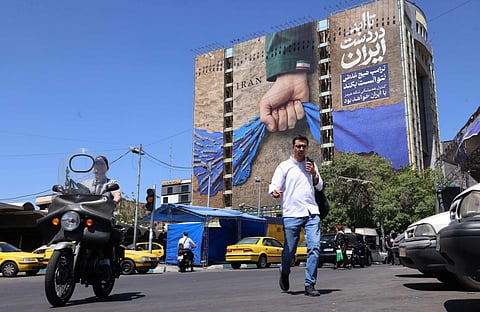
Dubai: The United States and Iran appear closer than they have been in months to a possible agreement that could halt the war in the Middle East and ease tensions around the Strait of Hormuz. But despite optimistic statements from President Donald Trump and signals from Tehran, major questions remain unresolved — and both sides are describing the proposed deal in strikingly different ways.
According to a detailed report by The New York Times, American and Iranian officials are presenting conflicting accounts of what has actually been agreed upon, particularly on Iran’s nuclear programme, the future of the Strait of Hormuz, and sanctions relief.
At the heart of the negotiations are five explosive issues that could determine whether the talks lead to a lasting breakthrough — or collapse into another cycle of confrontation.
Iran’s nuclear programme
The biggest sticking point remains Iran’s nuclear programme and, specifically, what happens to its stockpile of highly enriched uranium.
Trump has repeatedly insisted that Iran must surrender uranium enriched close to weapons-grade levels. According to the International Atomic Energy Agency, Iran currently possesses roughly 970 pounds of uranium enriched to 60 per cent purity, along with nearly 11 tonnes enriched at lower levels.
A US official quoted by the NYT said Washington and Tehran had reached a preliminary understanding under which Iran would eventually dispose of its highly enriched uranium stockpile, although the mechanism for doing so was still under negotiation.
But Iranian officials pushed back sharply on that claim. Three senior Iranian officials told the newspaper anonymously that no final agreement had been reached on uranium disposal and that all nuclear issues would instead be negotiated over the next 30 to 60 days.
The issue of future enrichment also remains unresolved. The US official said the draft arrangement does not currently require Iran to halt uranium enrichment, with that issue deferred to later negotiations. Secretary of State Marco Rubio acknowledged that a broader agreement could take months, suggesting Washington may temporarily accept an interim arrangement rather than demand immediate dismantlement.
That ambiguity is already fuelling doubts about how durable any agreement could be.
Control of the Strait of Hormuz
Another major fault line is the Strait of Hormuz, the strategic waterway through which roughly one-fifth of the world’s oil and gas supplies normally pass.
Before the war began on February 28, commercial shipping moved freely through the strait. But after the conflict erupted, Iran effectively disrupted traffic through attacks and restrictions on shipping, while the United States responded with a naval blockade targeting Iranian ports and Iran-linked vessels.
Now, the question is whether both sides are willing to roll back those measures.
Iranian officials told the NYT that Tehran would allow ships to pass through Hormuz without charging transit fees — at least temporarily — if Washington lifts its blockade.
Trump, however, signaled the blockade would remain in place until a final agreement is reached.
“The Blockade will remain in full force and effect until an agreement is reached,” he wrote on social media Sunday.
The dispute is significant because any Iranian attempt to formalise or monetise control over Hormuz could trigger legal and geopolitical backlash. International maritime law generally prohibits states from charging for safe passage through international waterways.
Frozen Iranian assets
Iran is also pressing for access to billions of dollars in frozen overseas assets locked up under sanctions.
Iranian officials claim the proposed arrangement could eventually unlock about $25 billion in frozen funds.
But the American position appears far more cautious.
The US official quoted by the NYT said Washington has not yet agreed to release any frozen assets, although it may consider doing so later if Iran complies with nuclear commitments.
The issue is politically sensitive for Trump, who has repeatedly criticised former President Barack Obama for releasing Iranian funds under the 2015 nuclear agreement — the same accord Trump withdrew from in 2018.
Iran-backed proxies
Another unresolved issue is Iran’s regional network of armed allies, including Hezbollah in Lebanon.
Iranian officials reportedly said the proposed arrangement would halt fighting “on all fronts,” including Lebanon, suggesting Tehran could restrain allied militias as part of a broader ceasefire framework.
But US officials have not publicly confirmed that Iran-backed groups are part of the negotiations.
Israeli Prime Minister Benjamin Netanyahu reinforced that uncertainty Sunday, saying Trump had reaffirmed Israel’s right to defend itself “on every front, including Lebanon.”
That suggests Israel may continue military operations regardless of any US-Iran understanding.
Iran’s missiles
One of Israel’s biggest concerns — Iran’s ballistic missile arsenal — also appears absent from the current framework.
Earlier in the war, the Trump administration had demanded limits on Iran’s missile capabilities. But the US official told the NYT that missiles are not part of the draft deal now under discussion.
That omission could become a major source of friction with Israel and Gulf allies, who view Iran’s missiles as one of the region’s biggest security threats.
Analysts warn that even if a ceasefire holds and Hormuz reopens, unresolved disputes over missiles and enrichment could leave the region vulnerable to another confrontation in the months ahead.


