Researchers conduct magnetic separation of flotation tailings: This process, called magnetic separation of flotation tailings, is a sequential laboratory process where leftover residue (tailings) from chemical froth flotation is exposed to a magnetic field to pull out iron-rich magnetic minerals like magnetite, thereby concentrating the remaining non-magnetic fraction to test for and upgrade uranium content.
Uranium discovered in the Philippines: Researchers use two-stage process to concentrate uranium, what's next
Potential uranium resource found in Camarines Norte as nuclear power plans
Last updated:
4 MIN READ
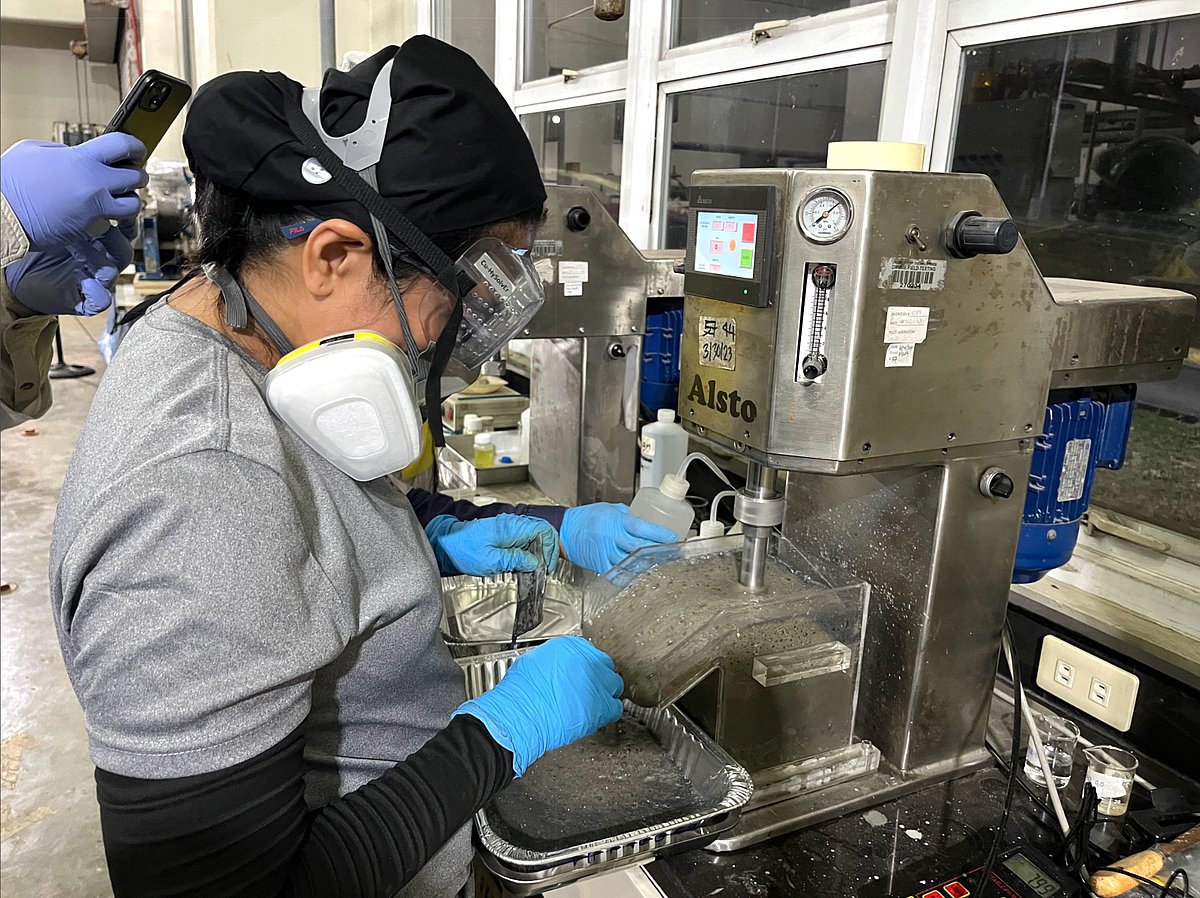
A Filipino scientist at the Philippine Nuclear Research Institute (PNRI) conducts a froth flotation process of the ground mineralised sample to test for potential uranium deposits from samples taken in Camarines Norte province, about 350 km south-east of the capital Manila.
Philippine Nuclear Research Institute | PNRI
Manila: Filipino scientists successfully concentrated uranium from mineral samples, a university has reported in a scientific journal.
The latest research has identified uranium-bearing minerals in surface samples in Larap in Jose Panganiban, Camarines Norte, which has a long history of mineral exploration.
Filipino scientists have identified uranium-bearing minerals in the gold-rich province about 350km southeast of Manila, successfully testing a process that increases their uranium concentration.
Potentially, this could open a new route for exploring the country’s domestic uranium resources as the Philippines prepares to introduce nuclear power.
Researchers from the University of the Philippines Diliman (UP Diliman), the Department of Science and Technology–Philippine Nuclear Research Institute (DOST-PNRI) and Japan's Akita University confirmed the presence of uraninite, a uranium-rich mineral, in samples collected from Barangay Bessemer, Larap, Jose Panganiban.
Flotation, magnetic separation
Laboratory experiments showed that the researchers could increase the uranium concentration of the mineral material by combining flotation and magnetic separation, two mineral-processing techniques commonly used in the mining industry.
The process raised the uranium concentration from 244 parts per million (ppm) to 305 ppm, recovering approximately 73% of the uranium in the processed material.
But drilling is needed to establish whether the deposit is "commercially viable".
At a glance
| Location: | Larap, Jose Panganiban, Camarines Norte |
| Main uranium mineral: | Uraninite |
| Initial uranium concentration | 244 ppm |
| Concentration after processing | 305 ppm |
| Uranium recovery | 73% |
| Sample collected | 180 kilograms |
The findings, however, demonstrate laboratory-scale uranium “preconcentration”.
It does not yet prove that the uranium deposit is in commercially viable quantities.
The findings come as the Philippines moves to incorporate nuclear energy into its future power mix, with the Philippine Energy Plan targeting at least 1,200 megawatts of nuclear generating capacity by 2032.
The research could help strengthen the country's scientific capabilities in uranium exploration and mineral processing.
However, scientists stress that further geological surveys and underground drilling are necessary to determine whether Larap contains enough uranium to justify commercial development.
A historic uranium site gets a new scientific look
The Larap–Paracale district has been associated with uranium exploration for decades.
The latest research focused on Bessemer, Larap, where scientists collected 180 kilograms of mineralised material from a zone approximately half a metre wide.
Specialised tests
Using microscopy, X-ray diffraction and elemental analysis, the researchers identified uraninite grains alongside copper-, molybdenum- and iron-bearing minerals.
The original samples contained 244 ppm of uranium, 0.57% copper, 0.49% molybdenum and 13.5% iron.
Identifying the minerals present was essential to determining how uranium could be separated from the other materials.
The researchers used a two-stage process to concentrate the uranium.
First, they applied flotation to separate copper- and molybdenum-bearing sulphide minerals. They then used magnetic separation to remove magnetite, an iron-rich magnetic mineral, leaving a non-magnetic fraction with a higher uranium concentration.
SWITCH ON: Using a digital monitor for their guide, staff at the Philippine Nuclear Research Institute (PNRI) lower the nuclear fuel rods into the core of the nuclear reactor, off Commonwealth Avenue, Diliman, Quezon City in Manila on June 20, 2022. It was the first time in more than 30 years, that the Philippines switched on a nuclear reactor research facility.
How scientists concentrated the uranium
Stage 1: Mineral samples (180 kg of mineralised material collected from Larap) 244 ppm uranium
Stage 2: Flotation (Separates copper- and molybdenum-bearing sulphides)
Stage 3: Magnetic separation (Removes magnetite and concentrates uranium in the non-magnetic fraction)
Laboratory result: Uranium-enriched material 305 ppm (Approximately 73% uranium recovery)
Examination
Microscopic examination after processing showed that some uraninite grains had been separated from the surrounding mineral material, providing further evidence that the method can improve uranium concentration.
However, the resulting material is not yet uranium concentrate, commonly known as “yellowcake”, and is nowhere near being ready for use as nuclear fuel.
Additional processing, including leaching and purification, would be required to produce yellowcake, an intermediate material in the nuclear fuel cycle.
The big question: How much uranium is underground?
Despite the promising laboratory results, the study does not establish the size or commercial potential of the uranium occurrence in Larap.
The researchers examined surface samples, which cannot reveal the full depth, thickness or extent of the mineralised zones beneath the ground.
Determining whether the area contains a potentially economically significant uranium resource will require a much more extensive exploration programme.
This would involve detailed geological mapping, radiometric and geophysical surveys, systematic drilling and laboratory analysis of drill cores.
Such investigations would help establish the three-dimensional extent of the mineralisation and estimate its uranium content.
Even if substantial uranium resources are confirmed, further studies would be necessary to determine whether extraction is economically feasible and can meet environmental, radiological, regulatory and community requirements.
The findings therefore represent an early stage of resource evaluation rather than evidence of a commercially recoverable uranium reserve.
Beyond uranium: Copper, molybdenum and iron
The Larap samples also contained copper, molybdenum and iron, highlighting the possibility of evaluating several minerals within the same geological area.
The researchers' processing method demonstrated how copper- and molybdenum-bearing sulphides could be separated during flotation, while magnetic separation removed iron-rich magnetite and concentrated uranium in the remaining material.
This multi-mineral approach is relevant to the government's push to develop a higher-value domestic minerals industry.
Executive Order No. 122, issued in August 2026, established a national framework for developing the Philippine critical minerals industry, emphasising investment, domestic processing, value addition and downstream manufacturing.
The Larap research could contribute to these efforts by building local expertise in identifying, characterising and processing complex mineral deposits.
The research
Paper: Integrated magnetic separation-flotation process for uranium preconcentration from Cu–Mo sulfidic and magnetite-bearing sample
Institutions: University of the Philippines (UP) Diliman, DOST-PNRI and Akita University, Japan
Funding: DOST Grants-in-Aid Programme, through the NuCycle Programme–NuMER Project.
Research implementation: Undertaken jointly by UP Diliman's Department of Mining, Metallurgical and Materials Engineering and DOST-PNRI.
Published in: SciEnggJ, 2026 Special Issue on Nuclear Science and Technology
Network Links
GN StoreAbout Gulf NewsTerms & ConditionsReach by GNSitemapContact usPrivacy PolicyGN FocusHave your sayWork with usAdvertise with usGulf News epaperPrinting Services
Download our app
© Al Nisr Publishing LLC 2026. All rights reserved.