Filipino tycoon Enrique Razon Jr. has cemented his position as the country's richest individual, according to the latest Forbes ranking. His wealth surged significantly due to the remarkable performance of his shares in global port operator ICTSI, could be further bolstered by his forays into the energy sector.
Meet the Filipino billionaire behind the latest gas find, Malampaya East 1
New gas well places the Philippines in a unique position to diversify its energy mix
Last updated:
7 MIN READ
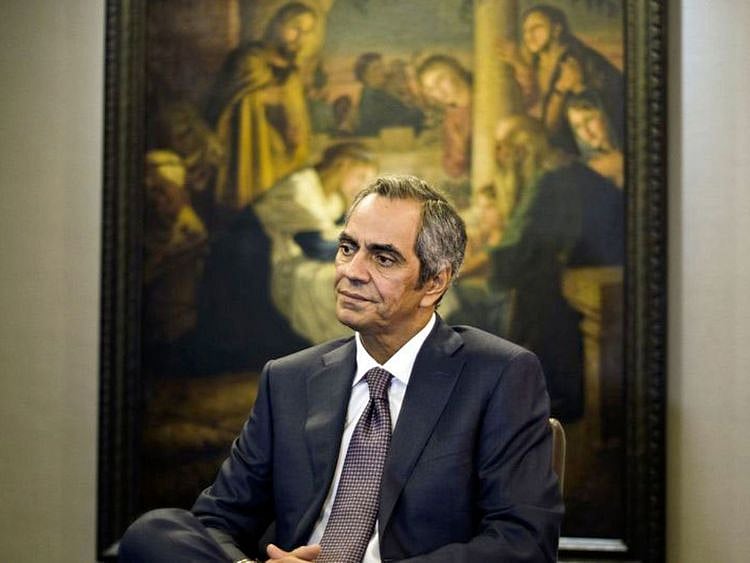
FROM MINIMUM WAGE TO CEO: Enrique Razon Jr, 65, started at age 17 in the family-owned cargo-loading company for minimum wage. Net worth was estimated by Forbes at $14.4 billion as of mid-January 2026 (from $8.1 billion in 2023). He is known as the Philippines’s ports, resorts and infrastructure baron. He has also made known his interest in building small modular nuclear power plants to bolster the southeast Asian nation's energy security.
Bloomberg
Manila: The latest discovery of natural gas at Malampaya East-1, announced on Monday, marks a potentially transformative moment for the Philippines’ energy sector.
Potentially, it could help cut power rates in the Asian nation.
The billionaire behind the new gas find: Enrique "Ricky" K. Razon Jr.
At 65, the tycoon has become a living business legend — but his story began far from boardrooms and balance sheets.
At just 17, he walked away from school and into the grit of the docks, earning minimum wage as a cargo loader in his family’s waterfront operations, hauling goods under the sun and learning the business the hard way.
His journey from a college dropout to the centre of the Malampaya East-1 gas oil find is one of grit, business acumen and a knack for risk-taking.
Razon Jr. (born March 3, 1960) is widely regarded as one of the most influential business figures in the Philippines.
Best known for his leadership of International Container Terminal Services, Inc. (ICTSI, his most recent strategic move into energy and infrastructure — including the Malampaya East-1 drilling project, is done through his Prime Infrastructure group.
Early life and upbringing
Razon was born into a Spanish-Filipino business family long associated with port operations.
His grandfather began a port services business in Manila in 1916. After World War II, his father rebuilt it.
Rather than taking an easy path, Razon embraced hands-on experience from a young age.
College dropout
He briefly attended De La Salle University and studied business, but at 17 years old he left school to work at minimum wage loading cargo in the family’s waterfront operations, mastering the work from the ground up rather than from a desk.
His father assigned him difficult assignments — including long waits at anchorages — to test his resolve.
This formative period instilled in him a relentless work ethic, humility, and deep understanding of port logistics.
Razon’s early career — sweating it out on the docks — grounded his belief that no role was too menial and that success requires both discipline and willingness to learn from the bottom up.
These principles would carry through in how he led his companies and diversified into new sectors.
OIL AND GAS PLATFORM: The Malampaya gas project, which generates over 2 gigawatts for the Luzon mainland (where Manila is), a huge part of the Philippines’ power requirements, is partly controlled by Filipino business tycoon Enrique Razon Jr.
Business empire
International Container Terminal Services, Inc. (ICTSI)
Razon’s major breakthrough came through ICTSI, the port-handling company originally incorporated by his family and partners in 1987 to bid for the Manila International Container Terminal (MICT) concession. Under his leadership, ICTSI not only won the contract in 1988 but also transformed into a global port operator with terminals in more than 30 locations across nearly 20 countries.
ICTSI’s explosive expansion under Razon was shaped by a strategic willingness to take calculated risks, such as entering emerging markets, especially during volatile economic periods and refocusing the business after setbacks like the 1997 Asian financial crisis.
His meticulous operational focus helped ICTSI grow from a local port operator into a major global logistics player.
Personal worth: $14.4 billion
By mid-January 2026, Razon’s net worth was estimated at about $14.4 billion (realtime Forbes data), placing him among the richest individuals in the Philippines. A significant portion of this wealth is tied to his ICTSI holdings and other industrial, infrastructure, and utilities assets.
While the ports business anchored his fortune, Razon did not confine himself to a single industry.
Business interests
International Container Terminal Services, Inc (ICTSI), is a global port operator, and is also the Philippines' largest multinational and transnational company.
ICTSI, chaired by Filipino tycoon Ricky Razon Jr operates in 20 countries across 6 continents, managing 34 terminals, including Manila and Subic. It also runs ports in otherAsian countries (Indonesia, Pakistan), Middle East (Iraq, Syria), Europe (Croatia, Poland, Georgia), Africa (Madagascar, Cameroon, DRC, Nigeria), and the Americas (Brazil, Mexico, Colombia, Ecuador). Their portfolio covers gateway terminals, inland container depots, and multipurpose terminals, focusing on development, operation, and management.
ICTSI has established operations in both developed and emerging market economies, and is ranked the eighth-largest container terminal operator, according to TEU equity volume, as per Llyod’s List.
Bloomberry Resorts Corp. is the Philippines' premier integrated resort operator, known for its flagship Solaire Resort in Parañaque City (Entertainment City) and Solaire Resort North in QC, which employs around 10,000+ people. It has expanded with investments in South Korea and plans for online gaming.
Apex Mining Co. is involved in gold and mineral production. Razon’s mines in the southern Philippines are expected to last until 2034, based on a daily production of 3,000 tonnes, as per Forbes. Apex also has oil and gas as well as solid waste management projects.
Infrastructure & utilities
Prime Infrastructure Capital Inc. (Prime Infra) is an infrastructure investment platform focused on strategic national assets (ports, water utilities, power, energy).
Through Prime Infra, Razon has acquired stakes in utilities and energy assets. Example: acquired a 60% stake in the gas-fired power plant assets of First Gen Corporation (owned by the Lopez family) for roughly $896 million. Prime Infra has also made moves in water infrastructure and other utility sectors.
Prime Energy Resources Development is Razon’s entity that now leads the Malampaya Service Contract (SC 38) and operates exploration and development. Prime Energy, a subsidiary of Prime Infra, leads the drilling campaign at Malampaya East-1 and is investing about $893 million in the latest development phase.
Other investments
International stakes and renewables – Prime Infra has an energy portfolio that includes solar, hydropower, waste-to-fuel, and overseas gas-fired projects.
Prime Infra's operating stake in the Malampaya gas-to-power project (Service Contract 38) positioned Razon’s firm as a central developer of the Philippines’ only major offshore natural gas field — a critical energy asset for national power generation and energy security.
This expansion comes as the original Malampaya field ages and domestic gas reserves dwindle, making new discoveries vital for energy security.
Through Prime Infra, Razon has moved aggressively into infrastructure and utilities, including:
Manila Water – Razon acquired controlling stakes in this major water utility serving millions of residents in Metro Manila and surrounding provinces.
MORE Electric and Power Corporation (MORE Power) – Provides power distribution in Iloilo City.
Bulk water, dams, and other utility projects – Prime Infra has also undertaken large-scale water infrastructure investments, such as the Wawa dam project to augment Metro Manila’s water supply.
These moves reflect a vision not just for profit but for critical national infrastructure, addressing long-standing service gaps in utilities and essential services — an ambition that has helped position his conglomerate as a key partner in nation-building.
Malampaya East-1 Project
On January 19, 2026, the consortium confirmed substantial new gas discoveries at Malampaya East-1. It is a significant expansion that could help extend the operational life of the Malampaya gas resource and support the country’s energy security.
Natural gas was discovered in Malampaya East-1 promising economic gains for the Asian country. The new find, announced by President Ferdinand R. Marcos Jr. on Monday, Jan. 19, 2026, confirms 98 billion cubic feet of natural gas. Photo shows the flaring operation off the coast of Palawan.
Prime Infra and partners are investing approximately $893 million in drilling and development of this fourth phase.
Beyond upstream natural gas, Razon’s Prime Infra acquired a 60 % stake in gas-fired power plant assets from First Gen Corp, enhancing synergies between gas production and power generation — a strategic alignment designed to strengthen both energy supply and efficiency for the Philippine grid.
Vision, legacy
Ricky's vision for Philippine industry reflects a firm belief: That Filipinos can help build globally competitive firms while contributing to national development.
His investment choices — from ports and resorts to critical infrastructure like water, power, and energy — illustrate a commitment to diversification that supports both economic growth and service reliability.
Razon’s career embodies a narrative where practical experience, disciplined work ethic, and strategic risk-taking combine to create enduring corporate value.
Cuts in Philippine power rates?
It's too early to say. As the country faces rising electricity demand (and one of the most expensive power rates in Asean bloc), volatile global fuel prices, and declining output from the initial Malampaya gas field, the new find offers renewed optimism for energy security and economic stability.
Economically, Malampaya East-1 could help reduce the Philippines’ dependence on imported liquefied natural gas (LNG), which has become increasingly expensive due to global market fluctuations.
A reliable domestic gas supply can stabilise power generation costs, protect consumers from sharp price swings, and improve the country’s balance of trade by cutting fuel import bills.
The development of the new gas field also has downstream economic benefits: more jobs, more government revenue (taxes and royalties), and the stimulation of related industries such as power generation, infra and energy services.
If commercial production proceeds as planned, Malampaya East-1 could extend the role of natural gas as a key pillar of the Philippine economy well into the next decade.
Strategic buffer
Energy experts view the Malampaya East-1 discovery as a strategic buffer during the country’s energy transition. While renewable energy is expanding, specialists emphasize that natural gas remains essential as a “bridge fuel” that supports grid stability while cleaner technologies scale up.
Analysts note that domestic gas production gives the Philippines greater control over supply planning and pricing, reducing exposure to geopolitical risks that affect global energy markets.
Investments
Policy experts also stress that the discovery reinforces the importance of continued investment in upstream exploration, which has historically been limited in the country.
However, experts caution that the long-term impact will depend on timely development, regulatory clarity, and alignment with national energy policies.
Without sustained exploration and supportive investment conditions, the benefits of Malampaya East-1 could be "short-lived".
Transitioning from coal
The new gas find could help push natural gas in further shaping the Philippines' energy landscape.
Natural gas is increasingly central to the Philippines’ efforts to transition away from coal-fired power generation.
Gas plants, with significantly lower carbon emissions and air pollutants, make them a practical alternative as the country works toward its climate commitments.
The availability of domestic gas could accelerate the shift by supporting existing gas-fired power plants, while encouraging new investments in flexible generation capacity.
It could also help diversify the energy mix, seen as critical to achieving both reliability and sustainability.
Gas trends: Where does the Philippines fit in?
Globally, natural gas continues to play a complex role in the energy transition. For the Philippines, Malampaya East-1 places the country in a unique position.
As a developing economy with growing energy needs, it can leverage domestic gas to ensure stability while gradually increasing renewable capacity.
Unlike major gas exporters, the Philippines’ focus remains on domestic consumption. In this context, Malampaya East-1 is less about competing in international markets and more about strengthening national resilience.
How effectively the country integrates this resource into its broader energy strategy will determine whether the discovery becomes a short-term relief measure or a cornerstone of a sustainable energy future.
Sign up for the Daily Briefing
Get the latest news and updates straight to your inbox
Network Links
GN StoreAbout Gulf NewsTerms & ConditionsReach by GNSitemapContact usPrivacy PolicyGN FocusHave your sayWork with usAdvertise with usGulf News epaperPrinting Services
Download our app
© Al Nisr Publishing LLC 2026. All rights reserved.