How Barakah Nuclear Power Plant made the UAE a global clean energy leader
Barakah produces 40TWh of carbon-free electricity annually, meeting 25% of UAE’s needs
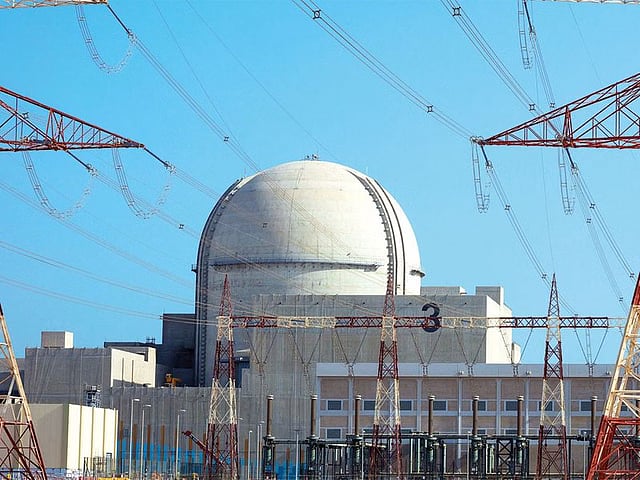
In the heart of Abu Dhabi’s Al Dhafra region stands the Barakah Nuclear Energy Plant — one of the most strategic projects in the history of the United Arab Emirates. More than simply being the first peaceful nuclear power plant in the Arab world, Barakah represents a fundamental transformation in the concepts of energy security, sustainable development, and a low-carbon economy across the region.
With all four reactors now fully operational, Barakah has become one of the key pillars of the UAE’s energy system and a globally recognized model for countries seeking to achieve climate neutrality without compromising economic growth or energy stability.
Get updated faster and for FREE: Download the Gulf News app now - simply click here.
Located in the Al Dhafra region of Abu Dhabi, the Barakah plant comprises four advanced South Korean APR1400 nuclear reactors, with a total generating capacity of approximately 5,600 megawatts of clean electricity.
The plant produces around 40 terawatt-hours of carbon-free electricity annually — enough to meet nearly 25% of the UAE’s electricity needs.
It also prevents the release of more than 22.4 million tons of carbon dioxide emissions every year, equivalent to removing approximately 4.8 million cars from the roads.
Barakah is considered the single largest source of clean electricity in both the UAE and the Arab world, delivering stable, around-the-clock power without interruptions or weather-related fluctuations, unlike some traditional renewable energy sources.
For decades, the UAE relied primarily on natural gas for electricity generation. However, rapid population growth and accelerating industrial and urban expansion created major challenges related to energy security and environmental sustainability.
In response, the UAE leadership made a strategic decision in 2008 to launch the nation’s peaceful nuclear energy program, a historic shift in national energy policy aimed at diversifying electricity generation sources and reducing dependence on fossil fuels.
Energy experts emphasize that the significance of Barakah extends beyond electricity generation. The project protects the national economy from fluctuations in global gas and oil prices while strengthening the country’s long-term energy independence.
The plant is expected to operate for between 60 and 80 years, making it a long-term investment in the UAE’s national energy security.
Barakah is one of the UAE’s most powerful tools in combating climate change, particularly as the country works toward achieving net-zero emissions by 2050.
Climate experts note that nuclear energy is among the lowest carbon-emitting energy sources across its full operational lifecycle, placing it alongside solar and wind energy as one of the world’s most important decarbonization solutions.
Barakah has already contributed significantly to reducing emissions, accounting for approximately 24% of the UAE’s nationally determined contributions toward climate mitigation targets.
The plant has also accelerated the transition toward a green economy by supporting energy-intensive industries — including aluminum, steel, and petrochemicals — with stable supplies of clean electricity.
Construction of the plant began in 2012. The first reactor entered commercial operation in 2021, followed by the second in 2022, the third in 2023, and the fourth in 2024 , a sequence regarded as one of the fastest modern nuclear deployment programs globally.
Specialists believe the UAE’s success in completing the project according to the highest international safety and quality standards has strengthened its position as a nation capable of executing some of the world’s most technologically complex projects.
Barakah has also become an international case study in mega-project management, particularly as it was delivered in partnership with South Korea under a strategic collaboration valued at more than $20 billion.
Since the launch of the UAE’s nuclear program, nuclear safety has remained a top national priority through an independent regulatory framework led by the Federal Authority for Nuclear Regulation in cooperation with the International Atomic Energy Agency.
The Barakah plant has undergone more than 500 inspections and technical reviews both within and outside the UAE, in addition to over 100 assessment missions conducted by the IAEA and the World Association of Nuclear Operators.
The plant operates using a “defense-in-depth” system that incorporates multiple redundant safety mechanisms capable of responding to a wide range of emergency scenarios.
The benefits of Barakah extend far beyond the energy sector. The project has helped create an entirely new economic and technological ecosystem within the UAE.
The plant has supported the development of Emirati talent in nuclear engineering, physics, cybersecurity, industrial artificial intelligence, and reactor operations.
It has also accelerated the localization of advanced technical expertise while strengthening local industries connected to nuclear energy, supply chains, and engineering services.
Thousands of employees and experts from more than 50 nationalities work on the project in one of the region’s most technologically advanced environments.
Barakah is not merely an energy project , it is also a political and developmental statement demonstrating the ability of the Arab world to harness peaceful nuclear technology under the highest standards of transparency and international compliance.
The project reflects the UAE’s vision of building a future economy driven by knowledge, technology, and clean energy, moving beyond traditional dependence on oil.
As global interest in nuclear energy continues to grow as a key solution to both climate change and energy security challenges, the UAE has emerged as an influential player in the future of global energy and a reference model for countries seeking to establish successful peaceful nuclear programs.
At a time when nations worldwide are racing to balance development with sustainability, Barakah appears to be far more than just a power station.. it is a sovereign strategic project shaping the future of the UAE for decades to come.
The development of infrastructure , particularly the electricity sector , remains one of the most critical pillars supporting economic development, industrial growth, and commercial activity worldwide.
The UAE continues to make rapid progress in modernizing its electricity sector to keep pace with expanding economic, industrial, and developmental activities.
The recent commercial operation of the fourth Barakah reactor marks the culmination of years of extensive efforts since the establishment of the UAE Nuclear Energy Program.
The Federal Authority for Nuclear Regulation confirmed that it conducted comprehensive reviews covering all aspects of the plant , from site selection and construction to testing and operational readiness , ensuring full compliance with all regulatory and safety requirements.
Network Links
GN StoreDownload our app
© Al Nisr Publishing LLC 2026. All rights reserved.