Argentina’s shale revolution hits new high with record oil output
Vaca Muerta drives record crude and gas output as Argentina’s energy boom deepens
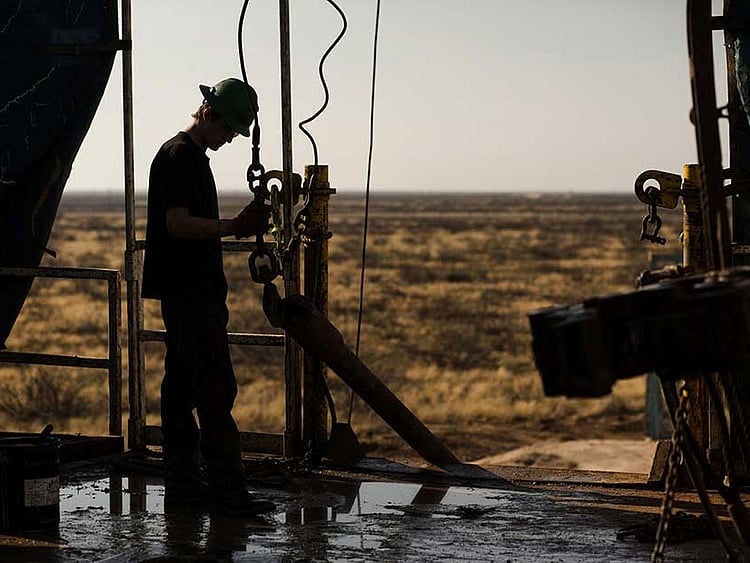
Argentina's oil industry continues to gather momentum, posting record crude production in May as development of the vast Vaca Muerta shale basin fuels one of the fastest-growing energy expansions outside North America.
Official data from Argentina's Ministry of Economy showed oil production reached an all-time high of 887,227 barrels per day, rising 0.6% from April and nearly 19% higher than the same month last year.
Get updated faster and for FREE: Download the Gulf News app now - simply click here
Natural gas production also surged to 5.5 billion cubic feet per day, reflecting continued growth in unconventional drilling, energy news site OilPrice.com reported.
The production gains come as Argentina seeks to strengthen its economy through energy exports while global oil markets remain sensitive to geopolitical tensions, including conflicts in the Middle East that have heightened concerns over supply security.
Vaca Muerta becomes engine of growth
At the centre of the expansion is Vaca Muerta, an 8.6-million-acre shale formation widely regarded as one of the world's largest unconventional hydrocarbon resources.
The basin supplied more than 70% of Argentina's crude oil production in May, marking a record share of national output. Shale gas also reached its highest contribution to the country's total gas production.
The formation is estimated to contain 16 billion barrels of technically recoverable oil and 308 trillion cubic feet of recoverable natural gas, placing it among the world's most significant shale resources.
Argentina has already overtaken Colombia to become South America's fourth-largest oil producer, with Vaca Muerta expected to drive further gains over the coming decade.
Billions flow into new infrastructure
The shale boom is attracting billions of dollars in fresh investment despite global uncertainty.
State-controlled YPF plans to spend $5.8 billion in capital expenditures during 2026, with roughly 70% allocated to unconventional operations in Vaca Muerta. Between 2025 and 2030, the company has outlined investment plans totaling $35.7 billion, primarily focused on expanding shale production.
Private operators are also ramping up spending:
Vista Energy: $1.5 billion
Pluspetrol: $800 million
Pan American Energy: $586 million
Combined upstream investment in the basin is expected to exceed $10 billion this year, while new pipelines, storage terminals and export infrastructure are being built to ease transportation bottlenecks that have limited production growth.
Global investors paying attention
Industry analysts say Vaca Muerta possesses several competitive advantages.
The formation contains thick shale layers, high reservoir pressure and high organic content, allowing wells to remain productive for longer periods.
Breakeven costs are estimated at $36–45 per barrel, making many projects competitive even during periods of lower oil prices.
The basin also produces light, sweet crude with low sulfur content, making it cheaper and easier to refine than many heavier crude grades produced elsewhere in South America.
Operators also point to relatively low carbon intensity compared with the global industry average, although environmental organisations continue to raise concerns about the broader climate impacts of expanding fossil fuel production.
Long view
Analysts expect Argentina's crude output to climb to between 1 million and 1.5 million barrels per day by 2030, provided planned investments and infrastructure projects proceed on schedule.
If realised, the expansion would transform Argentina into a far more significant energy exporter, boosting foreign exchange earnings and strengthening its position in global oil markets at a time when many countries are seeking diversified sources of supply.
Argentina set a new oil production record in May 2026, averaging 887,227 barrels per day (bpd), up 19% from a year earlier.
Natural gas production climbed to 5.5 billion cubic feet per day, nearing the country's all-time high.
The Vaca Muerta shale formation accounted for a record 70.6% of oil output and 69.8% of gas production, cementing its role as the engine of Argentina's energy boom.
More than $10 billion in upstream investment is expected in 2026, led by state-run YPF and major private producers including Vista Energy, Pluspetrol and Pan American Energy.
Analysts project Argentina could produce 1 million to 1.5 million bpd by 2030, potentially making it one of the world's fastest-growing non-OPEC oil producers.
Network Links
GN StoreDownload our app
© Al Nisr Publishing LLC 2026. All rights reserved.