Want to know if you are registered to use the Smart Gates at Dubai Airports before travelling? You can use the online service 'Inquiry for Smart Gate Registration' from GDRFA-Dubai to find out.
Bigger jets will land at Dubai airport this winter season amid travel boom
Saudi, Europe, South Asia fuel record winter demand as Dubai adds new airlines, capacity
Last updated:
3 MIN READ
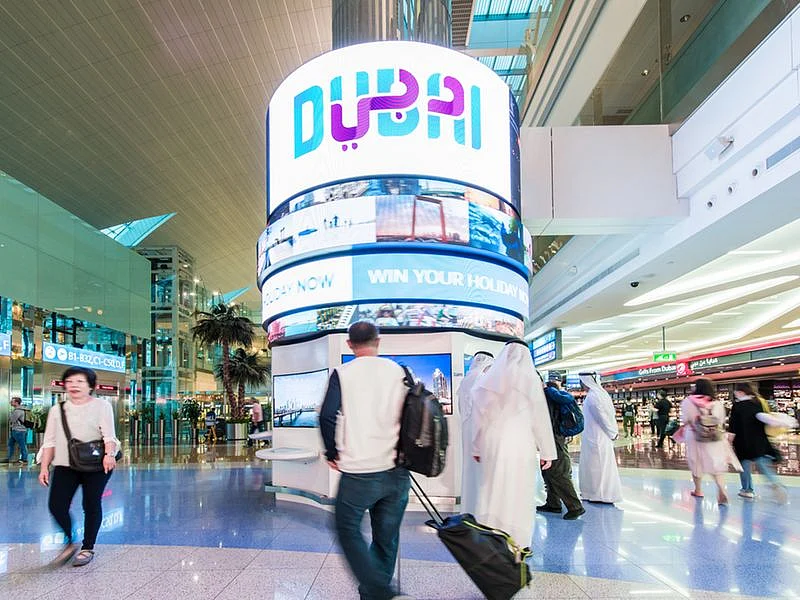
The moves by European carriers signal strong confidence in Dubai’s pull as a winter sun, business and events hub.
Dubai Airports
Dubai: European airlines are upsizing for Dubai’s winter rush. Carriers from Europe are quietly turning Dubai into a big-jet battleground this winter, rolling out larger aircraft and extra capacity as demand for the city surges.
According to a state news agency WAM report, Virgin Atlantic has switched to the Airbus A350-1000 on its Dubai route, increasing seat capacity by 52 per cent. At the same time, British Airways has resumed its A380 flights from London Heathrow to DXB.
German carrier Eurowings, for example, now operates a daily Stuttgart service to DXB and three weekly Düsseldorf flights to DWC, alongside increased frequencies to Berlin, Cologne, and Hannover.
Similarly, Air France has announced a significant increase in its flight frequency between Dubai and Paris Charles de Gaulle, offering up to 18 weekly flights starting from November 25, through March 2026.
Laila El Mansouri, Country Manager for the UAE at Air France-KLM, said, “With the addition of new flights, we are proud to strengthen connectivity between Dubai and Paris, providing our customers with more travel options, delivering the best of French hospitality and the signature Air France service.”
Together, the moves signal strong confidence in Dubai’s pull as a winter sun, business and events hub.
Dubai International is already on track to handle about 96 million passengers this year, edging close to its pre-pandemic record.
The CEO of the world's busiest hub, Paul Griffiths, has described connectivity as “the cornerstone of relevance in global aviation”, arguing that Dubai’s network strength only matters if it is delivered “with precision, efficiency and a seamless guest experience."
Demand from Saudi Arabia, Europe and beyond
Behind the bigger jets is a broad-based surge in regional demand. Europe and Central Asia are seeing a sizeable uplift this winter, with Kazakhstan’s FlyArystan joining the DXB network from Aktau and Austrian Airlines resuming Vienna services.
At the same time, Saudi Arabia has emerged as DXB’s second-largest market, accounting for 7.8 per cent of passengers, with combined traffic from the Kingdom across DXB and DWC reaching 6.3 million and rising.
Seasonal traffic from South Asia and the broader Middle East is also strengthening Dubai’s point-to-point profile, with new links from cities such as Sari in Iran and Lahore in Pakistan.
Robert Whitehouse, Vice President of Research at Dubai Airports, said the growth in direct traffic across both DXB and DWC reflects “a balanced mix of inbound visitors, outbound travel from residents and the many people choosing to make Dubai their home”, making the network more diverse and resilient.
DWC’s rising role in the capacity game
The shift to larger aircraft is not limited to DXB. Dubai World Central is taking on a more visible role as airlines use its available slots to complement DXB operations, helping manage peak-season pressure.
DWC welcomed 1.1 million guests in the first 10 months of the year, up 36.6 per cent, supported by demand from CIS, GCC and Western European markets.
For Griffiths, this dual-airport strategy is central to Dubai’s long-term growth story, with both hubs working in tandem to absorb rising demand and support the city’s ambitions as a global aviation and tourism powerhouse.

Dhanusha is a Chief Reporter at Gulf News in Dubai, with her finger firmly on the pulse of UAE, regional, and global aviation. She dives deep into how airlines and airports operate, expand, and embrace the latest tech. Known for her sharp eye for detail, Dhanusha makes complex topics like new aircraft, evolving travel trends, and aviation regulations easy to grasp. Lately, she's especially fascinated by the world of eVTOLs and flying cars. With nearly two decades in journalism, Dhanusha's covered a wide range, from health and education to the pandemic, local transport, and technology. When she's not tracking what's happening in the skies, she enjoys exploring social media trends, tech innovations, and anything that sparks reader curiosity. Outside of work, you'll find her immersed in electronic dance music, pop culture, movies, and video games.
Sign up for the Daily Briefing
Get the latest news and updates straight to your inbox
Network Links
GN StoreAbout Gulf NewsTerms & ConditionsReach by GNSitemapContact usPrivacy PolicyGN FocusHave your sayWork with usAdvertise with usGulf News epaperPrinting Services
Download our app
© Al Nisr Publishing LLC 2026. All rights reserved.