US vs China: Electric planes hit 2 milestones — Heart’s 11-tonne X1 and China’s piloted 19-seater
Heart Aerospace and COMAC achieve electric aviation milestones with groundbreaking flights
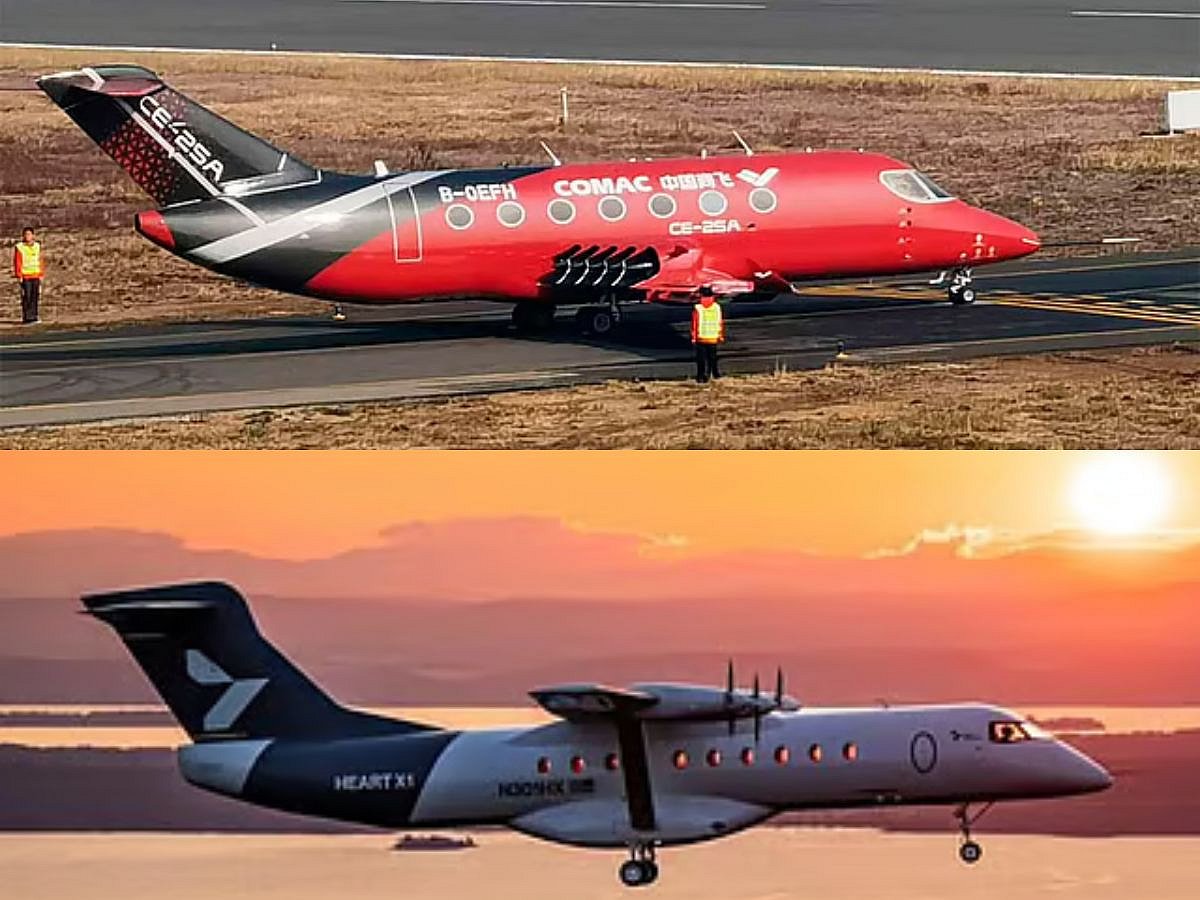
Two electric aircraft have reached major test-flight milestones this year, on opposite sides of the world.
Heart Aerospace’s 11-tonne X1 is the largest battery-electric aircraft to fly, while China’s CE-25A made its first piloted flight with two pilots and a flight-test engineer aboard.
Two electric aircraft have reached major test-flight milestones this year, on opposite sides of the world.
They are different kinds of programme. Both target short regional routes where electric aircraft could link smaller cities and airports with zero-emission flights, and each has cleared an early regulatory step.
Neither can carry paying passengers yet, as they must meet mandatory regulatory milestones.
The first flights, however give engineers real-world data for a potential commercial regional aircraft.
Get it: Fast, verified news for FREE ... download the Gulf News app — simply click here
Sweden-founded, US-based Heart Aerospace flew its full-scale X1 demonstrator for the first time on Aug. 12, 2026, from Plattsburgh International Airport in New York.
It flew for 27 minutes, reached 335 metres and used an all-battery-electric propulsion system producing more than 1 MW.
The electricity for the flight cost about $5, a figure that excludes pilots, maintenance, airport charges, battery depreciation, financing and insurance.
COMAC’s 10-tonne, 19-seat aircraft made its first piloted flight on Nov. 14 in Binzhou, Shandong province, with two pilots and a flight-test engineer onboard.
It stayed airborne for 16 minutes 38 seconds and covered 60.4 km. It had flown uncrewed on Feb. 2, 2026, and completed 19 unmanned validation flights before carrying a crew.
Get it: Fast, verified news for FREE ... download the Gulf News app — simply click here
| Heart Aerospace X1 | COMAC CE-25A | |
|---|---|---|
| Role | Full-scale technology demonstrator for the planned ES-30 | Designed for short regional and intercity routes |
| Flight date | Aug. 12, 2026 (first flight) | Nov. 14, 2026 (first piloted flight) |
| Location | Plattsburgh, New York | Binzhou, Shandong, China |
| Weight | More than 11.3 tonnes | 10 tonnes max take-off |
| Propulsion | Four wing-mounted electric motors, more than 1 MW | 10 ducted fans along the wings, driven by electric motors |
| Flight duration | 27 minutes | 16 min 38 sec |
| Altitude / distance | 335 m max; distance not given | 60.4 km; flight altitude not given |
| Seats | 30 (planned ES-30) | 19 |
| Range | ES-30 planned 200 km all-electric, up to 800 km hybrid | 400 km stated |
| Certification | FAA special airworthiness certificate issued July 2026; ES-30 entry into service targeted for 2031 | Type certificate application accepted by China’s aviation regulator; no commercial launch date |
| Partners | Backers include Breakthrough Energy Ventures, United Airlines and Mesa Air Group | CATL, Shanghai Jiao Tong University and others |
How to read the comparison
They aren’t like-for-like. The X1 is a "demonstrator", and the production ES-30 is planned as hybrid-electric. One line in the report calls the ES-30 fully electric, but the rest of it says hybrid. On the other hand, the CE-25A is presented as the aircraft intended for service.
Both ranges are unproven: The CE-25A’s first piloted flight covered 60.4 km, a fraction of its claimed 400 km.
Passengers: Neither can carry paying passengers yet.
Heart plans flight testing of its pre-production ES-30/X2 programme in 2028. COMAC’s CE-25A must complete certification and further testing.
The open questions are whether either can show real range and battery performance, and how fast regulators move.
Sign up for the Daily Briefing
Get the latest news and updates straight to your inbox
Network Links
GN StoreDownload our app
© Al Nisr Publishing LLC 2026. All rights reserved.