Joby’s electric aerial taxi service, once approved, would be rolled out initially in key markets including Dubai, New York, Los Angeles, the United Kingdom, and Japan.
Skyline shortcut: Joby’s JFK-to-Manhattan air taxis put New York’s future on the fast track
New York demo highlights safety, integration as key to future air taxi rollout
Last updated:
2 MIN READ
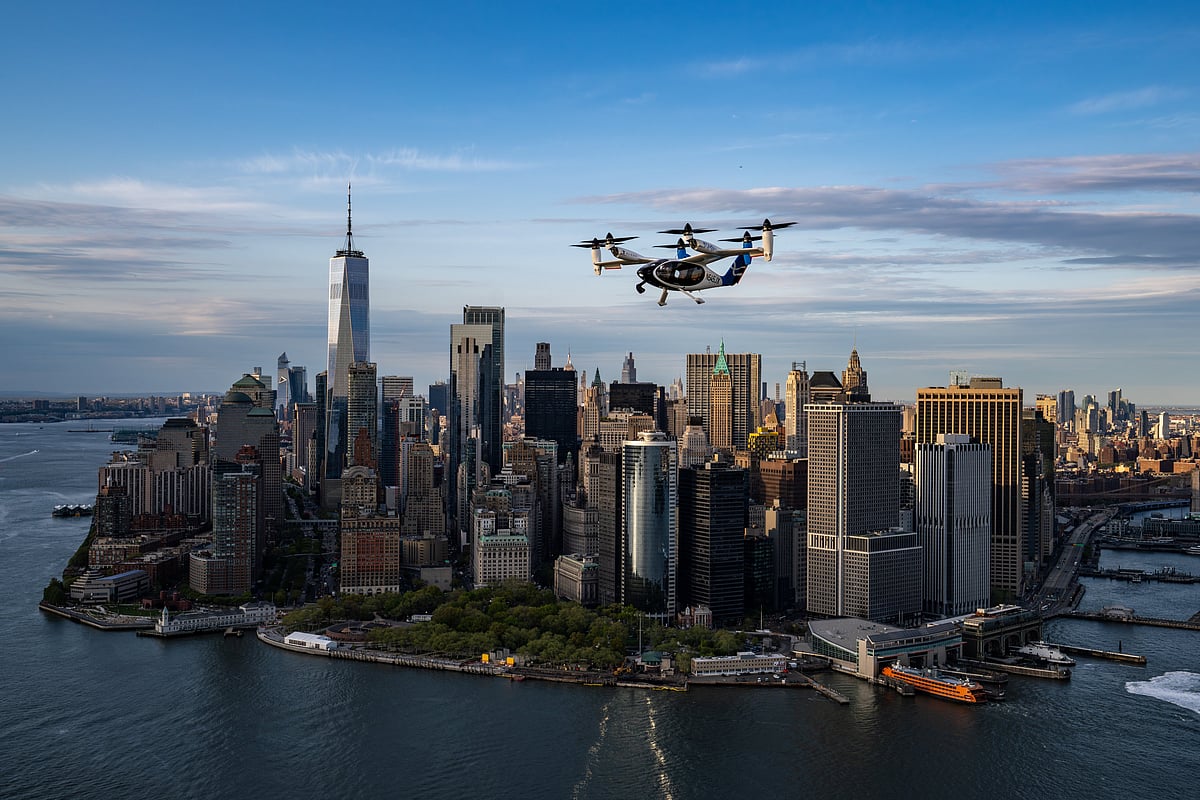
The first ever point-to-point eVTOL flights in New York's history, connecting JFK to Manhattan's heliport network in minutes, demonstrate how Joby aims to integrate with the region's existing infrastructure.
@Joby
Joby Aviation’s first point-to-point electric air taxi flights in New York City show that the idea of short-hop urban air travel is moving from concept to testable reality.
The company said the flights linked John F. Kennedy International Airport with Manhattan heliports in under 10 minutes, using routes that could one day become part of a commercial service.
The big takeaway is not just speed, but integration.
Over the next week, Joby's electric air taxi will showcase a quieter, cleaner, faster way to move through New York, in partnership with the regulators including the New York government and the US Federal Aviation Administration.
The first ever point-to-point eVTOL flights in New York's history, connecting JFK to Manhattan's heliport network in minutes, demonstrate how Joby aims to integrate with the region's existing infrastructure.
"Our vision for New York is simple: make getting to the airport — one of the city's most daunting experiences — one of its best, through partnerships with @Delta and @Uber," Joby stated in an X post.
These flights took place in FAA-controlled airspace and were part of the White House-backed "eVTOL Integration Pilot Program", which is designed to help regulators, airports, and operators figure out how electric vertical takeoff and landing aircraft can safely fit into existing transportation systems.
The event is significant as marks a live demonstration of how a future air taxi network might work in one of the world’s busiest cities.
The New York campaign also matters because it used existing heliports, including Downtown Skyport and the West 30th Street and East 34th Street heliports, rather than requiring a brand-new infrastructure buildout.
Plug-and-play
That suggests Joby’s near-term strategy is to plug into the city’s current aviation footprint and prove that quieter, zero-emission aircraft can operate alongside regular air traffic.
For commuters, the promise is obvious: a trip that might take far longer by car could be reduced to minutes.
For regulators and industry watchers, the significance is broader.
If these flights can be repeated safely and economically, they could accelerate the arrival of a new transportation category in US cities.
In practical terms, this is a milestone in the race to make air taxis commercially viable. It does not mean the service is available to the public yet, but it does show that the path from prototype to operating network is getting shorter.
Network Links
GN StoreAbout Gulf NewsTerms & ConditionsReach by GNSitemapContact usPrivacy PolicyGN FocusHave your sayWork with usAdvertise with usGulf News epaperPrinting Services
Download our app
© Al Nisr Publishing LLC 2026. All rights reserved.