Europe should’ve adopted digital passports, auto entry sooner: Emirates’ Tim Clark
DXB’s seamless digital border systems contrast sharply with Europe’s slow rollout delays
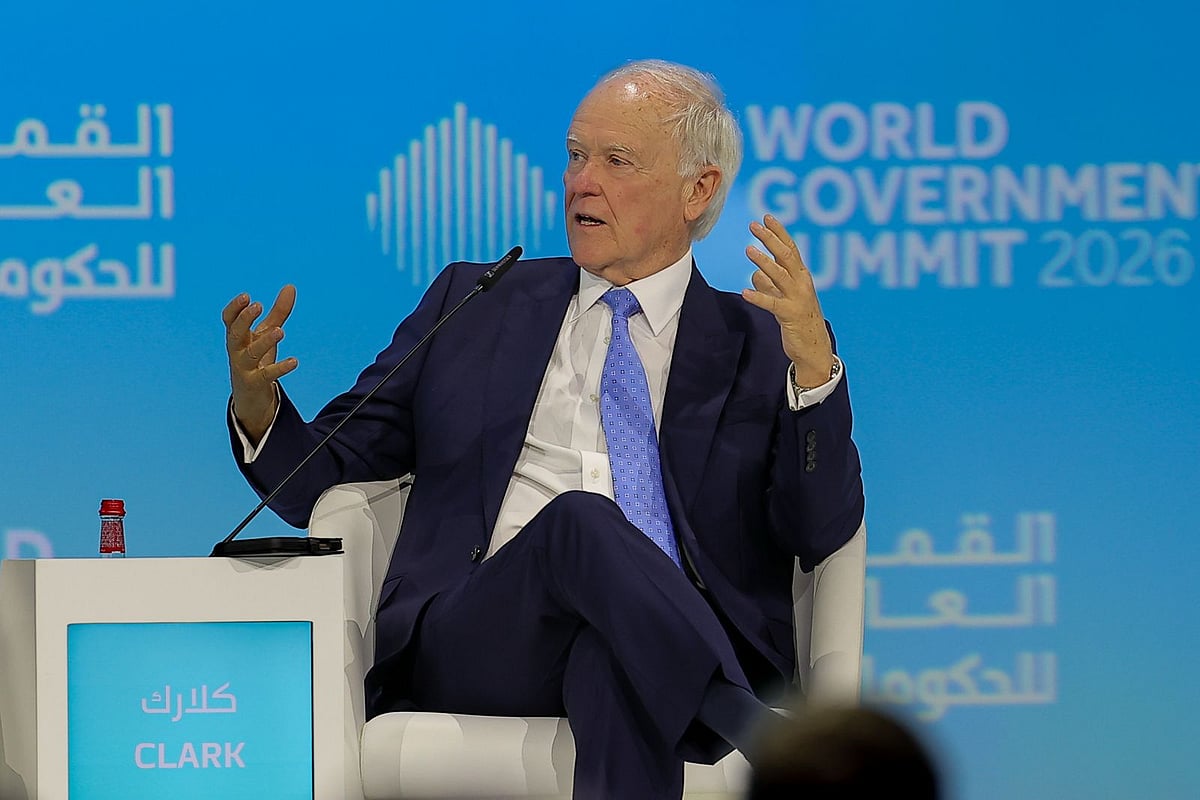
Dubai: Europe’s slow rollout of digital border and immigration systems risks becoming an obstacle to smooth air travel, according to Emirates Airline President Sir Tim Clark.
Speaking during a panel discussion on the future of aviation at the World Government Summit on Wednesday, Clark said European states were late to adopt technology that has existed for years — and is already working successfully in countries such as the UAE, the UK and the US.
Asked about the European Union’s move towards digital passports and automated entry and exit systems, Clark said, “It’s something they should have done a long time ago. The technology has been there for a long time.”
Clark said Europe only needed to look at more advanced aviation hubs to see what was already possible.
Common digital access
Clark said that while Europe now wants to introduce common digital access for both EU citizens and foreign visitors, the idea is long overdue — and the real challenge has been implementation, not innovation.
“They’ve got all they’ve got to do is take a look at the countries like this to see how they’ve advanced. The United Kingdom has been doing for some time. The Americans have been doing for some time now.”
Dubai’s success story
In contrast, Clark described Dubai’s border systems as a success story that other regions could learn from.
“We’ve tried it here in Dubai for years now, and we’re advancing at pace. We can take people through and out of Dubai and into Dubai without any kind of physical interdiction at all,” he explained.
In practical terms, this means passengers move faster — fewer queues, fewer checks and much less time spent at immigration. Clark argued the technology already exists to make this the norm globally.
“If we, if we got that right, using the technology we have today, forget what’s coming later, things will be a lot smoother.”
Yet, Europe’s progress has been hampered by multiple stakeholders and competing agendas at both national and institutional levels. “For reasons best known to the countries … they have different agendas as to how this is going to be done,” Clark said.
EU passport initiative
Clark said the EU’s digital passport initiative is a good idea in principle, but the rollout has been slower and more complex than necessary.
“It’s a bit of a Herculean task trying to get registered for that. But once you’re done … all these lanes and lines you just walk through, and the technology is there.”
With current computing power, Clark believes there’s no real excuse for further delay — and airports that adopt these systems will set the pace for the future. “There’s no excuse … be able to get this sorted within next five years,” he added.
Airspace complications
While aviation leaders stressed that space innovation should not be held back, they acknowledged that civil aviation and commercial space are now competing for the same airspace — and global rules are struggling to keep pace.
The International Civil Aviation Organization (ICAO), the UN body responsible for setting global aviation standards, finds itself at the centre of this challenge. ICAO President Toshiyuki Onuma admitted that reaching global consensus on airspace management is becoming increasingly difficult as more countries and stakeholders join the table.
The problem, speakers agreed, is not a lack of technology, as advanced systems already exist to manage crowded skies more efficiently. There are also systems in place to coordinate disruptions. However, according to Onuma, the real obstacle is political alignment and slow decision-making across borders.

Sign up for the Daily Briefing
Get the latest news and updates straight to your inbox
Network Links
GN StoreDownload our app
© Al Nisr Publishing LLC 2026. All rights reserved.