“We've already got that red carpet service, which is that facial recognition, and then if we can combine that with video analytics and track people through the airport, we can give them positive help and reinforcement," said Griffiths.
Dubai Airports’ future could be 'Minority Report'-style AI that tracks passengers, envisions CEO
Facial recognition, AI security and personalised services could transform airport travel
Last updated:
4 MIN READ
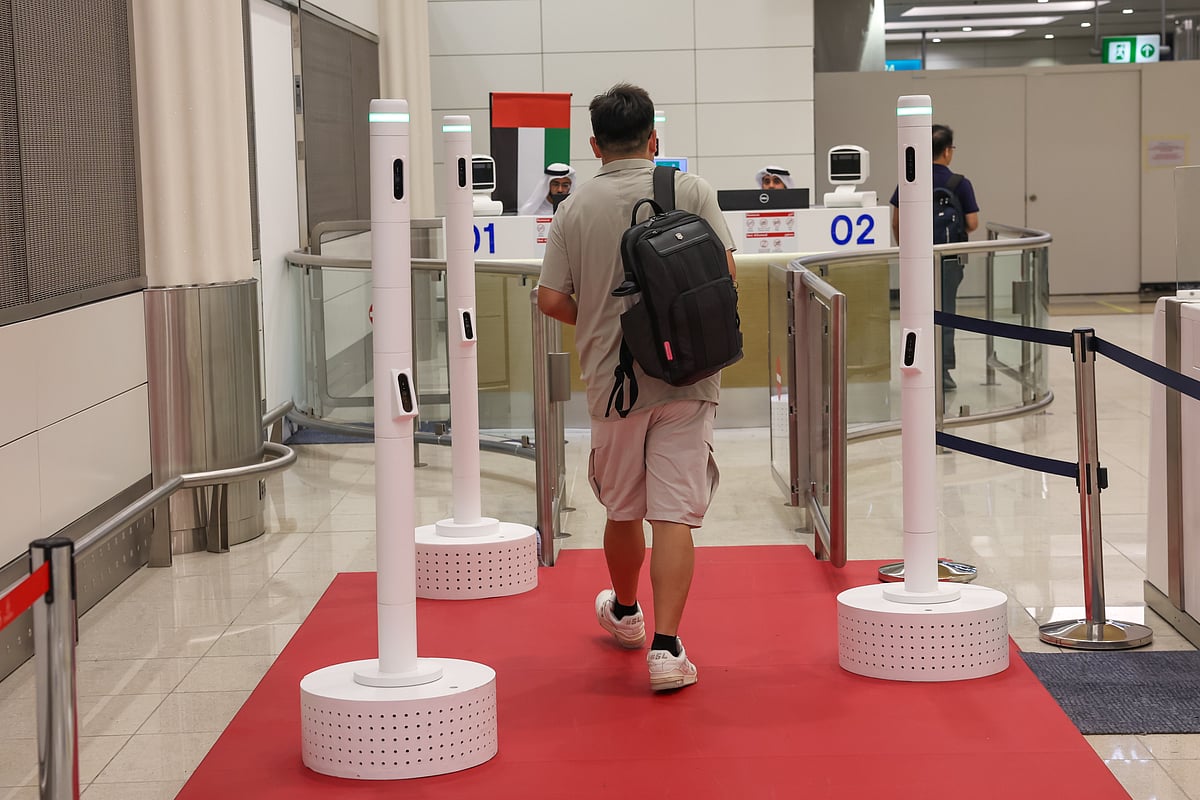
Dubai International Airport's Red Carpet service uses facial recognition technology to allow eligible passengers to clear immigration without repeatedly presenting their passports. Dubai Airports CEO Paul Griffiths says the technology could eventually pave the way for AI-powered terminals that recognise travellers and anticipate their needs.
Virendra Saklani/Gulf News
That Minority Report-style future could become a reality at Dubai's airports within five years, according to Dubai Airports CEO Paul Griffiths, who wants to use artificial intelligence (AI), facial recognition and video analytics to transform how passengers move through terminals.
Speaking during a media roundtable after releasing the hub’s third quarter-2026 results, Griffiths said the technology could allow airports to identify passengers as they move through terminals, anticipate their needs and intervene, when necessary, whether that means directing someone to the correct boarding gate or suggesting somewhere to eat.
“If you remember Minority Report, where they're all getting on the train, the cameras reading facial recognition and identifying them, and that was meant to be a glimpse of the future, an impossible sort of science fiction future,” Griffiths said, referring to the 2002 Tom Cruise futuristic thriller.
“But that's what we're doing now,” he added, referring to advances in biometric identification technology used by DXB’s Red Carpet Corridor.
Airports that recognise you
Dubai International Airport (DXB) already uses biometric technology through its Red Carpet service, which allows eligible passengers to complete immigration procedures without repeatedly presenting their passports.
The General Directorate of Identity and Foreigners Affairs (GDRFA Dubai) said in May that nearly 800,000 passengers had used the service since its launch, with an adoption rate of 83 per cent among eligible travellers.
Griffiths wants to take that technology further by combining facial recognition with video analytics to monitor passenger movements and provide assistance.
“If we can combine that with video analytics and track people through the airport, we can give them positive help and reinforcement,” he said.
“If they're going the wrong way, or they've got lost, or something, then our guest experience agents will know exactly where they should be.”
Asked how soon such technology could become widespread, Griffiths replied: “I think probably five or possibly less.” Eventually, he envisages cameras becoming almost invisible to passengers.
“I think the camera technology will be embedded into the walls, and you'll just be walking through the airport. You won't even know that there's, you know, biometric scans going on,” he said.
Personalised journeys
The technology could also change how passengers spend their time before departure.
Griffiths said biometric systems could help airports determine whether travellers need to head straight to their boarding gates or have time to visit restaurants and shops.
A passenger arriving early could, for example, receive a restaurant recommendation or a promotional offer, such as a complimentary drink for visiting an outlet within 10 minutes.
“Every airport journey can be designed around your particular needs as an individual customer,” Griffiths said.
Dubai Airports is already examining different traveller profiles, including the growing number of younger and Gen Z passengers, to understand how services and retail offerings could be tailored more closely to individual needs.
AI-powered security
Security screening could also undergo a significant redesign. Griffiths said he had challenged security equipment providers to develop systems that would allow passengers to walk through screening areas with minimal interruption.
“I'd rather see a sort of moving walkway where you put your bag next to you and it's screened as you walk through, and then you just pick it up at the end,” he said.
Under the proposed system, AI would analyse scanned baggage images and identify potential threats instead of relying entirely on security staff examining screens.
“Properly programmed AI-based database of all of the different things that shouldn't go through airport security should be more reliable than a human being staring at a screen,” he said.
Griffiths suggested such technology could eventually be introduced at Al Maktoum International Airport (DWC).
Smarter airport staff
The Dubai Airports chief also wants AI to support frontline employees rather than replace them, when asked if AI could make jobs redundant.
He described a future in which guest experience staff wear earpieces providing real-time flight information.
If a passenger asks for directions to a Beijing flight, for example, AI could tell the employee which gate to recommend, how much time remains before boarding closes and how long the walk will take.
Griffiths went further, suggesting cameras on employees' security badges could eventually recognise passengers and allow staff to greet them by name, with their destination and boarding information already available.
“What we need is a much more intelligent way of giving our guest experience ambassadors the tools to do the job better,” he said.
He acknowledged that some travellers might regard such technology as intrusive, but argued that concerns about new technologies often diminish as they become more familiar.
The proposed use of embedded cameras and passenger tracking nevertheless raises questions about privacy, consent and how personal information would be handled. Griffiths did not provide details of data retention or safeguards for these proposed systems.
Testing at DXB
Dubai's longer-term plan is to test new airport technologies at DXB before introducing them at the much larger Al Maktoum International Airport.
The Dh128 billion ($35 billion) expansion of DWC, approved in April 2024, is designed to eventually handle 260 million passengers annually as Dubai progressively shifts its aviation operations to the new airport.
Griffiths said the aim was to ensure new systems were fully tested before their deployment at DWC.
The airport operator is also planning at least a year of operational testing at the new facility before welcoming its first passengers.
While several technologies remain concepts rather than confirmed projects, Griffiths said the goal is clear: remove unnecessary steps from the journey while making airport staff better equipped to assist travellers.
“Our plan is to remove all of those friction points and try and make the entire airport service completely seamless,” he said.
Network Links
GN StoreAbout Gulf NewsTerms & ConditionsReach by GNSitemapContact usPrivacy PolicyGN FocusHave your sayWork with usAdvertise with usGulf News epaperPrinting Services
Download our app
© Al Nisr Publishing LLC 2026. All rights reserved.