Passenger confidence harder to restore than airport operations, experts say at Dubai Airport Show
Aviation experts say technology alone cannot restore trust after major disruption
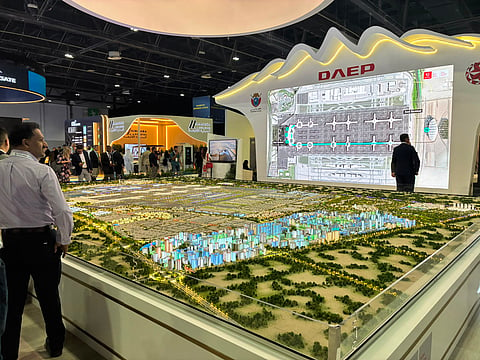
Dubai: Passenger confidence can take far longer to recover than airport operations after a major disruption, aviation experts said at the Dubai Airport show on Monday.
This highlights the growing importance of clear communication, crisis coordination and human support as the Gulf aviation sector faces increasingly complex disruptions.
Tim Walder, Board Chair of the British Aviation Group, said airports could restore an operational problem within a relatively short period, but rebuilding passenger confidence could take much longer.
“When something goes down, yes, there’s going to be a team that will be fixing it and trying to fix it, and you can get that back in alignment within a certain time,” Walder said.
“If you lose that confidence, you lose that for a long time.”
His comments came during a panel discussion on operational resilience involving Kashif Khalid, Regional Director – Africa & Middle East at the International Air Transport Association (IATA), Walder and Binu Gopal, Chief Operating Officer of Ras Al Khaimah International Airport.
Passenger support
Walder said the response to disruption needs to begin with the passenger's entire journey, rather than focusing only on what is happening inside the airport.
One of the first priorities when disruption occurs is communication, he said: passengers need to know what has happened, how they can be helped and where they should go.
But he stressed that technology alone is not enough.
“There’s people on the ground, getting people out there and looking into the airport ... to understand how you can communicate,” he said.
His comments pointed to the importance of practical assistance during prolonged disruption, including access to water, food and information.
“If you value your passengers, value it as well,” he said.
Since the outbreak of hostilities between the United States and Iran in late February 2026, the UAE aviation sector has faced unprecedented operational volatility.
Major UAE carriers, including Emirates, Etihad, flydubai, and Air Arabia, have had to navigate recurring rolling delays, route suspensions, and extensive rerouting to avoid regional conflict zones.
Although controlled aviation corridors allowed flights to gradually resume, the region remains highly volatile under continuous threats.
As a result, the European Union Aviation Safety Agency (EASA), the United States, Canada, and Australia have extended its Gulf conflict advisory through late 2026, forcing international and regional airlines to continuously adjust schedules as they manage changing geopolitical tensions and airspace restrictions across the Middle East.
Gulf lessons
The panel also discussed how repeated disruptions have changed the way airports and aviation stakeholders approach resilience.
The risks facing the industry now extend beyond traditional operational problems, with the discussion covering weather-related disruption, terrorism, geopolitical challenges, airspace issues, immigration and border-related problems, as well as ground operations.
Khalid and Gopal also highlighted the need for different parts of the aviation ecosystem to work together during a crisis.
Gopal said an airport can provide a common platform for stakeholders during a crisis because it has visibility across the wider aviation ecosystem.
He said the response depends on the nature of the disruption — whether it is an airport operational issue, bad weather or a security-related event — but that a common operational understanding remains important.
Data matters
Technology and data are also becoming increasingly important to the way airports respond to disruption.
Walder said data can help stakeholders understand where problems are developing and communicate with people across the airport ecosystem, including individuals who may not physically be on the airfield when decisions need to be made.
Meanwhile, Gopal said technology can help airports anticipate problems and support their response, but warned against becoming too dependent on technological systems.
He said airports need to be able to continue operating when systems fail, making resilience dependent not only on technology but also on the ability of organisations and their people to respond.
Future airports
As Dubai prepares for greater airport capacity and connectivity, collaboration and technology will play a growing role in shaping the passenger experience, according to Majid Al Joker, Chief Operating Officer of Dubai Airports.
“We must remind ourselves that we share the same purpose: bringing the entire experience together. Dubai’s ambitions extend beyond the airport to tourism, trade and the wider economy, and how successfully we work together today will shape how those ambitions are realised tomorrow,” he said.
Al Joker said collaboration was essential to growing capacity and improving service, while collective action would help airports and their partners respond to disruption and support passengers.
Meanwhile, Abdulla Al Shamsi, Senior Director of Future of Things at Dubai Airports Engineering Projects, said the airports of the future could be defined by technology that passengers barely notice.
“By 2032, the most advanced airports may be those where technology is least visible to the passenger,” he said, pointing to the potential role of artificial intelligence, digital identity and real-time information in making journeys more seamless.
Al Shamsi said DAEP's approach involved experimenting with new ideas and challenging established processes.


