UAE travel demand will “return with a vengeance,” says flydubai CEO as airline plans new growth phase
Bigger fleet, cargo and premium travel underpin flydubai's next growth phase
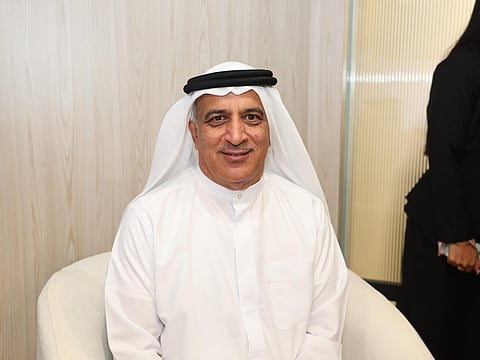
Dubai: flydubai is confident that travel demand to the region will return “with a vengeance” as the impact of the US-Iran conflict fades, with the Dubai carrier preparing for its next phase of growth through a bigger fleet, expanded cargo operations, a stronger premium offering and greater technology investment.
The airline’s chief executive Ghaith Al Ghaith told media on the sidelines of the Arabian Travel Market (ATM) that the airline expects to exceed its pre-conflict operating levels by the end of 2026 as it takes delivery of 11 new aircraft.
The airline is currently operating at around 85 per cent of its pre-conflict capacity, with about 130 destinations compared with around 140 before the disruption.
But Al Ghaith's message is that flydubai is planning beyond simply restoring what it lost. The airline has a whopping 300 aircraft on order, is expanding into cargo, is upgrading its business-class offerings and continues to recruit as new aircraft join the fleet.
The strategy comes as flydubai also seeks to completely shake off its “budget” label and position itself more broadly as a Dubai-based carrier serving a growing network.
Asked why industry watchers still call flydubai a low-cost carrier, Al Ghaith pushed back to say say, “We are flydubai. We reflect what this fantastic city is all about. We are the call to action: flydubai. We have to live up to the standard that Dubai is."
Demand rebound
Al Ghaith expects demand to come back strongly as the disruption eases.
The recovery, however, is not uniform across all markets. He said bookings from the Eastern bloc and Eastern Europe were “almost back to normal or pre whatever level numbers”, while acknowledging that fewer competing airlines are operating some of those routes. For flydubai, the bigger question is how quickly the remaining constraints on travel disappear.
“As long as these advisory are there, it is definitely not good for business,” Al Ghaith said.
He said lifting travel advisories would help accelerate the recovery. That creates a potentially important second phase for Dubai's aviation market: airlines can restore capacity, but passenger demand also needs to return.
Fleet growth
flydubai's response is to continue investing for the longer term.
The airline has around 300 aircraft on order, while 11 aircraft are expected during the remainder of 2026. The fleet expansion is not without challenges. Deliveries of Boeing 787 aircraft have been pushed back to 2028 from earlier expectations.
Al Ghaith said delays affect more than the aircraft itself because airlines prepare crews, routes and other infrastructure around expected deliveries. “When you plan for an aircraft, you plan for people, you plan for routes, you plan for training, you plan for everything,” he said.
Despite the delays, the long-term ambition remains substantial. “We order 300 aircraft not to stick around here,” Al Ghaith said.
Premium and cargo push
The airline is also investing in a more premium proposition. Demand for its business-class product has been strong, according to Al Ghaith, with flydubai continuing to retrofit aircraft so its business-class offering can increasingly feature lie-flat seats.
“It is very successful,” he said of the demand. The premium strategy is part of a broader attempt to change how passengers perceive the airline.
Cargo is another part of flydubai's growth strategy.
The airline has begun operating Boeing 737-800 freighters under wet lease, initially with three aircraft, with plans to expand beyond the initial fleet.
The narrow-body freighters allow flydubai to serve smaller cargo markets while leveraging its existing network. The operation is also being developed alongside Emirates, with the two airlines able to feed cargo into each other's networks.
That gives flydubai another avenue for growth as it builds a business beyond passenger traffic.
Dubai growth
The airline's long-term expansion will also involve Dubai's two airports.
flydubai plans to restart operations from Dubai World Central before eventually moving to the new Al Maktoum International Airport.
The eventual move is part of Dubai's much larger airport expansion plan, but Al Ghaith did not give a fixed date for flydubai's return to DWC or its eventual full transfer. For flydubai, the airport transition sits alongside rather than replaces its wider fleet and network expansion.
Fuel pressure
One of the biggest variables for the airline — and for passengers — remains fuel. “The fuel is the biggest headache,” Al Ghaith said.
Fuel costs feed into airline operating costs and ultimately influence fares, although lower costs do not necessarily translate immediately into cheaper tickets.
“Sometimes price does not go back as fast,” he said, explaining that airlines also price according to what the market can take. For travellers, a sustained easing in fuel costs could therefore provide some relief, but it would not automatically mean a matching fall in airfares.
Despite the disruption, flydubai has continued recruiting rather than cutting jobs.
“We continue to hire,” Al Ghaith said. “We don't have any layoffs.” The recruitment is linked in part to the airline's fleet expansion, with staff required as new aircraft enter service.
Profitability
The investment raises the question of how quickly the airline can translate the recovery into stronger financial performance. Al Ghaith said making money remains a fundamental target for the airline.
“We always work on a target that we make money. This is always in our DNA,” he said.
Asked whether profitability in 2026 was achievable, he replied: “Yes, why not?” He did not provide a profit forecast or financial target. He did, however, say the airline's cash flow remained strong despite the disruption. “Our cash flow is as strong as it was before the war,” he said.
flydubai described the seven months of disruption “as significant but manageable.”
The airline is therefore entering the next phase with a mix of near-term recovery and longer-term expansion: restoring its network, waiting for travel advisories to ease, managing fuel costs while adding aircraft, and building businesses around cargo and premium travel.
If demand does return “with a vengeance”, as Al Ghaith expects, flydubai is positioning itself to have the aircraft, people, products ready to capture it.


