Oman Air is actively modernizing its fleet and undergoing a major financial restructuring to return to profitability.
Airlines cannot fully pass soaring fuel costs to passengers, says Oman Air CEO
Carrier says bookings remain strong despite war and regional airspace disruption
Last updated:
4 MIN READ
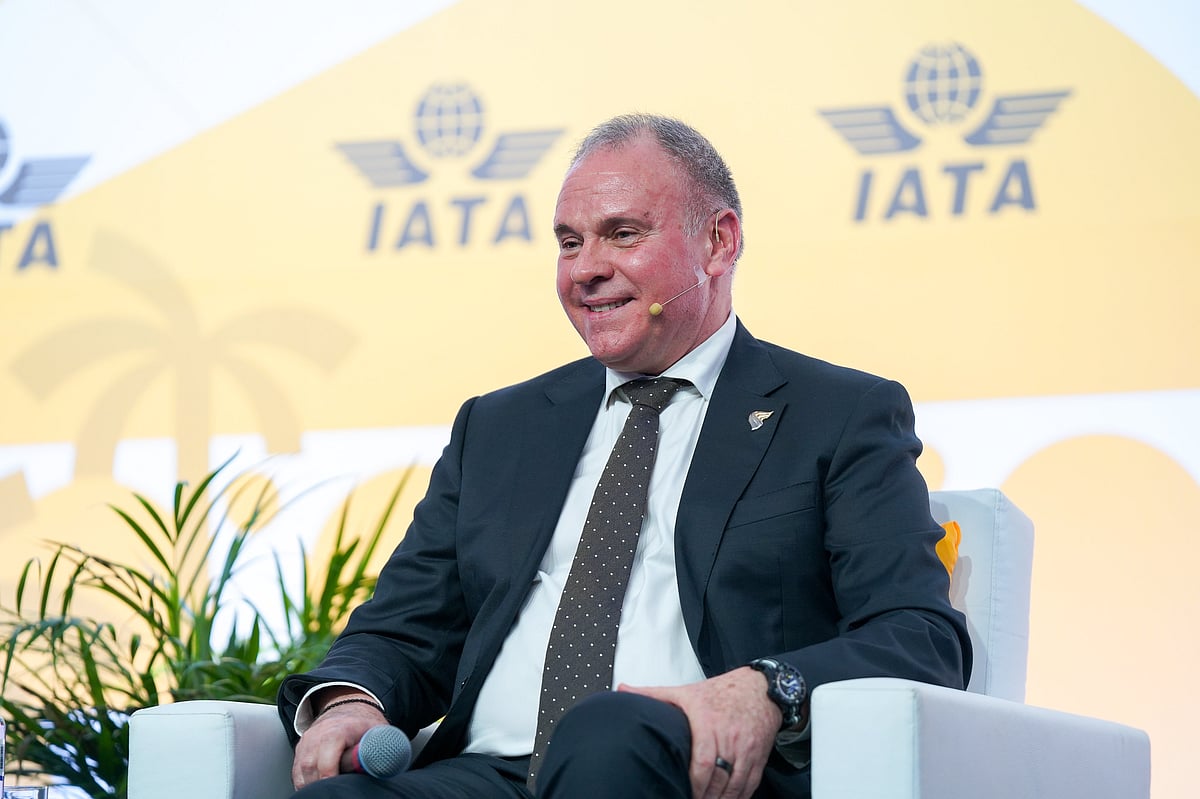
"We're continuing the work on the transformation. We want to be world class in terms of cost base and efficiency and productivity, and that doesn't change in any respect. All of that work still going on in the background," Korfiatis said on Oman Air's transformation plan.
IATA
Rio de Janeiro: Oman Air says airlines are unable to fully pass soaring fuel costs onto passengers despite ticket prices rising across the industry, as Middle East carriers grapple with the financial fallout from the US-Israel-Iran conflict.
Speaking on the sidelines of the International Air Transport Association (IATA) annual meeting in Rio de Janeiro, Oman Air CEO Con Korfiatis said jet fuel prices — not passenger demand — remain the airline’s biggest challenge.
“You're never able to fully pass that on,” Korfiatis said, referring to higher fuel costs. “It just doesn't work because at the end of the day, there's inflection points for demand based on the price.”
Korfiatis' comments highlight the difficult balancing act airlines face globally: while fuel prices have surged following Middle East tensions, carriers cannot raise ticket prices enough to fully recover those costs because excessively expensive fares would eventually weaken travel demand and leave flights less full.
Airlines worldwide face a sharp increase in fuel costs as the Strait of Hormuz blockade enters its third month. In fact, IATA expects jet fuel prices to average almost 70 per cent higher in 2026 than in 2025, significantly squeezing airline profit margins globally.
IATA's outgoing director general Willie Walsh said, "Profits will shrink from $45 billion in 2025 to $23 billion this year. And margins will shrink from 4.2 to 2.0 per cent. All airline bottom lines are suffering from the rapid 70 per cent rise in jet fuel prices."
Demand remains strong
Korfiatis said Oman Air has raised fares where possible but must still remain competitive in the market.
“You don’t want empty aircraft. So, you have to price to achieve some kind of balance,” he said. Despite geopolitical tensions, Korfiatis said travel demand has remained resilient across the region, although booking patterns have changed significantly.
“People are still traveling, people are resilient,” he said. Korfiatis added that passengers are now booking much later than before, particularly after the conflict began.
“The first sort of month or so after the conflict started, bookings were only filling up within the last week,” he said. Transit traffic through the Gulf has remained particularly strong, helping offset softer point-to-point demand.
“The point to point is a bit softer, but it’s being replaced by people who are transiting through,” Korfiatis said.
The airline’s load factors — a measure of how full flights are — remained in the high 80 per cent range during the Eid travel period, according to the CEO.
How Oman Air managed the conflict
Oman Air’s operations were also affected during the early stages of the conflict, when regional airspace restrictions disrupted flight routes across the Gulf.
Korfiatis said some flights initially operated on indirect routings after the conflict began, though most services have now returned to normal paths.
“Most of the flights are pretty much direct,” he said.
The airline’s schedule has also largely recovered, with Oman Air currently operating at around 94 per cent of its normal flight levels.
What’s working for Oman Air?
The Muscat-based carrier drew regional attention earlier this year when Oman and Saudi Arabia became alternative exit routes for thousands of people trying to leave the Gulf as the US-Israel-Iran war broke out.
Oman Air had to accommodate four to five times its normal passenger traffic during parts of the crisis.
“To have that many people come across the border for flights, it certainly operationally challenged us in ways we haven't seen,” Korfiatis said.
“We've never seen our airport so full.” In some cases, Oman Air arranged transport services for passengers crossing the border into Oman. “At the border, some people didn't have transport, so we actually put some bussing services,” he said.
The crisis comes as Oman Air continues a multi-year transformation plan aimed at improving profitability after years of losses.
Korfiatis said the airline remains focused on improving efficiency, productivity and cost controls despite the volatile operating environment.
“We’re continuing the work on the transformation,” he said.
The airline recently reported its first-ever EBITDA profit, marking a milestone in its restructuring efforts. At the same time, Oman Air is also exploring new aircraft orders to replace ageing planes and expand its route network.
Korfiatis told Reuters the airline is studying narrowbody aircraft fitted with lie-flat premium seats that can operate long-haul routes more efficiently than larger widebody jets. “Something we've done in the last couple of years that we weren't doing in the past is long-haul flights with narrowbody aircraft,” he said.
“We see an opportunity to serve the market with this product.”
The airline, which operates a fleet of 34 aircraft, expects to fly at least as much capacity in 2026 as it did last year, despite ongoing uncertainty around fuel prices and regional tensions.
Korfiatis said summer bookings are gradually improving, although travellers are still booking closer to departure dates than before. “It seems to be building the way we would expect it to be,” he said. “But there’s a lot of last-minute bookings.”
Network Links
GN StoreAbout Gulf NewsTerms & ConditionsReach by GNSitemapContact usPrivacy PolicyGN FocusHave your sayWork with usAdvertise with usGulf News epaperPrinting Services
Download our app
© Al Nisr Publishing LLC 2026. All rights reserved.