In 2025, the GCC's fintech sector had a year to remember. According to Wamda's annual funding report, fintech attracted $4.4 billion across the MENA region, about 58 percent of all startup capital deployed, a record share that left every other sector in the shade. Proptech, the second-largest category, managed just $1 billion. The message was unambiguous: investors had decided that digital financial services were not a bet on the future. They were a bet on right now.
Then 2026 arrived. Geopolitical tensions escalated sharply. Global risk appetite tightened. The easy capital of the post-pandemic boom dried up. For most of the regional startup ecosystem, the numbers turned ugly fast — total MENA startup funding fell 37 percent year-on-year to $941 million in Q1 2026. March was the low point: just $48.3 million raised across the entire ecosystem, an 85 percent month-on-month collapse, one of the weakest single months on record.
Get updated faster and for FREE: Download the Gulf News app now - simply click here.
However fintech led sectoral funding every single month through this period. In Q1 2026, it captured 46 percent of all capital deployed. In March — that terrible, bruising month — fintech still attracted more investment than any other sector. By April, it had bounced back to $89.4 million, leading the market for the fourth consecutive month.
The story of GCC fintech is the story of a sector growing up.
Resilience with an asterisk
That resilience deserves context. The fintech investment that has continued to flow is not the same kind of investment that characterised earlier years, when investors bankrolled every conceivable fintech idea. Today's capital is more surgical. It is flowing into payments infrastructure, embedded finance platforms, B2B financial tools, and cross-border compliance technology. These are assets that generate steady, recurring revenue regardless of what is happening at the geopolitical level.
Consumer-facing apps and growth-stage plays, by contrast, are finding the environment considerably colder. This shift is entirely consistent with what the global consulting firms are observing at a macro level. Fintech revenues grew 21 percent in 2024 — a threefold acceleration compared to incumbent financial services players — while public fintech EBITDA margins climbed from 12 to 16 percent. Some 69 percent of listed fintechs are now profitable. The era of growth-at-all-costs is over. The era of profitable, disciplined scaling has begun, and the GCC is no exception.
Exciting product pipeline
Emirates NBD and PwC's joint market forecast puts a number on the fintech opportunity: the UAE fintech market alone is projected to reach $5.71 billion by 2029. On current trends, that figure looks conservative.
Beyond the funding flows, the product pipeline across the GCC is arguably more exciting today than at any point during the boom years, precisely because the ideas coming through now are being built for real unit economics rather than headline metrics.
In the UAE, the regulatory infrastructure is catching up with the ambition. Last month, the UAE Central Bank granted Tabby a Stored Value Facilities licence, a milestone that formally embeds BNPL into the UAE's regulated financial system. The same month, the Central Bank launched a nationwide unified electronic Know Your Customer framework which will slash onboarding friction for customers and meaningfully reduce compliance costs across banks and fintechs alike.
Saudi Arabia's most consequential move was structural: in March 2026, SAMA granted its first live open banking licences to firms, transitioning from sandbox pilots to full commercial operations. APIs are now enabling real data-sharing between banks and fintechs for the first time, unlocking better credit products, faster onboarding, and personalised financial services at scale. Separately, Riyad Bank's digital arm Jeel partnered with Ripple to pilot blockchain-based cross-border transfers and tokenisation — not a proof of concept, but a live test within a regulatory framework.
Bahrain saw a successful pilot of instant payments using digital commercial bank money on Google Cloud's Universal Ledger — the kind of infrastructure-layer innovation that rarely makes headlines but underpins everything that does.
Genuine optimism
The GCC fintech story entering 2026 is not the breathless, everything-is-possible narrative of 2021. It is something better: a sector with proven demand, strengthening regulation, improving unit economics, and a clear technological frontier to push toward.
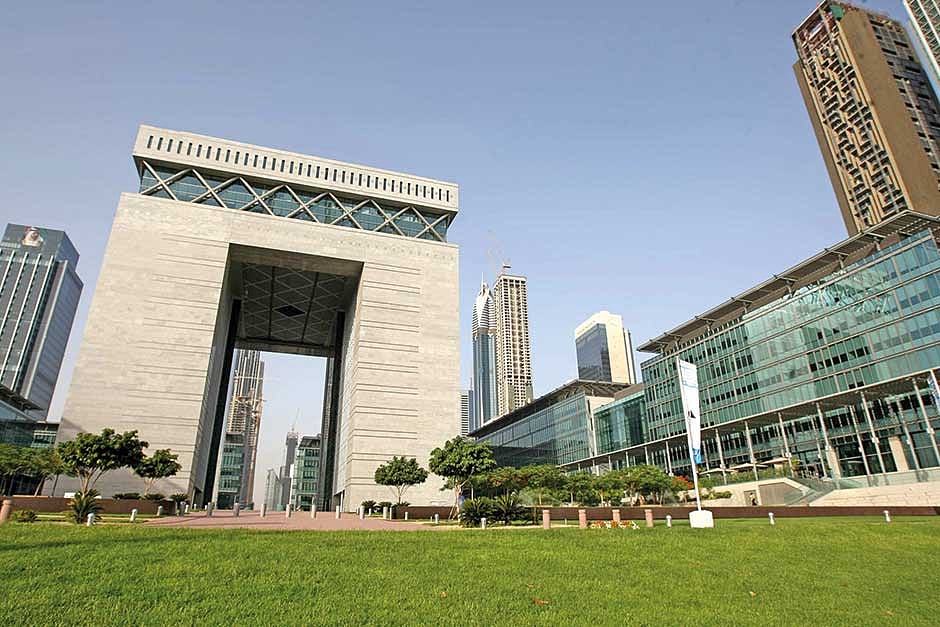
Dubai's announcement that DIFC will become the world's first AI-native financial centre, embedding artificial intelligence into its legal frameworks, regulatory systems, and physical infrastructure, signals where the region's ambitions are pointed. The projection of $3.5 billion in economic benefits and 25,000 jobs is the kind of number that, even discounted for optimism, commands attention.
GCC fintech is not in decline. It is in selection. The firms that survive this period of harder scrutiny will be, almost by definition, the ones worth backing. And the next chapter, built on open banking rails, agentic AI, and embedded finance infrastructure, promises to be more durable than anything the boom years produced.
Network Links
GN StoreDownload our app
© Al Nisr Publishing LLC 2026. All rights reserved.