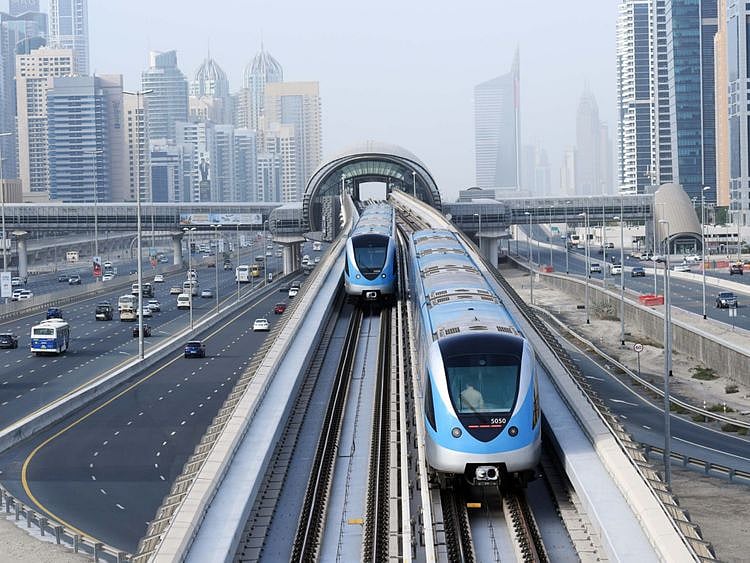
Dubai: Across the globe, a quiet but profound urban transformation is underway. Cities are reimagining how people live, work, and move, ushering in a new era of smarter, more sustainable living. With rising populations and mounting infrastructure demands, the focus is shifting. It’s no longer about how much we build, but how intelligently we plan and execute it. At the heart of this shift is a powerful principle – proximity.
Cities are increasingly reconfiguring around the principle that vibrant, connected communities, where essential services are easily accessible, deliver a better quality of life, stronger environmental outcomes, and greater economic value. This has brought global focus to the concept of ‘20-minute city,’ where key amenities and services are accessible within a 20-minute walk or bike ride.
New Urban Paradigm
What began as a framework for compact European cities is now a global movement. In today’s complex urban environments, the 20-minute city is adapting to new realities - bigger populations, diversified transport needs, and digital lifestyles. The model still champions walkability and mixed-use development, but now incorporates smarter public transit systems, micromobility solutions, and digital infrastructure to support more connected, inclusive communities.
Crucially, it’s a model built for people. Not just the privileged few in urban cores, but for wider populations seeking access to work, education, wellness, and recreation without the burden of long commutes or disconnected infrastructure.
Leading with vision
While many cities around the world are still exploring this concept, the Gulf Cooperation Council (GCC) countries are already turning it into reality. With ambitious national visions and a unique ability to implement them at speed and scale, GCC countries are emerging as global leaders in proximity-based urban development.
From Dubai to Riyadh to Doha, proximity, sustainability, and liveability are being embedded into national development agendas. With strong central planning, greenfield development opportunities, and significant investment capital, GCC nations have the structural advantages needed to reimagine city life, often without the legacy constraints faced by older metropolises.
For example, Dubai’s 2040 Urban Master Plan aims for 55 per cent of residents to live within 800 meters of mass transit, and for 80 per cent of daily needs to be met within a 20-minute walk or cycle. In Saudi Arabia, developments such as NEOM are pioneering new city models that place proximity, innovation, and sustainability at the centre, in line with the country’s Vision 2030. Similarly, Qatar’s National Vision 2030 prioritises inclusive, connected, and environmentally responsible urbanism and design.
Redefining real estate
This proximity-driven shift is also redefining the Real Estate landscape across the region. The rise of mixed-use communities - where residential, retail, education, wellness, and entertainment spaces coexist - has fundamentally changed how people experience cities. These developments aren’t just about convenience - they represent a new standard in lifestyle and investment appeal. As a result, the GCC Real Estate market is projected to grow at a compound annual growth rate (CAGR) of 1.95 per cent between 2025 and 2029, reaching a market value of over USD 5 trillion.
Beyond infrastructure
The 20-minute city is not just a planning model but also a value creation strategy that delivers measurable returns for end-users, investors, and urban stakeholders alike. For residents, it offers convenience, time efficiency, improved quality of life, and enhanced well-being, features that are increasingly being viewed as essential in homebuying decisions. Communities built around proximity are also more attractive, boosting liveability and property values alike.
For developers and investors, proximity-focused development delivers strong, sustainable returns. Walkable, amenity-rich environments tend to command price premiums, experience higher occupancy, and show resilience in fluctuating markets. Transit-oriented, mixed-use projects also benefit from faster absorption and more stable rental yields, supporting both short-term performance and long-term value creation.
A prime example of this shift is ‘Takaya,’ the latest development from Union Properties. It is built around this vision, a large-scale, mixed-use destination where residential, retail, wellness, education, and leisure spaces are woven into one, connected, cohesive, and human-centric environment. Takaya is aligned with Dubai’s broader goal of creating sustainable, proximity-based urban communities that are designed not just for today, but for generations to come.
Road ahead
As cities across the globe evolve, those that embrace the 20-minute city model will set the benchmark for liveability, resilience, and long-term capital value. The GCC is uniquely positioned to lead this transition, and in many aspects, it already is.
- The writer is Chief Executive Officer and Board Member of Union Properties PJSC
Sign up for the Daily Briefing
Get the latest news and updates straight to your inbox
Network Links
GN StoreDownload our app
© Al Nisr Publishing LLC 2026. All rights reserved.