22 ships hit, 800 stranded in Hormuz, Al Jaber warns of supply shock
Disruptions threaten 20% of global energy flows, raising price risks
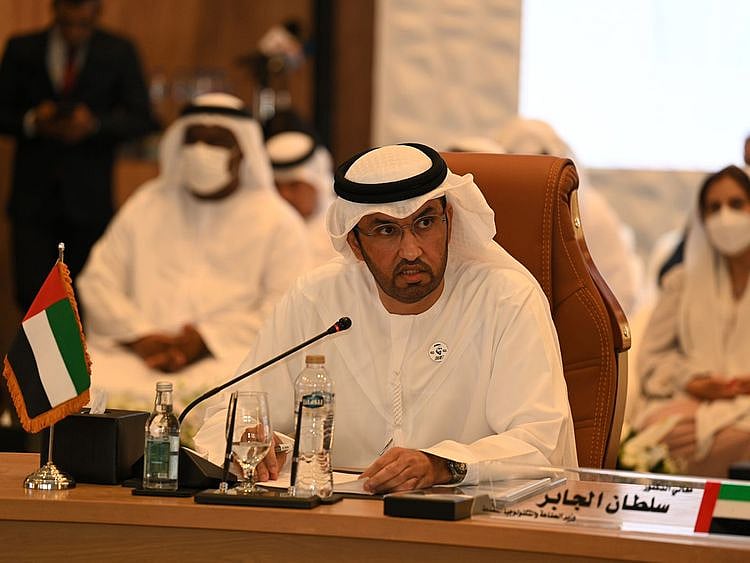
Dubai: Fresh figures shared on Sunday by Dr Sultan Ahmed Al Jaber point to a sharp escalation in disruptions across the Strait of Hormuz, with at least 22 ships attacked, 10 crew members killed and close to 800 commercial vessels now stranded, including almost 400 oil tankers.
Around 20,000 seafarers are currently unable to transit safely through the corridor, which carries more than a fifth of globally traded energy.
The latest figures, published on social media platform X, provides the clearest snapshot yet of the scale of disruption building across one of the world’s most critical trade routes.
Get updated faster and for FREE: Download the Gulf News app now - simply click here.
Scale of disruption
In his latest remarks on Sunday, Al Jaber framed the situation in direct terms, pointing to both the human toll and the growing backlog of vessels.
“The Strait of Hormuz has never been Iran’s to close or restrict,” he said. “Any attempt to do so is not a regional issue; it is the disruption of a global economic lifeline and a direct threat to the energy, food and health security of every nation.”
He described the situation as illegal and dangerous, warning that setting such a precedent would carry global consequences.
“The world simply cannot afford it and must not allow it.”
The figures shared reflect a system under strain, with shipping flows slowing and vessels unable to clear the corridor at normal pace.
Earlier warning flagged tightening control
“This moment requires clarity. So let’s be clear: the Strait of Hormuz is not open,” he said.
“Access is being restricted, conditioned and controlled.”
He argued that such conditions effectively shift the nature of the passage from open transit to controlled access, raising concerns over the integrity of global shipping routes.
“Conditional passage is not passage. It is control by another name.”
Gap between markets and reality widens
The Thursday remarks also highlighted a growing disconnect between market expectations and physical supply.
Cargoes that moved before the escalation are now arriving at their destinations, while new shipments remain delayed, creating a visible gap in energy flows.
“This is where the paper traded markets are meeting physical reality, and the 40-day gap in global energy flows is truly exposed,” he said.
An estimated 230 vessels remain loaded with oil and ready to sail, waiting for safe passage through the Strait.
Pressure building on global supply chains
With about 20% of global energy flows passing through the Strait, any sustained restriction feeds directly into supply tightness and price pressure.
“Every day the Strait remains restricted, the consequences compound. Supply is delayed, markets tighten, prices rise,” he said.
The impact extends beyond energy markets, with potential knock-on effects across food systems, manufacturing and household costs worldwide.
Asia remains particularly exposed, with roughly 80% of shipments from the Strait bound for the region.
“The immediate priority is clear: close that gap. Restore the more than 20% of globally traded energy that flows through this corridor,” he said.
He added that energy producers, including ADNOC, are preparing to restore production and shipments within operational constraints, while prioritising safety.
“Energy security and global economic stability depend on it.”

Sign up for the Daily Briefing
Get the latest news and updates straight to your inbox
Network Links
GN StoreDownload our app
© Al Nisr Publishing LLC 2026. All rights reserved.