Volkswagen lists a WLTP driving range of between 304 and 334 km, depending on configuration and market. Inside a VW ID. Polo. Due to high demand, a VW dealership said the waitlist for the electric city car has now reached at least 10 months.
VW’s €25,000 EV is already sold out: 30,000 orders and a 10-month wait
VW’s cheapest EV sells out as Europe’s electric-car rebound gathers pace
Last updated:
3 MIN READ
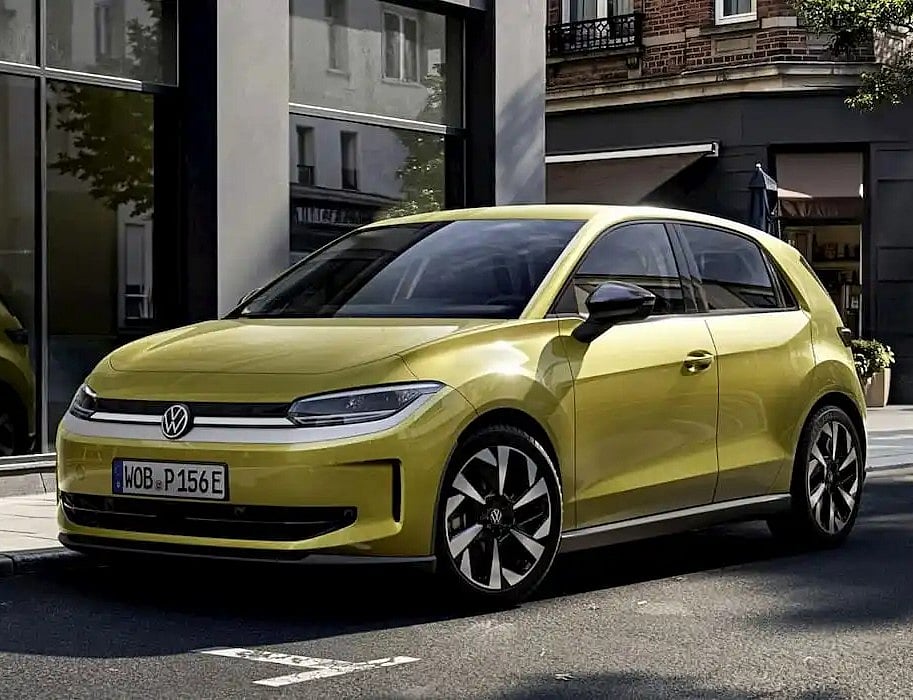
Volkswagen is betting on its new family of electric city cars to fight back against Chinese automakers like BYD. The VW ID. Polo is already sold out across all trims, as per German newspaper Automobilwoche. The base VW ID. Polo Trend with the 37 kWh battery, starts at just €24,995, or about $29,000, and offers a WLTP range of 334 km (207 miles).
Electrek
Volkswagen’s lowest-priced electric vehicle has sold out across its initial European allocation after attracting more than 30,000 orders, underscoring renewed demand for affordable battery-powered cars as the region’s EV market gains momentum.
Buyers ordering a made-to-specification Volkswagen ID. Polo now face a wait of at least 10 months, according to reports citing a major Volkswagen dealer group.
Get it: Fast, verified news for FREE ... download the Gulf News app — simply click here
The entry-level electric hatchback starts at €24,995 ($29,084) in Germany and Belgium and is built at Volkswagen Group’s Martorell plant near Barcelona, Spain.
“The entire ID. Polo range is sold out. The waiting time is at least 10 months,” the head of a major Volkswagen dealer group told German industry publication Automobilwoche.
Volkswagen has not publicly detailed the size of its production backlog or confirmed a universal delivery timetable, according to Electrive.
Affordable EV in demand
The ID. Polo is central to Volkswagen’s effort to lower the entry price of electric vehicles and defend its European home market against Chinese competitors, particularly BYD.
The base ID. Polo Trend uses a 37-kilowatt-hour lithium iron phosphate (LifePO4) battery, paired with an 85-kilowatt, or roughly 114-horsepower, electric motor.
The vehicle can reportedly charge from 10% to 80% in about 23 minutes using DC fast charging.
The car’s €24,995 price is significant because it places a mainstream European-brand EV near the long-sought €25,000 threshold.
Lower-cost Chinese brands have used price as a key competitive advantage in Europe, putting pressure on Volkswagen and other legacy automakers to offer smaller EVs without sacrificing profitability.
Production becomes the bottleneck
Volkswagen Group began series production of the ID. Polo and the related Cupra Raval at Martorell in June. The two models use the group’s MEB+ electric-vehicle architecture and share components and production capacity.
The Skoda Epiq is part of the same broader small-EV program and has also drawn strong early interest.
The Epiq has been associated with a separate Volkswagen Group production plan in Spain.
Martorell initially operated with a limited-shift pattern as it began electric-vehicle production.
The plant is expected to expand toward three shifts before the end of 2026, with a theoretical output capacity of as many as 1,200 EVs a day, according to industry reporting, according to Newmobility.
The wait list shows that customer interest is not necessarily the constraint for lower-priced EVs. Manufacturing scale, battery supply, factory conversion and the ability to deliver cars at a profit are increasingly the bigger challenges.
Europe’s EV market in H1
Europe’s EV market strengthened in the first half of 2026, reversing some of the uncertainty that followed changes to consumer subsidies and weaker demand in parts of 2024 and 2025.
In the European Union, registrations of battery-electric cars rose to 546,937 vehicles in the first quarter, taking a 19.4% market share, up from 15.2% a year earlier, according to the European Automobile Manufacturers’ Association, or ACEA.
Total EU new-car registrations rose 4% in the quarter, as per the trade group.
A broader Europe-wide estimate from charging-platform operator Eleport put battery-electric vehicles at 22.2% of new car sales in the first half, up from 17.5% a year earlier.
It said BEVs edged ahead of diesel, at 6.5%, and narrowly exceeded petrol-only cars, at 22.0%, across the countries in its dataset.
What's next
Volkswagen’s ability to convert the ID. Polo order surge into durable market gains will depend on whether it can increase output without compromising quality or eroding margins.
The ID. Polo’s early demand suggests that Europe’s EV slowdown was not simply a lack of consumer interest. It also reflects a shortage of well-priced models from established local brands.
Whether the 30,000 orders translate into sustained sales will depend on how quickly Volkswagen gets cars to customers — and whether buyers are willing to wait nearly a year.
The group’s next tests include:
Ramping up output at Martorell and related Spanish sites.
Delivering the first ID. Polo and Cupra Raval customer vehicles on schedule.
Maintaining a sub-€25,000 entry point as battery, materials and energy costs fluctuate.
Matching or beating Chinese competitors on price, technology, charging and delivery times.
Expanding affordable electric models beyond the first wave of small cars.
Network Links
GN StoreAbout Gulf NewsTerms & ConditionsReach by GNSitemapContact usPrivacy PolicyGN FocusHave your sayWork with usAdvertise with usGulf News epaperPrinting Services
Download our app
© Al Nisr Publishing LLC 2026. All rights reserved.