Stellantis: Wants to revive the legendary 2CV as a $17,000 EV
Inside US carmaker's drive to take on China’s cheap electric cars
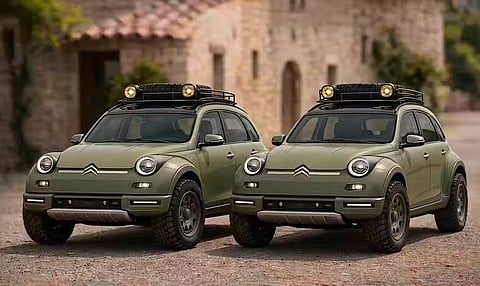
European car buyers may soon see the return of one of the continent’s most iconic people’s cars — this time powered by batteries instead of gasoline.
Stellantis, the multinational auto giant behind brands such as Citroen, Fiat, Jeep, Peugeot, and Ram, is reportedly firming up plans to launch a truly low-cost electric vehicle in Europe priced below €15,000 — or roughly $17,000 — by 2028.
At the center of speculation is a possible revival of the legendary Citroen 2CV, the minimalist French economy car that became a symbol of affordable mobility in postwar Europe.
French automotive reports and industry analysts say Stellantis executives have been discussing a modern electric reinterpretation of the 2CV as part of a broader strategy to reclaim Europe’s disappearing budget-car market.
The move comes as European automakers race to counter the rapid rise of low-cost Chinese EV manufacturers while trying to meet stricter emissions regulations and slowing consumer demand for expensive electric vehicles.
European battleground
Analysts say the battle for Europe’s next generation of affordable EVs could reshape the continent’s auto industry over the next decade.
The challenge for Stellantis is not simply building a cheap electric car — it is building one profitably.
Battery prices remain the single biggest obstacle to low-cost EV production. Automakers also face rising labor costs, expensive safety regulations, supply-chain volatility, and pressure from investors demanding stronger profit margins. Over the last decade, many European carmakers gradually abandoned ultra-small entry-level cars because they generated little profit compared with SUVs and crossovers.
That shift helped drive up average vehicle prices across Europe and pushed many younger and lower-income buyers out of the new-car market entirely.
Industry observers say Stellantis’ planned “e-car” project is designed to reverse that trend.
French media reports citing company insiders say the proposed vehicle would emphasize simplicity, lightweight construction, and low manufacturing costs instead of premium features. One consultant involved in discussions reportedly described the project as requiring “industrial minimalism,” where every component, material, and supplier decision would be scrutinized to shave costs.
The possible revival of the 2CV carries symbolic and emotional significance in France.
Originally introduced by Citroën in 1948, the 2CV became famous for its stripped-down practicality, low operating costs, and ability to navigate rough rural roads. It played a role similar to the Volkswagen Beetle in Germany — a mass-market car that democratised mobility for ordinary families after World War II.
Democratising electric mobility
Reports linking the 2CV to Stellantis’ future EV strategy gained momentum after Citroen CEO Xavier Chardon publicly acknowledged interest in bringing back the model in electric form.
While Stellantis has not officially confirmed the vehicle, Chardon’s comments fueled speculation that executives see the 2CV brand as a way to generate nostalgia while marketing affordability.
But the risks are substantial.
If the new model is perceived as too expensive, too technologically complicated, or disconnected from the simplicity of the original 2CV, the backlash from enthusiasts and buyers could be severe.
Industry reports also suggest there is internal competition within Stellantis over which brand will lead the project.
Affordable EV platform
Citroen and Fiat are both reportedly seeking control of the affordable EV platform, with the decision likely affecting styling, pricing, factory allocation, and market positioning.
One factory repeatedly mentioned in reports is Stellantis’ Pomigliano d’Arco plant near Naples, Italy — a facility historically associated with production of the Fiat Panda, another iconic European city car known for practicality and low ownership costs.
Producing the EV in Europe would also carry political importance.
European governments have grown increasingly concerned about dependence on Chinese-made electric vehicles and battery supply chains.
European tariffs
European Union officials have already imposed tariffs on some Chinese EV imports amid fears that state-supported Chinese automakers could overwhelm domestic manufacturers through aggressive pricing.
At the same time, Stellantis itself maintains deep ties with China.
The company owns a 21% stake in Chinese EV manufacturer Leapmotor, fueling speculation that Chinese battery technology or components could eventually play a role in the low-cost EV project.
Stellantis is not alone in the affordable EV race.
French rival Renault has already generated major attention with the revival of the electric Renault 5 and plans for an inexpensive city EV inspired by the classic Twingo.
Chinese brands such as BYD and MG have also aggressively expanded across Europe with lower-priced electric models.
Analysts say the next few years could determine whether Europe can still produce genuinely affordable cars domestically — or whether low-cost EV dominance will shift decisively toward China.
If Stellantis succeeds in delivering a road-ready EV near the $17,000 mark without relying heavily on subsidies, it could force rivals to radically rethink pricing strategies and small-car development.
If it fails, the project risks becoming another high-profile promise in an industry where “affordable EV” has often remained just out of reach.


