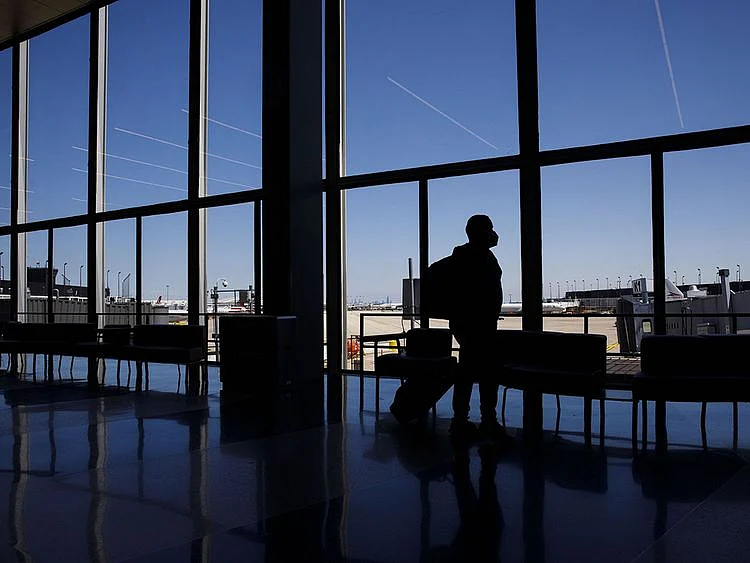
Dubai: Job losses in the Middle East’s aviation and related sector could hit 1.5 million – 300,000 more than the earlier estimate. The industry’s headcount is estimated at 2.4 million.
And those losses will be brought on by a 56 per cent drop in full-year air traffic from a year ago, according to updates issued by IATA (International Air Transport Association).
Also Read
UAE: Bank delays approval for deferment of loan repayment due to COVID-19 crisis?ICA return permit for people outside the UAE - follow these 7 stepsCOVID-19: Can my employer fire me when I am stuck outside the UAE?UAE driving rules: 5 ways you could get fined“Middle East economies have been brought to their knees by COVID-19 - and without air connectivity being re-established, the socio-economic impact is getting worse," said Mohammed Al Bakri, IATA’s Regional Vice-President for Africa and the Middle East.
"Businesses which contribute substantially to the region’s GDP and provide thousands of jobs are at risk without these vital connections. For the region’s economic recovery, it is imperative that the industry restart safely as soon as possible.”
What can be done to limit job losses?
In the IATA prescription, the only way out would be to speed up opening of air borders and frequency of flights.
‘Harmonize’ the restart
“Inconsistent application of biosafety measures along with unnecessary entry requirements are deterring passengers and suppressing the resumption of air travel,” it adds. “Harmonizing the restart of aviation across the region is critical for economic recovery.
“Governments need to implement the common global set of air transport biosecurity measures, contained in International Civil Aviation Organization’s “CART Take-off Guidelines”.
Continued financial and regulatory support
There should be direct financial aid such as wage subsidies and loans, an extension of the waiver to the 80-20 slot rule, and relief from taxes and charges.
"We are grateful to governments which have provided relief to aviation,” said Albakri. “However, the situation is not getting better - governments need to continue applying relief measures — financial and regulatory.
“A regional priority is securing support in the form of wage subsidies and loans as well as an extension of the waiver for the 80:20 use-it-or-lose-it slot rule. This is needed to provide critical relief to airlines in planning schedules amid unpredictable demand patterns.
“Saudi Arabia has confirmed a waiver for its slot coordinated airports and we hope the UAE, Morocco and Tunisia will do so soon.”
Sign up for the Daily Briefing
Get the latest news and updates straight to your inbox
Network Links
GN StoreDownload our app
© Al Nisr Publishing LLC 2026. All rights reserved.