Dubai expat puts Dh100,000 of his savings in a single fixed deposit — and later regrets it
Missed rates, locked cash and inflation pressures are forcing UAE savers to rethink FDs
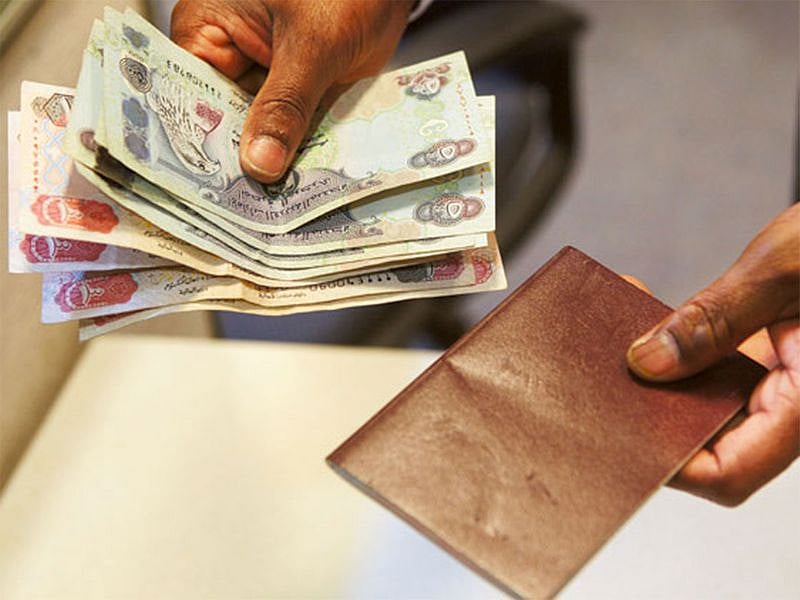
Dubai: When Dubai-based engineer Suresh, 41, placed most of his savings into a single fixed deposit, the decision felt prudent rather than risky.
Interest rates back home were attractive, his bank was more than familiar, and the guaranteed return offered certainty at a time when he wanted stability. After receiving his end-of-service benefits, Patel committed nearly Dh100,000 to a one-year fixed deposit with one bank.
“I wanted something predictable, with no surprises,” he told me. The surprise, however, came months later, when an unexpected family expense required immediate access to funds. Breaking the deposit early meant giving up a large portion of the interest he had planned around.
“That was the first time I realised how restrictive the decision had been,” Suresh said.
Is safety worth the risk?
Fixed deposits remain one of the most widely used savings products among UAE residents. They preserve capital, offer clear returns and require little ongoing management. The risk emerges when they become the only strategy.
Concentrating savings into one fixed deposit, with one bank and one maturity date, limits flexibility during periods of financial stress or market change. Emergency needs, job transitions or relocation plans rarely align with deposit maturity schedules.
This is not a new concern. An earlier report from Standard Chartered UAE cautioned that while holding cash in bank deposits may feel safe, money left idle for long periods risks losing value because inflation has historically outpaced interest earned on basic deposit products.
For savers like Patel, that trade-off between certainty and access only becomes visible when circumstances shift.
Why regret depositing?
Interest rates fluctuate, often faster than fixed deposit tenures allow.
Several UAE residents who locked long-term deposits during high-rate periods later found more attractive offers elsewhere but were unable to move without penalties. This creates opportunity loss rather than direct financial loss, but the impact can still be meaningful.
Citibank UAE has previously noted in its fixed-deposit product guidance that time deposits protect the principal and pay a fixed rate for a set tenor, but interest is typically realised only at maturity, while early access may be restricted or penalised.
That structure works well for planned, surplus funds. It becomes problematic when applied to savings that may be needed unexpectedly.
To address this, financial advisers often point to fixed-deposit laddering, where savings are split across multiple deposits with staggered maturities. This allows portions of money to become available at regular intervals, reducing the risk of being locked into a single rate or timeline.
All money in one bank?
Another overlooked issue is institutional concentration.
Many UAE residents keep their salary account, savings, fixed deposits and credit facilities with one bank for convenience. While this simplifies banking, it also increases reliance on a single institution for liquidity.
Temporary account restrictions, compliance reviews or technical outages can limit access to funds across multiple products at once. Spreading savings across more than one bank is often viewed as a continuity measure rather than a lack of trust.
Can inflation eat your gains?
Even when fixed deposits deliver positive returns, inflation can erode real value.
HSBC UAE has repeatedly highlighted in its savings and investing guidance that returns on low-risk cash products may fail to keep pace with rising living costs, reducing purchasing power over time despite nominal gains.
This is why banks and advisers increasingly emphasise diversification rather than abandonment of deposits. Fixed deposits still play a role, but typically alongside other tools such as recurring deposits or long-term investment plans aimed at growth.
Time to rethink savings?
After reassessing his situation, Suresh restructured his savings. His money is now split across two banks, with multiple fixed deposits maturing at different intervals, while a small portion is allocated to a monthly investment plan.
“The fixed deposit itself wasn’t the issue,” he said. “Putting everything into one place, for one year, was.”
For many UAE residents, his experience reflects a broader shift in thinking. Fixed deposits remain useful, but relying on a single deposit for all savings can expose households to risks that only surface when flexibility matters most.

Sign up for the Daily Briefing
Get the latest news and updates straight to your inbox
Network Links
GN StoreDownload our app
© Al Nisr Publishing LLC 2026. All rights reserved.