A view of Eastwood, a suburb of Manila: The 33-km Manila Subway Project is set to run near the Eastwood City area in QC, with key stations in neighboiring Libis/Ugong Norte and surrounding Quezon City areas.
If you have $52,000 (₱3 million): Invest in a Philippines farm, condo, house & lot, or a mix of each?
Unlock smart returns — condo for rent, land for growth, or house for steady income?
Last updated:
5 MIN READ
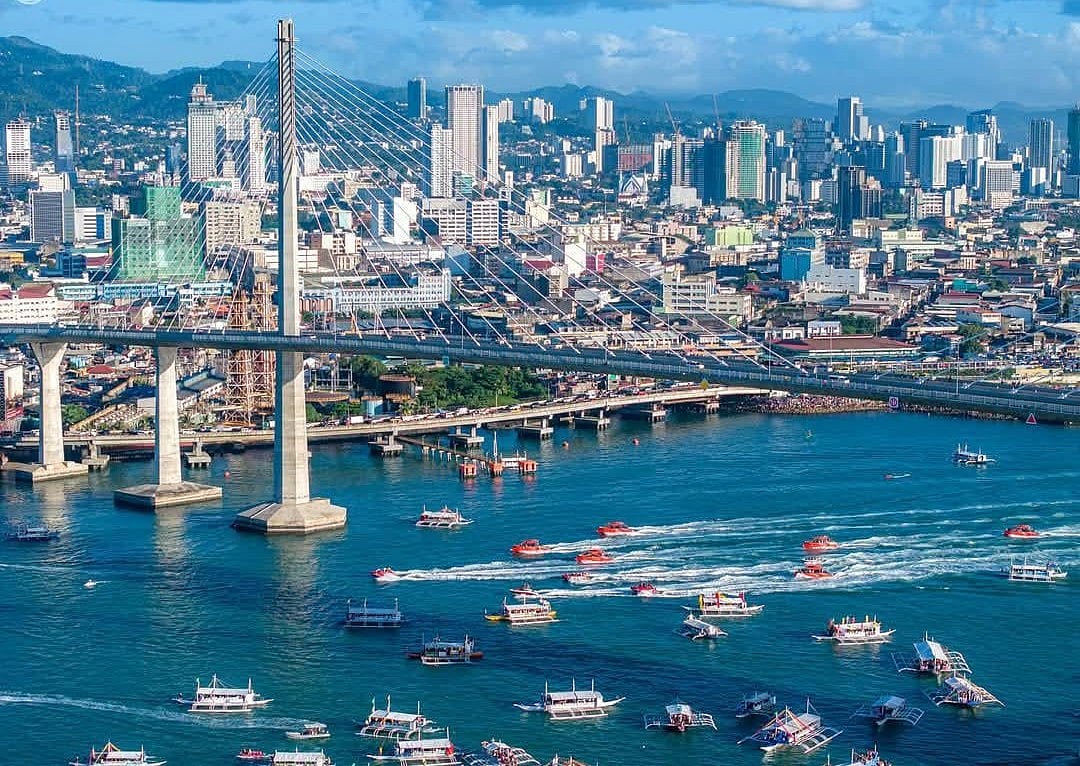
A view of a fluvial parade in Cebu City, the historic "Queen City", in central Philippines. It's also the hub of commercial ship-building, maintenance, repair and operations (MRO) in the Asian country.
Pinterest | Island Nomad
[Invest Series for OFWs and global go-getters — a serving that spills the beans on ways to flip your savings in the Philippines, whether you're wiring remittances from overseas or diving in as a wide-eyed foreigner chasing that Asian dream, even as you sip halo-halo abroad).
Manila: Investing in the Philippines with just ₱3 million ($52,000)?
It's actually a (very) good starting point. The amount offers solid potential.
Overseas Filipino workers (OFWs) who haven't raised that amount yet? Don't panic. It's still possible (read below).
The key: start today, and keep looking for opportunities. Know this, however: success hinges on consistency, convinced that turning your ideas into reality takes some pain, grit and time.
"Success" also depends on how your choice aligns with personal goals, i.e. like steady rental income or long-term growth, alongside factors such as risk appetite, timeline, and preferred location.
Here's a guide:
First, define your goals
What's your goal? Start by clarifying priorities to narrow options.
If rental income tops your list, lean toward condos or house & lots in high- demand areas.
Condos here, reportedly still recovering from a supply glut, are wide open to foreigners, not just locals.
Tip: It's best to check and pick units near new Metro or Subway lines are coming up, as they tend to draw more investor interest, or in second-tier cities (Clark/Angeles, Cebu, Davao, Baguio, Naga, Iloilo, CDO), as they tend to be more affordable (without the Manila traffic nightmare). In Manila, Eastwood is good option, eventually.
In general, lower upfront costs and minimal management favour urban condos, while land excels for future development upside.
Why choose a condo unit?
Urban condos provide accessible entry with ₱3 million often securing a studio or one-bedroom in spots like Cebu, Davao, Tagaytay, or Batangas.
Manila condos may be slightly higher, especially those in high-demand areas or central business districts (CBDs), like the Bonifacio Global City (BGC).
And do keep an eye out for other upcoming hubs, like the Villar City.
In general, condos generate reliable rentals near universities, BPOs, or hospitals — expect ₱12,000–₱25,000 monthly.
A street view of Naga City, a second-tier city south of Manila. The road and trains from the capital Manila to Naga are bad right now. But with anti-corruption crackdown against erring contractors and public works officials, things are moving in the right direction.
This could yield 4–7% gross before home-owners association (HOA) fees.
Maintenance stays low (need to fix the AC, washer, lights, plumbing as needed, so best to get a reputable/licensed property managers, especially if you're staying overseas, or somewhere far away.
This is ideal for hands-off city income. Do check with your propery manager matters such as tax rules, insurance (i.e. mortgage redepmption insurace).
I'm an OFW, but I don't have ₱3 million to spare right now, so how!
Calm down. Kaya mo yan! (You can do it!)
To reach a goal of ₱3 million pesos, give it time (10 years, or less).
Example: You would need to invest approximately ₱17,332.54 each month in a fund that offers a 7% annual return for 10 years.
A view of Festive Walk, in Iloilo City, Philippines.
Two investment fund options: (a) SSS Flexifund/MyPension Booster or (b) Pag-Ibig MP2. Both are state-backed. The latter actually did bettern than 7% per annum in the last two years.
The Flexifund is a no-brainer: you can invest as little as $3.75 per month, the price of 3 cups of kadak chai in Dubai.
A street view of Davao, known as the "Crown Jewel of Mindanao" and is famous for being the gateway to Mount Apo (the Philippines' highest peak). It is renowned for its cleanliness, the durian fruit capital status, the Philippine Eagle Center, and the vibrant Kadayawan Festival.
So this ₱3 million target just needs a bit of consistency, perhaps scrimping on daily Starbucks or some overpriced sugar-loaded milk tea.
If done in earnest, then you let the magic of compounding interest work for you.
Land: The long game
For locals (Filipinos), this option delivers low per-hectare costs in provinces, with strong appreciation near growth corridors like Cavite-Batangas-Quezon.
For capital appreciation, agricultural land near expansion (industrial) zones shines.
Lease to farmers for passive income while waiting 5–10+ years for value spikes from infrastructure.
This comes with certain drawbacks: delayed returns, location risks, and conversion hurdles. But it's perfect for patient investors eyeing infrastructure-driven gains.
For foreigners, Manila recently dropped a bombshell move. A new legislation now allow 99-year land leases to drive foreign investments in energy, transpo, infra, manufacturing — and agriculture.
House-and-lot for family appeal
A ₱3 million house & lot suits suburban or provincial buys, attracting family renters for stable occupancy.
In general, this option offers to 3–6% yields.
Resale holds firm in established neighbourhoods, but expect hands-on maintenance, title complexities, and size limits outside metros. Choose this for spacious, reliable rentals with balanced appreciation.
According to the Global Property Guide, rental yield returns in the Philippines are "moderately good", averaging 5.57% in Q3 2025, an increase from 5.12% in Q1 2025, 5.36% in Q3 2024.
A night-time view of the Manila skyline: Condo units priced between ₱2.5 million ($43,000) and ₱12 million ($205,000) are now emerging as the main growth engine for the capital’s residential condo sector, as per latest industry data.
Condo, land or house and lot?
Maximise with smart moves
If you already have ₱3 million, or more, you have a number of options.
One is by diversifying: splitting funds — ₱2 million into a house & lot, ₱1 million as a condo down payment — for dual income and growth.
Target land near airports or expressways.
Use financing for bigger assets via low down payments. The country's leading banks will be more than happy to assist you (especially OFWs) when you're applying for a condo or home mortgage.
On land, lease immediately to farmers or for parking to bridge toward appreciation.
Case examples (illustrative)
📍 Condo in Cebu/Davao/Naga/Iloilo/Angeles (₱2.5–3M)
Rent: ₱15,000–₱22,000/month
HOA: ~₱2,500–₱4,000/month
Net yield: ~4–6%
📍 House & lot in provincial city (₱2.5–3M)
Rent: ₱18,000–₱28,000/month
No HOA
Net yield: ~4–6%
📍 Agricultural land in growth corridor (₱3M buys more area)
Lease to farmers: ₱100–₱400/hectare annually (varies)
Appreciation if urban spill-over occurs
Recommendation summary
If you want income now:
✅ Condo (in a strong rental market)
If you want long-term growth:
✅ Land (near future development)
If you want balance of both:
✅House & Lot in growing area, or split strategy
Note: This content is for informational purposes only and does not constitute investment advice. Please consult a licensed broker or fund manager for guidance tailored to your financial goals and risk profile.
Sign up for the Daily Briefing
Get the latest news and updates straight to your inbox
Network Links
GN StoreAbout Gulf NewsTerms & ConditionsReach by GNSitemapContact usPrivacy PolicyGN FocusHave your sayWork with usAdvertise with usGulf News epaperPrinting Services
Download our app
© Al Nisr Publishing LLC 2026. All rights reserved.