Wounded US Air Force officer climbed 7,000-foot ridge to evade Iranian forces
Injured F-15E officer survives 100 mph fall, evades capture in Iran mountains
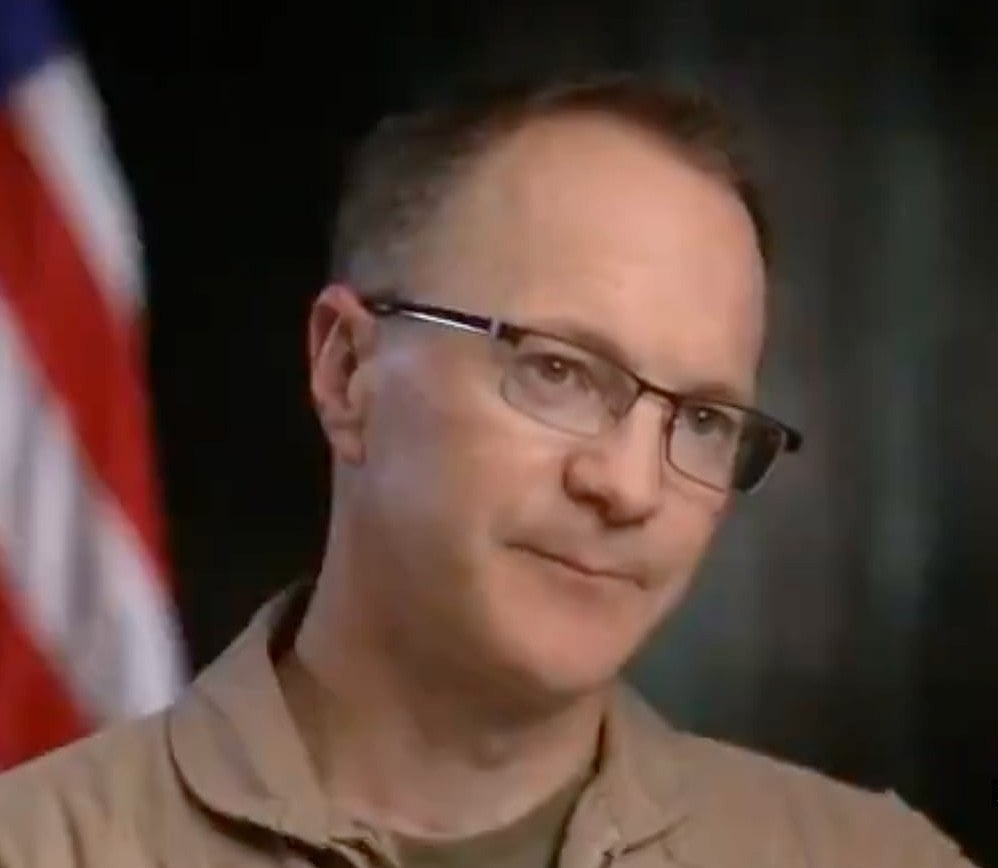
A badly wounded US Air Force colonel climbed a 7,000-foot ridgeline in Iran to evade Iranian forces after his F-15E fighter jet was shot down, according to an interview aired by CBS News’ “60 Minutes.”
The officer, identified by the mission call sign “Bravo,” spent nearly two days behind enemy lines before US special operations forces rescued him in what US officials described as one of the most complex military search-and-rescue missions in recent US history.
Bravo was the weapons-systems officer aboard the two-seat F-15E Strike Eagle known as “Dude 44.”
The aircraft was shot down over Iran in early April, leaving Bravo and the pilot, “Alpha,” separated by about 5 miles after they ejected.
The pilot was rescued within hours. Bravo, who suffered multiple injuries, remained missing in the mountains.
“I think the best way I've been able to describe that moment was getting hit by a freight train,” Bravo told correspondent Norah O’Donnell.
“A modern-day miracle,” Bravo replied. “I believe that it's a testament to God's provision in my life to bring me through that moment in a way that didn't prevent injuries, but prevented any catastrophic injuries that would have affected my ability to survive.”Colonel "Bravo", F-15E US Air Force officer who survived after being shot down over Iran in April
Get it: Fast, verified news for FREE ... download the Gulf News app — simply click here
“We do all we can to try to save the aircraft. It was evident that that wasn't possible. And soon thereafter, we ejected and found ourselves floating over the heart of Iran.”
The F-15E was shot down by Iranian forces during a US strike mission. CBS reported at the time that the aircraft was carrying a two-person crew and that Iranian forces claimed responsibility for bringing it down.
A damaged parachute
Bravo said his parachute had been damaged when the aircraft was hit.
“My parachute was damaged in the initial attack. At one point when I looked up and saw no parachute, that was the most terrifying thing I've ever seen,” he said.
“So I paused, right then. And I prayed, ‘Lord, your will be done. But if I'm getting through this, I need help.’”
Asked whether he was effectively free-falling, Bravo replied: “Free-falling is a good way to put it.”
“I wasn't focused on the speed at which I was falling. I was instead focused on trying to correct the problems that were in front of me and doing anything I could to unfurl or pull pieces of the parachute loose.”
Up to 100 mph fall
Bravo said military professionals later estimated that he hit the ground at between 70 and 100 mph.
“How did you survive that?” O’Donnell asked.
“A modern-day miracle,” Bravo replied. “I believe that it's a testament to God's provision in my life to bring me through that moment in a way that didn't prevent injuries, but prevented any catastrophic injuries that would have affected my ability to survive.”
The impact broke his back and left him with a broken arm, a broken shoulder and a sprained ankle, as well as cuts and scrapes to his head and face.
Despite the injuries, Bravo said he immediately moved away from his landing site.
“I had injuries, but we all train to adapt and overcome the things that are — that we're faced with. I moved as quickly as I could, despite the injuries, away from the place that I landed.”
Network Links
GN StoreDownload our app
© Al Nisr Publishing LLC 2026. All rights reserved.