Will the US and Israel strike Iran again, or is it just rhetoric? 5 big questions
Trump and Netanyahu escalate threats as Tehran warns of retaliation
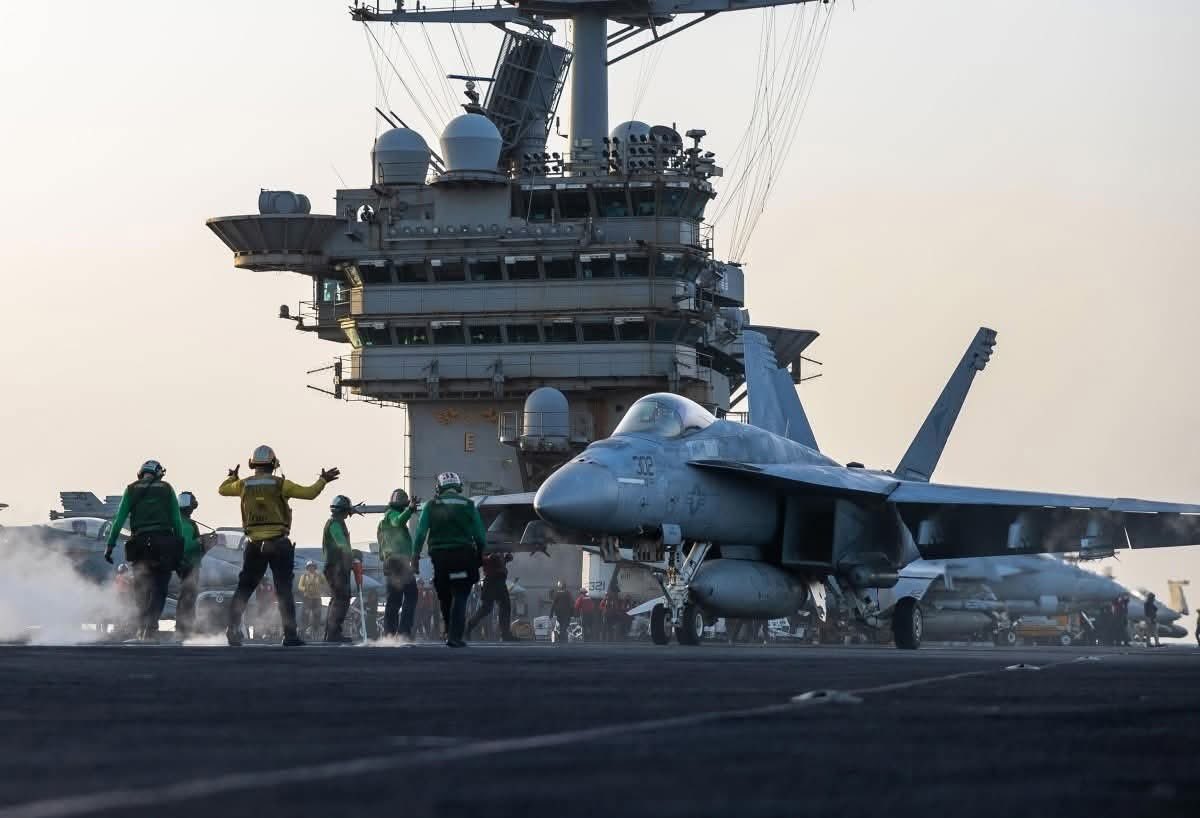
Dubai: Fresh threats from US President Donald Trump and Israeli Prime Minister Benjamin Netanyahu have raised fears of renewed military strikes against Iran, potentially reigniting a conflict that has already shaken the Middle East and disrupted global energy markets.
Trump warned on Sunday that Washington could “soon finish the job” unless Tehran changed course, while Netanyahu said Israel was prepared to strike Iran without US support and vowed to bring down Tehran’s government.
Iran responded with a warning of more severe retaliation, as Iranian commanders signalled readiness for another round of fighting.
The escalating rhetoric comes amid reports of fresh US military planning, Iranian threats against regional infrastructure and American security warnings about possible attacks on US interests.
But another war is not inevitable. Trump previously indicated that Washington would hold off on fresh strikes until after the November 3 US midterm elections, while diplomatic options remain open.
Here are five questions about what could happen next and what it means for the Gulf.
Is another US-Israeli attack on Iran imminent?
Trump’s warning has revived concerns about renewed military action, but neither Washington nor Israel has announced a new offensive.
Earlier this month, Trump said the US would not attack Iran before the November 3 midterms and described discussions with Tehran as productive.
Axios reported that Trump and Netanyahu discussed another military operation, amid Israeli concerns that Iran was rebuilding its nuclear programme.
CNN also reported that US military planners had developed options for further strikes, potentially including the use of powerful conventional bombs against Iranian nuclear and energy facilities.
However, military planning does not necessarily mean an attack has been authorised. The threats could also be intended to increase pressure on Tehran during negotiations.
Could Israel strike without US support?
Netanyahu has explicitly raised that possibility.
“The objectives I set do not depend on American approval,” he said on Sunday while presenting an updated national security doctrine.
He declared that Israel could act independently and suggested preemptive strikes might be necessary to prevent Iran from attacking first.
Netanyahu also described confronting Iran as his life’s mission and called for the Islamic Republic’s government to be brought down.
Israel has demonstrated its ability to strike Iranian targets, but another sustained campaign, particularly against heavily fortified nuclear facilities, could require capabilities that the US is better equipped to provide.
An independent Israeli strike could also draw Washington into the conflict if Iran retaliated against American forces or interests.
Can Iran retaliate more forcefully this time?
Iranian commanders insist they are prepared for another confrontation.
Major General Ali Abdollahi, chief of staff of Iran’s armed forces, warned that another military miscalculation would trigger more severe retaliation than before.
According to CNN, Revolutionary Guards commanders have claimed that Iran has developed new weapons and expanded its stockpiles despite months of attacks.
Iranian officials have also discussed more sophisticated missiles, coordinated drone attacks and the possibility of striking targets beyond the Middle East.
However, some of these capabilities have not been independently demonstrated.
Despite substantial military losses, Iran retains missiles, drones and other means of threatening regional targets, while its ability to disrupt shipping through the Strait of Hormuz remains a significant concern.
Why could the Middle East face greater risks?
US embassies across the Gulf, Israel, Iraq, Lebanon and Jordan urged Americans on Monday to exercise “heightened vigilance”, warning that the regional security situation could deteriorate rapidly.
The alerts cited Houthi attacks on Saudi Arabia, where Riyadh's international airport remains closed after strikes that killed 18 people this month.
“The hostilities have the potential to escalate rapidly beyond that immediate area,” the warning said.
Americans were advised to prepare for possible flight cancellations, airspace closures and travel disruptions, and to make contingency plans.
Iranian officials have threatened to expand attacks beyond military installations to critical civilian and economic infrastructure if fighting resumes.
Mohsen Rezaei, head of Iran’s Supreme National Security Council, warned that undersea internet cables, data centres, artificial intelligence facilities and other infrastructure across the region could be targeted in another war.
Such attacks could disrupt banking, communications and digital services, while strikes on oil and gas facilities could threaten energy supplies and drive up global prices.
The warnings have heightened concerns that another confrontation could spread beyond Iran and Israel, with potentially serious consequences for countries across the Middle East.
What could trigger another war — and can diplomacy prevent it?
A preemptive Israeli strike, an Iranian attack on US interests or a major confrontation involving regional infrastructure could trigger renewed fighting.
The Strait of Hormuz remains another flashpoint, with restrictions on shipping continuing to threaten global energy trade.
But diplomatic possibilities have not disappeared.
Iran has previously offered to reopen the strategic waterway in exchange for sanctions relief and other concessions, while Washington continues to press Tehran over its nuclear programme.
The political calendar adds uncertainty, with Israel voting on October 27 and the US holding midterm elections on November 3.
For now, neither side appears willing to abandon its demands.
The biggest danger is that threats intended to deter another war could instead provoke the very confrontation both sides may be seeking to avoid.

Sign up for the Daily Briefing
Get the latest news and updates straight to your inbox
Network Links
GN StoreDownload our app
© Al Nisr Publishing LLC 2026. All rights reserved.