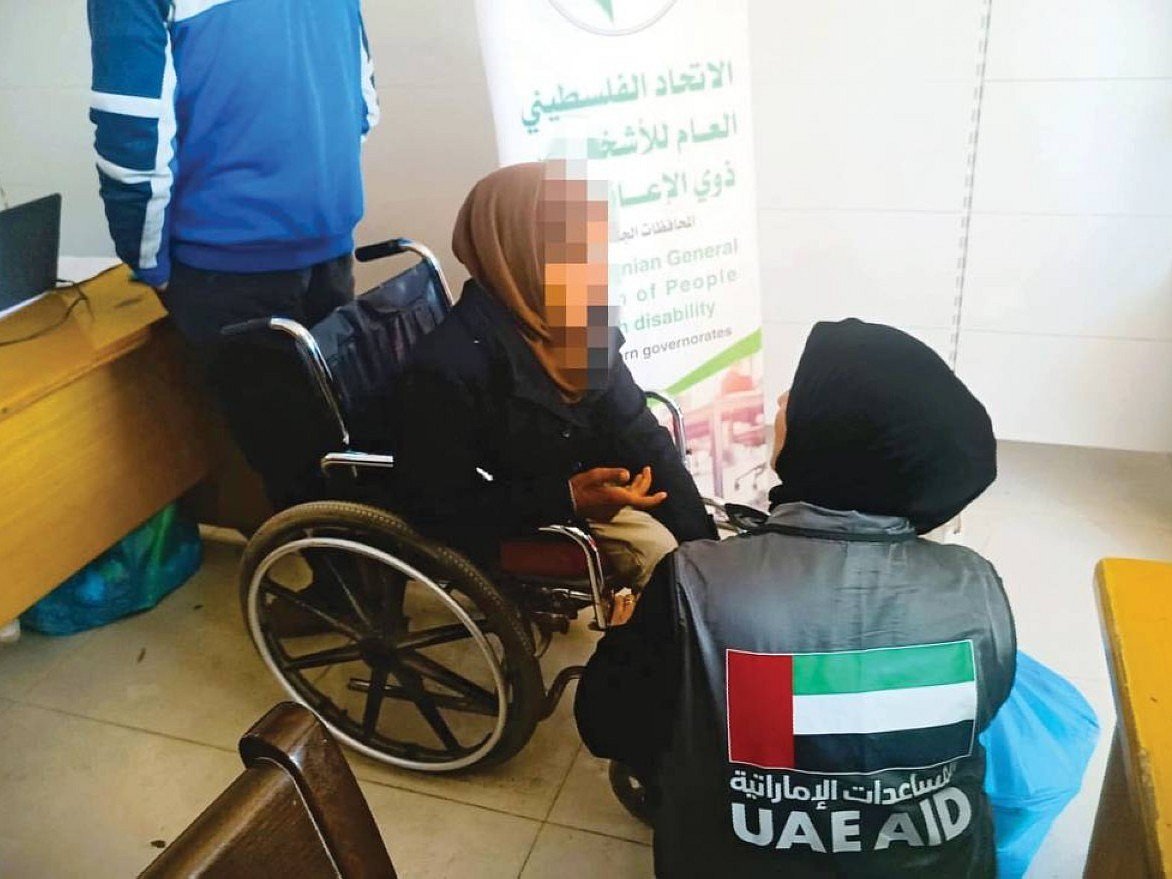
The UAE is expanding medical and rehabilitation support for people injured in Gaza, as estimates show that more than 100,000 people are now living with disabilities caused by the war.
Through Operation Gallant Knight 3, the UAE is providing treatment, prosthetic limbs, wheelchairs and other medical equipment to help injured Palestinians regain mobility and return to their daily lives.
Get updated faster and for FREE: Download the Gulf News app now - simply click here.
The support has moved beyond emergency care to include long-term rehabilitation, physiotherapy and psychological support for amputees and people with serious injuries.
Ayman Zaqout, Chairman of the Palestinian Federation of Persons with Disabilities, said the UAE’s support has helped prevent some patients from losing limbs at a time when Gaza’s healthcare system is facing severe shortages.
He said infections, delayed treatment and a lack of antibiotics and sterilisation materials have caused many treatable injuries to develop into permanent disabilities.
According to Zaqout, between 60% and 70% of people with disabilities in Gaza have lost wheelchairs or other assistive devices during repeated displacement.
Operation Gallant Knight 3 has supplied hundreds of wheelchairs for children and adults, including specialised chairs for people with spinal cord injuries and complex mobility conditions. Hospital beds, healthcare kits and support for children with Down syndrome have also been provided.
The UAE has also launched the Step of Hope programme to support people who have lost limbs during the war.
The programme includes medical examinations, measurements, the manufacture and fitting of prosthetic limbs, physiotherapy and long-term follow-up care.
Its first phase is being carried out at the UAE Floating Hospital in Al Arish, Egypt, where prosthetic limbs are manufactured for injured patients.
A second phase uses 3D scanning technology to take measurements inside Gaza and send them electronically to the floating hospital, where customised prosthetic limbs are produced and later delivered to patients.
The final phase aims to establish prosthetic limb manufacturing and fitting services inside Gaza to provide sustainable care for injured residents.
The programme began with prosthetic limbs for 40 patients, with plans to expand according to medical needs.
Sharjah Charity International is funding another 50 prosthetic limbs, while Dar Al Ber Society has allocated more than Dh34 million to support the programme.
The rehabilitation process also includes walking exercises, muscle strengthening, physiotherapy, psychological support and adjustments to prosthetic limbs as patients recover.
Alongside the rehabilitation programme, the UAE has delivered more than 400 tonnes of medicines and medical supplies to Gaza.
A further 20-tonne shipment was recently distributed to hospitals and healthcare facilities in cooperation with international partners.
Officials said the programme reflects the UAE’s wider humanitarian approach, which focuses not only on saving lives but also on helping injured people rebuild their independence and dignity.
Network Links
GN StoreDownload our app
© Al Nisr Publishing LLC 2026. All rights reserved.