Trump warns Iran’s supreme leader should be ‘very worried’ as nuclear talks resume in Oman
Washington insists talks must include ballistic missiles — demand Iran has long rejected
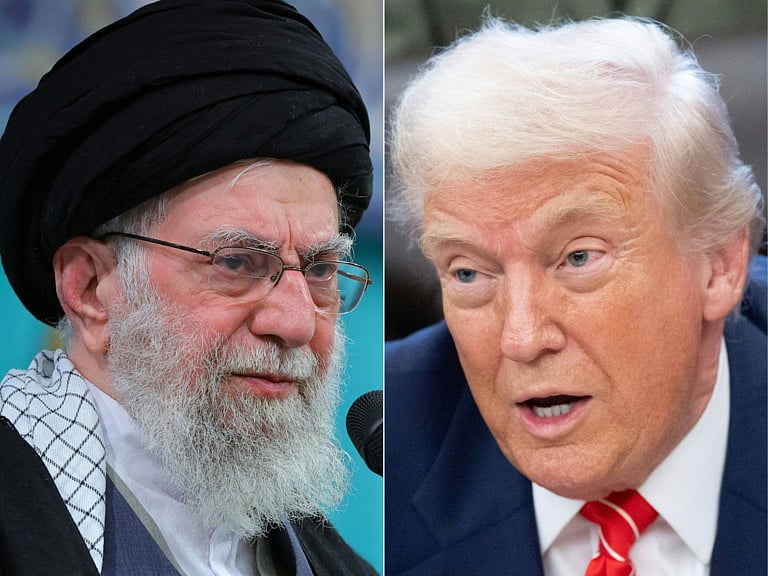
Dubai: US President Donald Trump warned Iran’s supreme leader Ayatollah Ali Khamenei should be “very worried,” even as Washington and Tehran confirmed their first formal nuclear negotiations since last year’s US strikes on Iran’s nuclear sites.
Tensions between the longtime foes have surged in recent weeks following a violent crackdown by Iranian security forces on nationwide anti-government protests — one of the most serious challenges to Tehran’s rule since the 1979 Islamic Revolution.
In response, Trump has dramatically ramped up the US military presence in the region, sending what he described as a naval “armada,” and repeatedly threatening new strikes.
“I would say he should be very worried. Yeah, he should be,” Trump told NBC News in an interview late Wednesday.
Iran, meanwhile, has warned that any US attack would trigger swift retaliation, including strikes on American forces and assets across the Middle East. One Iranian drone was shot down by US forces earlier this week as tensions simmered.
Talks confirmed in Oman
Despite swirling doubts earlier in the day about whether negotiations were collapsing over disagreements on location and agenda, both sides confirmed that talks will go ahead on Friday in the Omani capital Muscat.
Iranian Foreign Minister Abbas Araghchi said the talks were now officially scheduled, thanking Oman for facilitating the meeting. A White House official also confirmed the plans to Agence France-Presse.
The talks will involve Araghchi and Trump’s special envoy Steve Witkoff.
Earlier reports had suggested Turkey as a possible venue and even hinted the US was close to pulling out after disputes over whether Iran’s ballistic missile programme should be on the table.
Different agendas
Washington has made clear it wants far broader negotiations.
US Secretary of State Marco Rubio said talks must include Iran’s nuclear ambitions, ballistic missile capabilities, its support for militant groups across the region, and its treatment of protesters at home.
“They will have to include the range of their ballistic missiles, their sponsorship of terrorist organisations, their nuclear programme, and the treatment of their own people,” Rubio said.
Tehran, however, insists discussions will focus strictly on its nuclear programme and the lifting of sanctions — a long-standing demand.
Iran has consistently ruled out missile talks, arguing the weapons are for self-defence, particularly against Israel.
Fallout from last year’s strikes
The renewed diplomacy follows the collapse of indirect US-Iran nuclear talks in mid-2025 after Israel launched surprise strikes on Iran, followed days later by US bombing of Iranian nuclear sites.
Trump defended those attacks in his NBC interview, saying they prevented wider regional conflict.
“If we didn’t take out that nuclear, we wouldn’t have peace in the Middle East,” he said, adding that Arab nations were previously fearful of Iran but no longer so.
Trump also claimed Iran had attempted to restart its nuclear programme at alternative locations following the strikes.
“They were thinking about starting a new site in a different part of the country. We found out about it. I said, you do that, we’re going to do very bad things to you,” he said.
Iran under pressure
Iran enters the talks facing mounting internal and regional strain.
The protest crackdown has drawn global condemnation, while Tehran’s influence across the Middle East has weakened after Israel’s severe blows to Hezbollah in Lebanon and the fall of longtime Syrian leader Bashar al-Assad.
With tensions high, warships deployed and rhetoric escalating, the Oman talks now carry enormous stakes — raising hopes of de-escalation even as the risk of renewed military confrontation looms large.
-- With AFP inputs

Sign up for the Daily Briefing
Get the latest news and updates straight to your inbox
Network Links
GN StoreDownload our app
© Al Nisr Publishing LLC 2026. All rights reserved.