Trump wants more nations in Abraham Accords. What does that mean?
Analysts warn push for wider Israel recognition could complicate fragile Iran talks
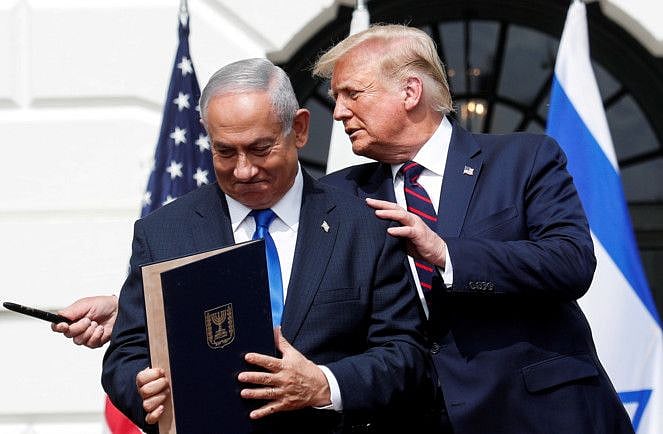
Dubai: US President Donald Trump has raised the stakes in already fragile Iran peace negotiations by demanding that several Muslim-majority countries normalise ties with Israel as part of any broader regional agreement — a push analysts say could dramatically complicate efforts to end the war and reopen the Strait of Hormuz.
In a lengthy social media post, Trump said countries including Saudi Arabia, Qatar, Pakistan, Turkey, Egypt and Jordan should join the Abraham Accords, the US-brokered agreements launched in 2020 to establish diplomatic ties between Israel and Arab states.
“After all the work done by the United States to try and pull this very complex puzzle together, it should be mandatory that all of these Countries, at a minimum, simultaneously, sign onto the Abraham Accords,” Trump wrote.
He later intensified the demand, saying Saudi Arabia and Qatar should “sign first” and warning that countries refusing to join “should not be part of this Deal”.
Trump even floated the idea of Iran eventually joining the accords if a peace agreement is reached with Washington.
“Wow, now that would be something special!” he wrote. “This will be the most important Deal that any of these Great, but always in Conflict Countries, will ever sign.”
The comments added fresh uncertainty to slow-moving negotiations aimed at ending the conflict that erupted in late February between the US, Israel and Iran.
While a ceasefire has largely held since April 8, major disputes remain unresolved, including Iran’s control over shipping through the Strait of Hormuz, the future of Tehran’s nuclear programme and the gradual lifting of US pressure measures.
What are the Abraham Accords?
The Abraham Accords are US-brokered agreements launched in 2020 under President Donald Trump to normalise relations between Israel and several Arab countries. They are called the Abraham Accords after Abraham, a patriarch revered by Judaism, Christianity and Islam, symbolising hopes for unity between faiths and nations.
What they mean
Countries joining the accords:
officially recognise Israel
establish diplomatic ties
open embassies
expand trade, tourism and security cooperation
Which countries joined?
UAE, Bahrain, Morocco and Sudan
Why they matter
The accords broke with decades of Arab policy that linked ties with Israel to the creation of a Palestinian state.
Why they remain controversial
Critics say the agreements sidelined the Palestinian issue and failed to address the Israeli-Palestinian conflict. Countries such as Saudi Arabia and Qatar have repeatedly said they will not normalise ties with Israel without progress toward Palestinian statehood.
Trump said Monday that a deal with Iran would either be “great and meaningful” — or there would be “no deal”.
The proposal to expand the Abraham Accords, however, could prove politically explosive across the Middle East.
The accords were initially signed by the UAE and Bahrain in 2020, later joined by Morocco and Sudan, and were hailed by Trump as a landmark diplomatic achievement that reshaped regional politics.
What does it mean?
In practical terms, joining the accords means formally recognising Israel, establishing diplomatic relations and opening broader economic, security and political cooperation.
But the agreements remain deeply unpopular among large sections of the Arab and Muslim world because they sidestepped the Palestinian issue and did not require the creation of an independent Palestinian state.
That remains a major obstacle for countries such as Saudi Arabia and Qatar, both of which have repeatedly said they will not normalise relations with Israel without progress toward Palestinian statehood.
Trump’s latest proposal also drew attention because some of the countries he listed — including Turkey, Egypt and Jordan — already have diplomatic or peace relations with Israel.
According to the Washington Post, Trump nevertheless insisted those nations should formally sign onto the Abraham Accords framework as part of what he described as a broader regional coalition.
Analysts reacted sceptically, warning that the White House may be underestimating both regional tensions and public anger across the Middle East.
'Needlessly complicated and unrealistic'
Anna Jacobs of the Arab Gulf States Institute in Washington said Gulf countries were unlikely to embrace such demands while conflicts continue in Iran, Gaza and Lebanon.
“The national security of the Gulf states has been threatened more than ever before because of President Trump’s reckless decisions, and he expects Arab states to thank him and normalise relations with Israel, which they will not do at this stage,” she said.
“These expectations and assumptions from this US administration shows how little they understand the Middle East.”
Former US ambassador to Israel Dan Shapiro also warned that linking Abraham Accords expansion to ending the Iran war was “needlessly complicated and unrealistic”.
“Trump just publicly demanding these leaders fall into line as part of a deal to end the war with Iran is not going to work,” Shapiro wrote on X.
The diplomatic push came even as hopes for a breakthrough deal with Tehran fluctuated sharply.

Sign up for the Daily Briefing
Get the latest news and updates straight to your inbox
Network Links
GN StoreDownload our app
© Al Nisr Publishing LLC 2026. All rights reserved.