UAE passport’s historic 20-year journey: From 35 to 188 visa-free destinations
UAE passport surges to world No. 2, adding 153 visa-free destinations in 20 years
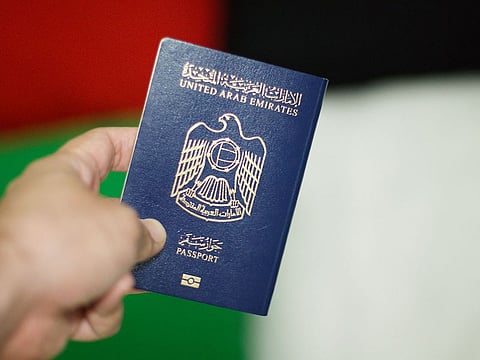
The UAE passport has climbed to second place among the world's most powerful travel documents, marking the biggest rise in the 20-year history of the Henley Passport Index.
The July 2026 index, based on exclusive IATA Timatic data, shows Emirati passport holders now enjoy visa-free or visa-on-arrival access to 188 destinations.
The UAE shares the No. 2 position with Japan and South Korea, behind only Singapore, which remains the world's strongest passport with access to 192 destinations.
Get updated faster and for FREE: Download the Gulf News app now - simply click here.
UAE's historic rise in global mobility
The UAE has emerged as the biggest success story in the latest Henley Passport Index, adding an unprecedented 153 visa-free destinations since 2006 — the largest improvement recorded by any passport in the index’s history.
Two decades ago, the UAE passport ranked in the middle of the global standings, with access to just 35 destinations. Today, it has become one of the world's most powerful travel documents, offering access to 188 destinations.
Dr Christian H. Kaelin, Chairman of Henley & Partners and creator of the Henley Passport Index, said passport strength reflects a country’s global influence.
“Passport power is one of the clearest expressions of a country’s geopolitical capital. The strongest passports belong to nations that other countries want as partners — for trade, investment, security, or cooperation,” he said.
The UAE’s rise highlights how sustained diplomacy, international partnerships and global engagement can reshape a country’s mobility and influence.
Why the UAE's passport rise matters
The UAE's improved ranking reflects more than easier international travel. It highlights the country's growing diplomatic ties, economic partnerships and role as a global centre for business, investment and talent.
With access to 188 of 227 destinations without requiring a visa in advance, Emirati citizens now enjoy one of the highest levels of travel freedom worldwide.
The report also links the UAE's passport strength to its ability to build international partnerships and attract global businesses and investors.
Henley & Partners said interest in global mobility options is also rising among UAE-based residents, with enquiries for residence and citizenship-by-investment programmes increasing 41% since conflict escalated in the Gulf in February.
UAE passport: Key highlights
Biggest rise in history: UAE added 153 visa-free destinations since 2006, the largest gain recorded.
From 35 to 188 destinations: UAE passport rose from mid-ranking to one of the world’s strongest.
Global No. 2 ranking: UAE shares second place with Japan and South Korea, behind Singapore.
Geopolitical influence: UAE passport power reflects its global partnerships and influence.
More than travel: Passport strength highlights diplomacy, economic ties and connectivity.
Business and talent hub: Strong mobility attracts investors, businesses and talent.
High travel freedom: Emirati citizens can access 188 of 227 destinations without a prior visa.
Rising mobility demand: UAE residents’ enquiries for residence and citizenship programmes rose 41%.
World's most powerful passports in 2026
The top rankings show a changing global mobility landscape:
1st: Singapore — 192 destinations
2nd: UAE, Japan, South Korea — 188 destinations
3rd: Sweden — 187 destinations
4th: Belgium, Denmark, Finland, France, Germany, Ireland, Italy, Luxembourg, Netherlands, Norway and Spain — 186 destinations
5th: Austria, Greece, Malta, Portugal and Switzerland — 185 destinations
6th: Hungary, Poland and the United Kingdom — 184 destinations
7th: Australia, Canada, Czech Republic, Latvia, Malaysia, New Zealand, Slovakia and Slovenia — 183 destinations
8th: Croatia and Estonia — 182 destinations
9th: Lithuania and Liechtenstein — 181 destinations
10th: Iceland and the United States — 180 destinations
From No. 1 to 10: How US passport lost its top spot
The latest index highlights a major shift in passport power over the past two decades.
In 2006, the United States held the world's strongest passport alongside Denmark and Finland, offering access to 130 destinations.
Twenty years later, the US ranks 10th, with access to 180 destinations. Because several countries share the same rankings, 36 passports now rank ahead of the American passport.
The United Kingdom, which ranked third in 2006, now sits in sixth place, while Canada has moved up to seventh.
Global mobility gap reaches record high
Although passport power has expanded worldwide, the gap between the world's most and least mobile citizens has widened significantly.
Singapore's top ranking, with access to 192 destinations, contrasts sharply with Afghanistan's position at the bottom of the index, with access to just 22 destinations.
This creates a record 170-destination gap between the world's strongest and weakest passports.
Afghanistan has remained the lowest-ranked passport since 2006, although its access has increased from 12 destinations two decades ago.
The weakest passports in the 2026 ranking are:
Afghanistan — 22 destinations
Syria — 26 destinations
Iraq — 29 destinations
Yemen — 31 destinations
Pakistan — 32 destinations
Somalia — 32 destinations
Nepal — 39 destinations
Palestinian Territories — 40 destinations
Libya — 40 destinations
Bangladesh — 40 destinations
Bolivia is the only passport to have recorded a decline over the past two decades, losing six visa-free destinations.
Diplomacy, not just peace, shapes passport power
Henley & Partners' analysis comparing passport rankings with the Global Peace Index found that peaceful countries generally have stronger passports, but diplomacy, economic influence and international cooperation can also play a decisive role.
The UAE was identified as one of the countries whose passport strength significantly exceeds what its peace ranking alone would suggest.
The report said passport power is shaped by a combination of diplomatic influence, economic strength, global partnerships and confidence in a country's institutions.
Dr Kaelin said mobility is increasingly becoming a measure of opportunity.
"For twenty years, we have measured how nations build freedom of movement for their citizens. Today, we are witnessing the same shift in how families think about their future."
He added: "In an increasingly uncertain world, the greatest privilege is no longer simply the freedom to travel — it is the freedom to choose, to have access rights."
A new era of global mobility
The UAE’s rise from a mid-ranking passport to one of the world's strongest travel documents reflects a broader shift in global mobility.
As countries compete for trade, investment and talent, passport strength is becoming more than a travel benefit — it is a measure of global connectivity, opportunity and international influence.


