Strait or canal: Who can charge ships - and who can’t?
Iran’s Hormuz tensions raise questions over shipping rights
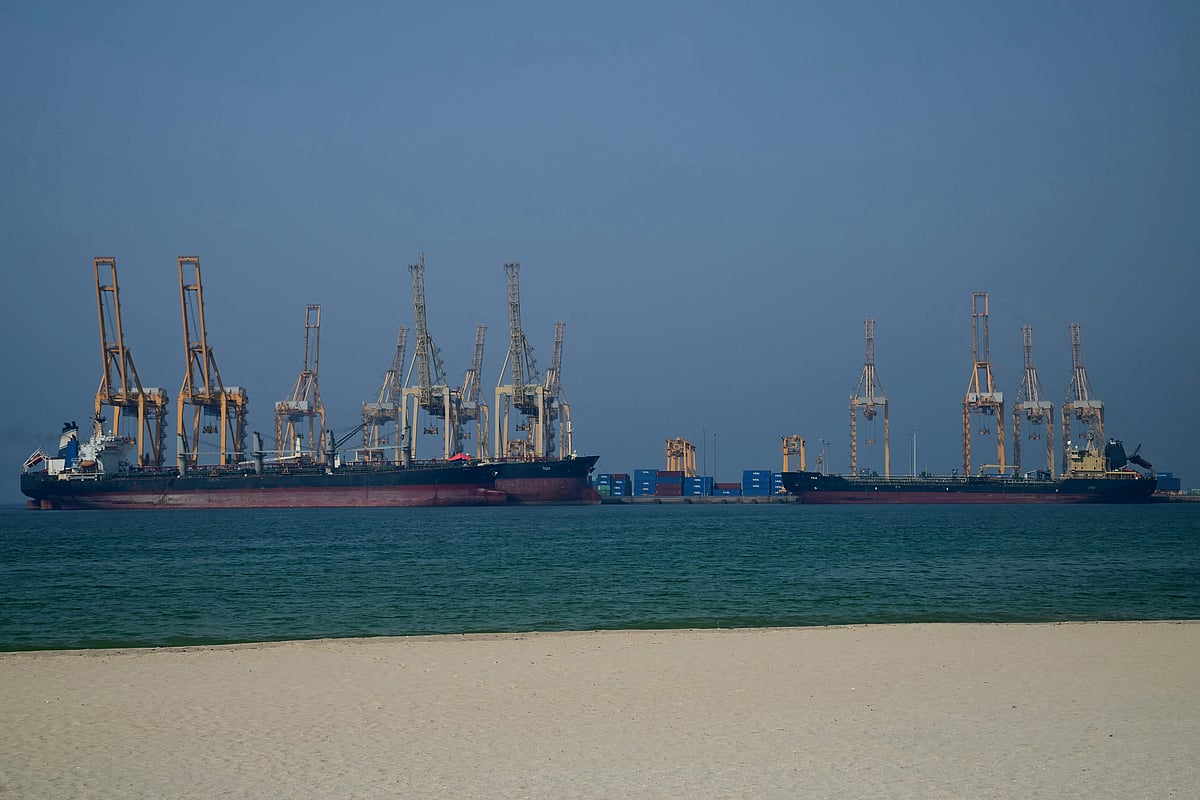
A dispute over shipping in the Strait of Hormuz is fast becoming a global economic concern.
Iran’s threat to charge vessels for passing through the narrow waterway — combined with ongoing disruptions to traffic — has unsettled energy markets and raised fresh questions about the rules governing international trade routes. The strait carries about one-fifth of global oil supplies.
At stake is a long-standing legal distinction between natural straits and man-made canals, and whether countries can impose charges on ships simply for transit.
What is a strait - and why is it important?
A strait is a naturally formed narrow waterway that connects two larger bodies of water and is used for international navigation.
The Strait of Hormuz links the Arabian Gulf to the Indian Ocean and is one of the world’s most important energy corridors.
Under international law - particularly the United Nations Convention on the Law of the Sea (UNCLOS) - ships have the right of transit passage through such waterways. This means vessels must be allowed to pass continuously and without obstruction.
Countries bordering these straits can regulate traffic for safety or environmental reasons, but they cannot suspend passage or impose fees simply for allowing transit. This principle exists to ensure that global trade routes remain open and are not controlled by any single state.
What is a canal — and why can it charge tolls?
A canal, unlike a strait, is an artificial waterway built and maintained by a country.
Because canals require continuous investment, dredging and operational management, states are allowed to charge tolls for their use. These fees function much like infrastructure charges and are widely accepted in global shipping.
The Suez Canal, completed in 1869, is a key example. It generates billions in annual revenue for Egypt and is a major artery linking Europe and Asia.
Similarly, the Panama Canal charges vessels based on size, cargo and traffic demand. These toll systems fund maintenance, safety services and expansion projects that keep the canals operational.
Key facts: Strait vs canal
Strait (e.g. Hormuz)
Natural waterway
Connects major seas
Governed by international law (UNCLOS)
Transit passage must remain free
No general tolls allowed
Canal (e.g. Suez, Panama)
Man-made waterway
Built and maintained by a country
Operates like infrastructure
Tolls legally charged
Fees fund maintenance and operations
Special cases
Turkish straits allow limited service charges
Most global straits remain toll-free
Can Iran legally charge tolls in the Strait of Hormuz?
Under widely accepted interpretations of international maritime law, it cannot.
Straits used for international navigation fall under a legal regime that guarantees free transit. While coastal states may charge for specific services such as pilotage or towing, they cannot impose a general transit fee.
What is happening in Hormuz right now?
The legal debate is unfolding alongside real-world disruption.
Iran has restricted vessel movement through the strait during the conflict, allowing limited passage to selected ships while threatening broader control over Gulf shipping routes.
The United States has responded with plans to blockade Iranian ports, escalating tensions and increasing uncertainty for global shipping.
Traffic through the strait has already fallen sharply, and oil prices have surged, underlining the global impact of even partial disruptions.
Do other waterways charge ships?
The global system follows a clear pattern shaped by law and geography.
Artificial canals such as the Suez and Panama canals charge tolls as part of their operating model. These are engineered routes, and fees are used to fund construction, maintenance and navigation services.
Natural straits, however, are treated as shared global corridors. Major routes such as the Strait of Hormuz, the Strait of Malacca and the Singapore Strait do not charge transit fees for simple passage.
There are exceptions in how waterways are governed. The Turkish straits — including the Bosphorus and Dardanelles — operate under the Montreux Convention, which guarantees free passage for merchant vessels while allowing limited, standardised service charges.
Why does this distinction matter globally?
The difference between canals and straits is central to the functioning of global trade.
If countries were allowed to charge tolls in natural straits, it could set a precedent for others to follow. Strategic chokepoints could become tools of economic and political pressure, increasing shipping costs and disrupting supply chains.
Experts warn that such a shift could weaken the rules-based system that has governed maritime trade for decades and introduce uncertainty into global logistics networks.
What are the economic risks?
The Strait of Hormuz is one of the world’s most critical chokepoints.
Around 20% of global oil supply passes through it, meaning any disruption has immediate consequences for energy markets, transport costs and inflation worldwide.
Recent tensions have already pushed oil prices sharply higher, demonstrating how quickly uncertainty in the strait can ripple across the global economy.
How are countries responding?
Governments across the region and beyond have pushed back against the idea of tolls or restricted access.
Gulf states have stressed that the Strait of Hormuz must remain open to all and cannot be controlled unilaterally. The United States has also insisted that free navigation must be part of any long-term settlement.
At the same time, major powers remain cautious about military escalation, given the risks of further disruption in a narrow and heavily trafficked waterway.
Sign up for the Daily Briefing
Get the latest news and updates straight to your inbox
Network Links
GN StoreDownload our app
© Al Nisr Publishing LLC 2026. All rights reserved.