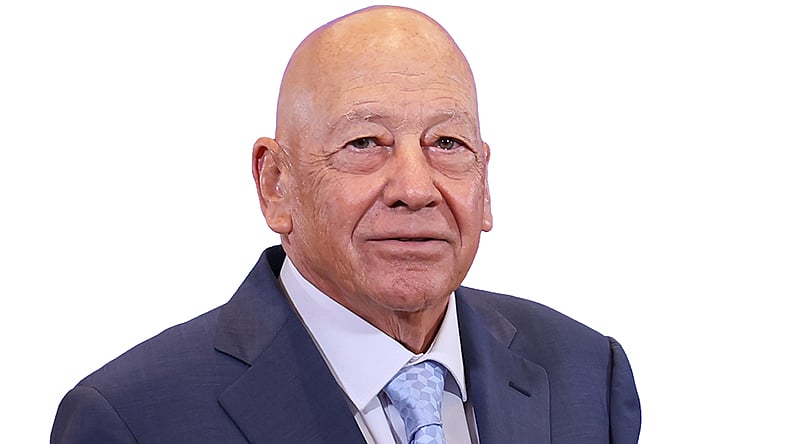
News outlets reported that George Prokopiou’s firms (Dynacom, Sea Traders) are operating in the volatile Gulf region, highlighting his reputation for high-risk, high-reward shipping strategies.
As missiles light up the Strait of Hormuz amid escalating tensions, most shipowners are rerouting fleets and hunkering down.
One billionaire magnate defies the chaos — sailing straight into the firestorm.
While his critics accuse him of profiteering, George Prokopiou, 79, the unyielding Greek tycoon turning global peril into profit, makes a counterpoint: shipping fills voids while others cower.
Risk taker
Prokopiou's mantra?
"If you are not a risk-taker, you are not in shipping."
During his 55-year shipping career, he lived it through turmoil: Gulf Wars, Somali piracy, Red Sea Houthi attacks, and now Hormuz missile hits or fast boat swarms.
While rivals idle in Oman or India, his tankers — insured via high-risk war clauses — push VLCCs (Very Large Crude Carriers) loaded with Iraqi or Saudi crude through the strait.
In the current crisis, triggered by Iranian retaliation to Israeli strikes, Hormuz traffic plummeted.
The Wall Street Journal reported that Prokopiou sent at least five ships through the Strait of Hormuz while war flared across the Middle East.
They are among the few merchant vessels to have sailed through the waterway since the conflagration trapped thousands of boats and threatened a global energy crisis.
Humble beginnings
Born in Athens in 1946, Prokopiou launched his career at 25 by purchasing his first tanker in 1971 with borrowed funds and sheer grit.
What started as a single vessel evolved into a colossal fleet across three powerhouse companies: Dynacom Tankers (crude oil focus), Dynagas LNG (liquefied natural gas carriers), and Sea Traders (dry bulk carriers).
SHIPPING TYCOON: George Prokopiou, 79, owns Greek shipping firms Dynacom, Dynagas Holding and Sea Traders, plus a 43% stake in publicly traded Dynagas LNG Partners.
AT A GLANCE
George Prokopiou founded Sea Traders in 1974, Dynacom in 1991 and Dynagas in 2004 and took Dynagas LNG Partners public on the New York Stock Exchange in 2013.
The firms collectively own 102 tankers, dry bulk cargo ships and LNG carriers. Dynagas was one of the first companies to operate Arctic LNG carriers that could operate in frozen waters.
In 2021, he acquired Greek shipyard Hellenic Shipyards in a public tender for $44 million.
He also owns real estate in Greece, Italy and London, as per Forbes.
150 vessels
Today, his operations command over 150 vessels, with 70+ oil tankers in Dynacom alone — plus dozens under construction at top Korean and Chinese yards,
This scale ranks him among the elite, controlling a sizeable slice of the world's 7,000+ tanker fleet.
Recent expansions target LNG demand, with Dynagas securing long-term charters amid Europe's energy scramble post-Ukraine war.
$4.7 billion
Personal net worth of George Prokopiou (Source: Forbes)
Prokopiou's playbook
Recent moves by Prokopiou (he turns 80 on June 8), echo his 2019 playbook during tanker drone attacks, where he loaded ships in the Gulf despite threats.
Shipping's daredevil tycoon George Prokopiou has long been renowned for sailing close to the wind in pursuit of profit. He's known to have sailed straight into Hormuz missile mayhem while rivals opted to avoid the risky passage.
Insiders say his crews — often Filipino and Greek — get hazard bonuses tripling base pay.
Curiously, shipping firms — including those like Prokopiou’s Dynacom —have long relied on Philippine-based crewing systems.
Shipping companies established dedicated crew agencies in the Philippines decades ago to source and manage manpower.
This institutional pipeline makes Filipino hiring not just convenient — but structurally embedded in global shipping operations.
They are trained through 80–100 maritime schools in the Philippines, are highly proficient in English — the language of global shipping — factors that raise efficiencies, curb operational risk, especially in high-stakes environments like.
Windfall profits amid global crunch
Hormuz handles 21 million barrels daily — 20% of seaborne oil trade. Its partial blockade has spiked spot rates: Suezmax tankers hit $400,000–$500,000/day (vs. $30,000 peacetime averages), per Baltic Exchange data.
A single roundtrip from Gulf to China now nets $20–30 million profit per ship.
For Prokopiou's $4.7 billion fortune (latest Forbes 2025 estimate), this could add $1–2 billion annually if sustained.
Analysts note his low-debt model — vessels often unencumbered — amplifies gains. Critics decry profiteering, but he counters: shipping fills voids others flee.
Luxury empire beyond the seas
Greece's "king of real estate" owns prime assets: 44% of Astir Palace Vouliagmeni (luxury Riviera resort, sold partially for €370 million in 2023), Athens office towers, and island villas.
His 115-meter yacht Elysian (ex-Stella Super) features a helipad and infinity pool, yet he shuns publicity, rarely granting interviews.
Married to Chinese-born Elsa Loizou, the couple's low-profile life contrasts his boardroom bravado.
Philanthropy includes Orthodox church donations and maritime academies.
Controversies
Boldness breeds backlash. Post-2022 Ukraine invasion, Dynacom shipped Russian Urals crude to Asia, complying with G7 $60/barrel cap but irking EU hawks.
Labour unions allege subpar safety: a 2023 Dynagas crew mutiny in Singapore cited fatigue; a 2024 tanker collision off Hormuz killed two.
Environmentalists target his older fleet's emissions, though retrofits meet IMO 2020 sulfur caps. Prokopiou dismisses critics: "Shipping is war without guns—risk is the price of trade."
Succession in turbulent waters
At nealry 80, Prokopiou eyes succession via sons Georgios and Nikos. His saga symbolises shipping's Darwinian edge: in chokepoints like Hormuz, Panama, or Malacca, hesitation costs billions.
As Trump demands reopening and Starmer backs clearing actions, Prokopiou's tankers keep oil flowing — proving one man's risk-taking sustains the world's economy.
Recent studies underscore such operators' role: a 2026 Lloyd's List report on "Resilient Fleets in Crises" cites Prokopiou-style risk models as key to supply chain survival.
An IMF analysis (Jan 2026) warns prolonged Hormuz closure could add $150/barrel to oil prices.
In global trade's pressure cooker, Prokopiou doesn't just survive — he thrives.
Sign up for the Daily Briefing
Get the latest news and updates straight to your inbox
Network Links
GN StoreAbout Gulf NewsTerms & ConditionsReach by GNSitemapContact usPrivacy PolicyGN FocusHave your sayWork with usAdvertise with usGulf News epaperPrinting Services
Download our app
© Al Nisr Publishing LLC 2026. All rights reserved.